

Industrial sales objections are a normal part of complex business-to-business selling.
Buyers may question price, timing, technical fit, implementation risk, vendor credibility, internal approval, or whether changing from an existing supplier is worth the disruption.
These concerns do not always mean the opportunity is lost. They often mean the buyer needs more information, stronger evidence, better internal alignment, or a clearer connection between the proposed solution and the business problem.
Effective objection handling is not about defeating the buyer in an argument. It is about identifying the real concern, determining whether it can be resolved, and helping both sides decide what should happen next.
Glossary: Industrial sales objection handling: Industrial sales objection handling is the process of clarifying and responding to buyer concerns about price, value, timing, technical fit, risk, credibility, competition, authority, or implementation.
What Is an Industrial Sales Objection?
An objection is a stated concern that may prevent or delay a buying decision.
Common objections include:
- “The price is too high.”
- “We do not have budget.”
- “We already have a supplier.”
- “This is not a priority right now.”
- “We are not sure the solution will work in our facility.”
- “We need approval from corporate.”
- “Your lead time is too long.”
- “We have never worked with your company.”
- “Send me some information.”
- “We are still evaluating alternatives.”
An objection may be genuine, incomplete, or simply the easiest way for the buyer to pause the conversation.
The salesperson should avoid assuming that the first statement reveals the complete issue.
FAQ: Are industrial sales objections a sign that the deal is lost?
No. An objection may indicate that the buyer needs more information, stronger evidence, internal alignment, technical clarification, budget approval, or a better understanding of the proposed value.
Objection, Condition, or Brush-Off?
Not every negative response should be handled in the same way.
An objection may be resolved through clarification, evidence, negotiation, or a change in scope.
A condition is a real circumstance the salesperson may not be able to change, such as a frozen capital budget, a mandatory contract, or a technical requirement the solution cannot meet.
A brush-off is a vague response intended to end or delay the conversation, such as “Send me something” without a defined interest or next step.
Recognizing the difference prevents salespeople from repeatedly arguing against conditions that cannot be changed or chasing accounts that have not demonstrated real interest.
Glossary: Sales condition: A sales condition is a fixed circumstance that may prevent a purchase and cannot necessarily be resolved through persuasion, such as unavailable funding, a mandatory specification, or an existing contractual restriction.
Use the Acknowledge, Clarify, Respond, Confirm Framework
A consistent framework helps salespeople remain calm and useful when concerns arise.
1. Acknowledge the Concern
Let the buyer finish explaining the issue. Avoid interrupting, defending the company too quickly, or preparing a rebuttal while the buyer is still speaking.
Useful acknowledgements include:
- “That makes sense.”
- “I understand why that would be important.”
- “Thank you for raising that.”
- “I can see why the implementation timeline would be a concern.”
Acknowledgement does not mean agreement. It demonstrates that the salesperson heard the concern and is willing to address it seriously.
2. Clarify the Real Issue
Ask a question before presenting a solution.
Examples include:
- “When you say the price is high, what are you comparing it with?”
- “Is the concern the total investment, the timing of the expense, or the expected return?”
- “Which technical requirement are you least confident we can meet?”
- “Is the project delayed because funding is unavailable or because approval has not been requested?”
- “What would your current supplier need to do poorly before you considered another option?”
Clarification prevents the salesperson from solving the wrong problem.
3. Respond With Relevant Evidence
The response should address the buyer’s stated concern using relevant information.
Useful evidence may include:
- technical documentation
- case studies
- customer references
- implementation plans
- return-on-investment analysis
- service-level commitments
- warranty information
- test results
- production data
- risk-mitigation procedures
The response should be specific enough to be credible and limited enough to remain relevant.
4. Confirm Whether the Concern Is Resolved
After responding, ask whether the buyer’s concern has been addressed.
Examples include:
- “Does that answer the concern about implementation?”
- “Would reviewing a comparable installation help your team evaluate the risk?”
- “If we can confirm that specification, is there another issue preventing the project from moving forward?”
- “Would it make sense to involve your engineering team in the next conversation?”
This step reveals whether the objection was resolved or whether another concern remains underneath it.
Glossary: Objection clarification: Objection clarification is the process of asking questions to determine the specific issue, comparison, assumption, or risk behind a buyer’s stated concern.
FAQ: What is the best first response to a sales objection?
The best first response is usually to acknowledge the concern and ask a clarifying question before defending the solution or presenting additional information.
1. Price Objections
“Your price is too high” may describe several different concerns.
The buyer may mean:
- the price exceeds the approved budget
- a competitor quoted less
- the buyer does not understand the value
- the scope includes features the buyer does not need
- the buyer is testing whether a discount is available
- the cost is difficult to justify internally
- the payment timing creates a problem
Useful clarification questions include:
- “Which part of the investment is most difficult to justify?”
- “Are you comparing total project cost or only the initial purchase price?”
- “What financial return would the project need to produce?”
- “Is the concern the amount, payment timing, or available budget?”
- “What is included in the alternative proposal?”
The response may involve demonstrating lower operating costs, reduced downtime, longer equipment life, stronger service, lower implementation risk, or another measurable outcome.
Do not rely on vague statements such as “our quality is better.” Show what is different and why it matters.
Glossary: Total cost of ownership: Total cost of ownership is the complete cost of purchasing, installing, operating, maintaining, supporting, and eventually replacing a product or system.
FAQ: How should an industrial salesperson respond when the buyer says the price is too high?
The salesperson should clarify what the buyer is comparing, determine whether the issue is budget, value, scope, or payment timing, and respond with relevant evidence about total cost, risk, performance, or return.
2. Budget Objections
“We do not have the budget” may be a temporary condition, a prioritization problem, or a sign that the opportunity was qualified too early.
Ask:
- Has a budget been requested?
- Is funding unavailable or simply unapproved?
- Which fiscal period could support the project?
- What information is required for capital approval?
- Is another initiative receiving priority?
- Could the project be phased?
- Would a different scope fit the current budget?
A project without current funding may still be a valid future opportunity, but it should not remain in a late pipeline stage as though a purchase is imminent.
The salesperson may need to help the buyer build a business case, provide cost estimates, document operational impact, or remain useful until the next budget cycle.
Glossary: Budget qualification: Budget qualification is the process of determining whether funding exists, has been requested, requires approval, or is expected during a future planning period.
3. “We Do Not Need This” Objections
A lack-of-need objection may mean:
- the account is genuinely a poor fit
- the problem is not serious enough
- the buyer is unaware of the issue
- the wrong person was contacted
- the message did not connect to a relevant priority
- the timing is too early
Do not try to force the buyer to admit a problem.
Instead, ask reasonable questions:
- “How are you currently handling this process?”
- “Are there any capacity, downtime, maintenance, or quality concerns connected to it?”
- “Is this something another department manages?”
- “What would need to change before this became a priority?”
- “Would it be useful to revisit this when the expansion moves into implementation?”
If the need is not present, disqualifying the opportunity may be the correct result.
Glossary: Sales disqualification: Sales disqualification is the decision to stop or delay active pursuit because the account lacks sufficient fit, need, timing, authority, budget, or opportunity potential.
4. Trust and Credibility Objections
Industrial buyers may hesitate to work with a supplier they do not know, especially when the purchase affects production, safety, quality, compliance, or facility operations.
Trust can be strengthened through:
- relevant case studies
- customer references
- certifications
- technical documentation
- clear implementation plans
- warranty information
- service coverage
- site visits
- pilot projects
- transparent limitations
Use proof that resembles the buyer’s situation.
A case study from a similar facility, industry, application, or project is generally more persuasive than an unrelated logo list.
Avoid exaggerated claims such as “everyone in your industry uses us” unless they are demonstrably true.
Glossary: Sales credibility: Sales credibility is the buyer’s confidence that the seller understands the problem, communicates accurately, can deliver the proposed solution, and will fulfill its commitments.
5. Incumbent Supplier Objections
“We already have a supplier” is common in industrial sales because changing vendors may create operational risk, administrative work, testing requirements, or political friction.
Do not attack the current supplier.
Ask:
- “What does the current supplier do particularly well?”
- “Are there any gaps in service, capacity, lead time, or support?”
- “Do you maintain secondary suppliers for risk management?”
- “What would justify evaluating an alternative?”
- “Are there upcoming projects that require additional capabilities?”
The opportunity may involve becoming a secondary source, supporting a new location, filling a capability gap, or preparing for a future project rather than immediately replacing the incumbent.
Glossary: Incumbent supplier: An incumbent supplier is the vendor currently providing a product or service to the buyer.
FAQ: How should a salesperson respond when a prospect already has a supplier?
The salesperson should respect the existing relationship, ask what the supplier does well, identify any gaps or future requirements, and determine whether a secondary-source, project-specific, or future opportunity exists.
6. Timing and Urgency Objections
“This is not a priority” or “We will revisit it later” may reflect real project timing.
Ask:
- What would cause the priority to change?
- Is there a target implementation date?
- When will planning or budgeting begin?
- What milestone should trigger the next conversation?
- Does delaying the project create operational or financial consequences?
- Who should be included when the project becomes active?
Urgency should be discovered, not manufactured.
The cost of delay may include downtime, lost capacity, higher maintenance costs, safety exposure, compliance risk, or missed production goals. But those consequences should be based on the buyer’s situation, not invented by the salesperson.
Glossary: Cost of inaction: Cost of inaction is the financial, operational, safety, compliance, quality, or strategic consequence of leaving a business problem unresolved.
7. “Send Me Information” Objections
A request for information may indicate genuine interest, early research, or a desire to end the conversation politely.
Before sending a generic brochure, ask:
- “Which information would be most useful?”
- “Are you evaluating a current project or gathering information for the future?”
- “Who else will review it?”
- “Would a case study, technical guide, or specification sheet be most relevant?”
- “When should we reconnect after you have reviewed it?”
Send material that matches the buyer’s question and agree on a reasonable follow-up point.
Do not send an email designed to “demand a response.” Follow-up should create value, not annoyance.
Glossary: Content-assisted selling: Content-assisted selling uses relevant case studies, technical guides, comparisons, data, and other resources to help buyers evaluate a solution and advance a decision.
8. Technical-Fit Objections
Technical objections deserve technical responses.
Examples include concerns about:
- capacity
- compatibility
- materials
- dimensions
- integration
- environmental conditions
- production requirements
- safety standards
- energy use
- maintenance
- software or controls
The salesperson should avoid improvising an answer when the issue requires engineering or technical review.
A useful response may involve:
- a technical specialist
- a site assessment
- testing
- drawings
- samples
- a proof of concept
- documented specifications
- a written exception or limitation
Credibility improves when the salesperson knows when to involve someone with deeper expertise.
Glossary: Technical validation: Technical validation is the process of confirming that a proposed product, service, or system meets the buyer’s operational, engineering, compatibility, safety, and performance requirements.
9. Implementation-Risk Objections
Buyers may support the idea but fear disruption during installation or adoption.
Concerns may include:
- production downtime
- training requirements
- integration problems
- site readiness
- resource availability
- schedule risk
- change management
- service support
Respond with an implementation plan that addresses:
- roles and responsibilities
- timeline
- dependencies
- testing
- training
- contingency plans
- communication
- post-installation support
Reducing uncertainty may be more important than reducing price.
Glossary: Implementation risk: Implementation risk is the possibility that installation, integration, training, scheduling, or adoption problems will disrupt operations or prevent the expected result.
10. Competitor Objections
When a buyer prefers another supplier, determine what is driving the preference.
Ask:
- Which criteria matter most?
- What does the competitor appear to do better?
- Is the decision based on price, familiarity, technical fit, service, or timing?
- Are the proposals based on the same scope?
- What risks is the buyer considering?
Respond by explaining meaningful differences rather than attacking the competitor.
Useful comparison areas may include:
- scope
- performance
- service
- implementation
- lead time
- warranty
- total cost
- technical support
- project risk
Glossary: Competitive differentiation: Competitive differentiation is the clear explanation of how an offering differs from alternatives in ways that matter to the buyer’s goals, requirements, and risks.
11. Internal-Approval Objections
Industrial purchases may require approval from engineering, operations, finance, procurement, safety, legal, corporate leadership, or another location.
Ask:
- Who else needs to approve the project?
- What information will each stakeholder require?
- What concerns are likely to arise?
- Can the salesperson participate in the review?
- When is the next decision meeting?
- What format should the business case use?
Help the buyer prepare for internal review with concise, accurate material.
That may include:
- an executive summary
- ROI calculations
- technical documentation
- implementation plans
- risk information
- customer references
- a comparison table
Glossary: Buying committee: A buying committee is the group of people who influence, evaluate, approve, purchase, implement, or use a B2B product or service.
12. Lead-Time Objections
Lead time can be decisive when the buyer faces a shutdown, construction schedule, equipment failure, or production deadline.
Clarify:
- the required delivery date
- why the date matters
- which components are critical
- whether partial delivery is useful
- whether the scope can be phased
- what alternatives the buyer is considering
Do not promise a schedule the company cannot meet.
Possible responses may involve:
- phased delivery
- expedited options
- temporary equipment
- alternative components
- revised implementation sequencing
- a realistic project plan
How to Build an Objection-Handling Library
Sales teams should document recurring objections and useful responses.
An objection library may include:
- the objection
- possible underlying meanings
- clarifying questions
- approved response points
- relevant proof
- technical resources
- case studies
- common mistakes
- recommended next steps
The library should guide conversations, not turn salespeople into script-reading automatons.
Review and update it as new objections, competitors, products, and customer concerns emerge.
Glossary: Objection-handling library: An objection-handling library is a shared resource containing common buyer concerns, clarification questions, approved response points, supporting evidence, and recommended next steps.
FAQ: Should salespeople memorize objection-handling scripts?
Salespeople should understand common objections and response principles, but rigid scripts can sound unnatural. A flexible library of questions, evidence, and response points is generally more useful.
Track Objections in the CRM
Recording objections helps sales and marketing identify recurring patterns.
Useful fields may include:
- primary objection
- underlying concern
- pipeline stage
- competitor involved
- response provided
- supporting content used
- outcome
- next step
Over time, this data may reveal:
- pricing concerns concentrated in one market
- technical questions that require better content
- trust concerns among new accounts
- implementation issues delaying proposals
- qualification problems producing avoidable objections
Objection data should inform sales coaching, marketing content, product positioning, and qualification standards.
When to Stop Handling the Objection
Not every opportunity should be rescued.
Consider disqualifying or delaying the opportunity when:
- the solution cannot meet the requirement
- the account is outside the target market
- there is no credible need
- the buyer will not provide essential information
- funding is unlikely within a reasonable period
- the project has been cancelled
- the opportunity requires unacceptable terms
- the buyer is only collecting quotes without genuine consideration
Good objection handling includes recognizing when no suitable solution exists.
How Industrial SalesLeads Can Help
Objection handling becomes easier when outreach is timely, relevant, and connected to real business activity.
Through Industrial Market Intelligence, Industrial SalesLeads helps companies identify planned construction, expansion, relocation, modernization, and equipment-investment activity.
That context can help sales teams understand:
- why the account may need help
- what project stage may be involved
- which contacts may influence the purchase
- when outreach may be appropriate
- which operational requirements may matter
Through Prospecting Services, Industrial SalesLeads can also help define target accounts, verify contacts, conduct outreach, qualify interest, nurture prospects, and schedule appointments.
Better targeting does not eliminate objections, but it reduces the number of conversations with accounts that have no credible fit or reason to buy.
Contact Industrial SalesLeads to discuss how industrial project intelligence and prospecting support can help your team create more qualified sales opportunities.
Final Thoughts
Industrial sales objections should be handled with curiosity, evidence, and judgment.
Acknowledge the concern. Clarify what the buyer actually means. Respond with information that fits the issue. Confirm whether the concern has been resolved. Then agree on a useful next step.
The objective is not to pressure every prospect into saying yes. It is to help qualified buyers evaluate the decision and to recognize when an opportunity should advance, remain in nurture, or be disqualified.
Handled well, objections improve the sales conversation because they reveal what the buyer needs in order to move forward.
Need More Industrial Sales Leads?
If you need more industrial sales leads, we have the solution for you. Our researchers uncover each month identified industrial projects that may be in the planning, development or implementation phases where you can contact the project manager directly via mail or email to sell your product or service. Take a quick look by opening an account to view for yourself what type of identified industrial sales leads you can get each month.
Just remember…
Every industrial sales objection is valuable feedback. By using a proactive objection handling strategy, you’ll stop fearing resistance and start using it to drive deals forward.
Want a predictable flow of qualified leads?
Let’s talk about how we can build it for you.
Latest Posts
-
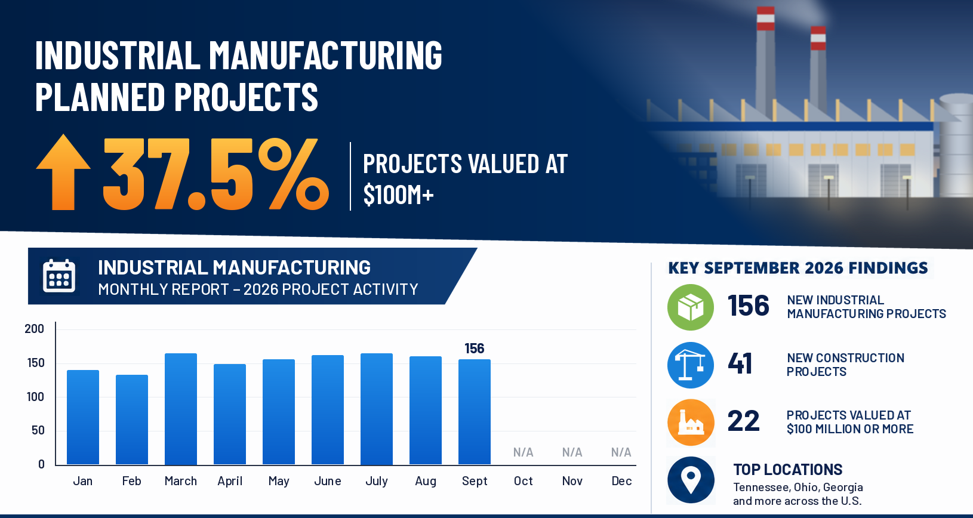
37.5% Growth in $100M New Industrial Planned Projects MoM for September 2026
-
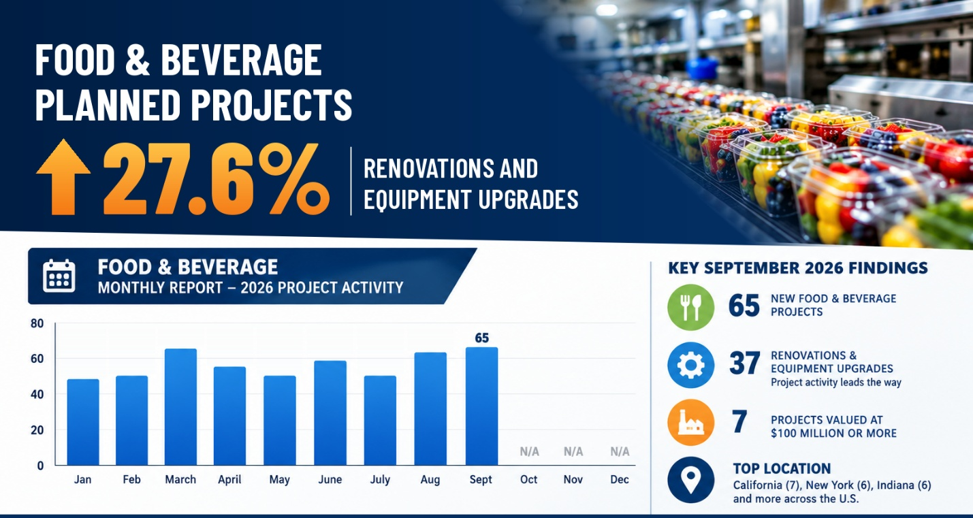
27.6% MoM Increase in Industrial Planned Projects for Renovations and Equipment Upgrades for September 2026
-
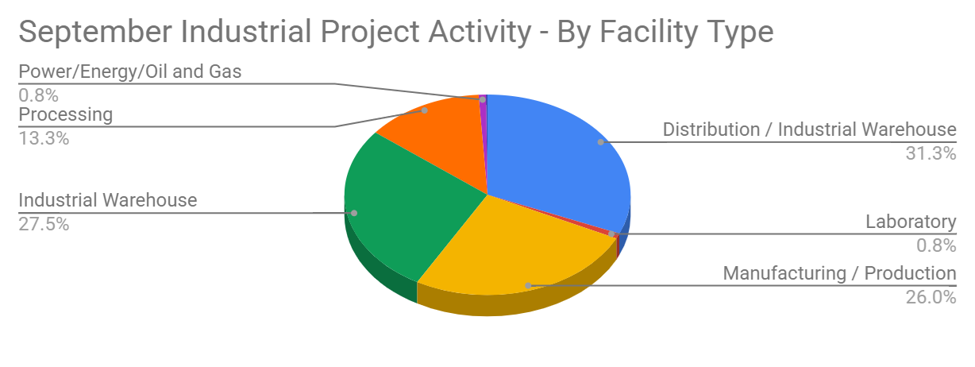
392 New Planned Industrial Projects Tracked in September 2026
-
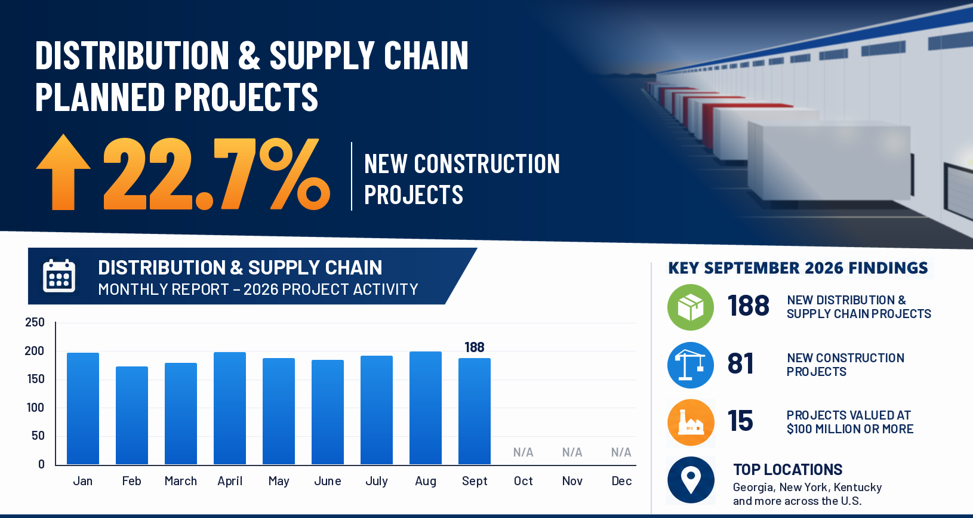
22.7% Increase in September 2026 for New Planned Distribution and Supply Chain Projects Over August 2026
