
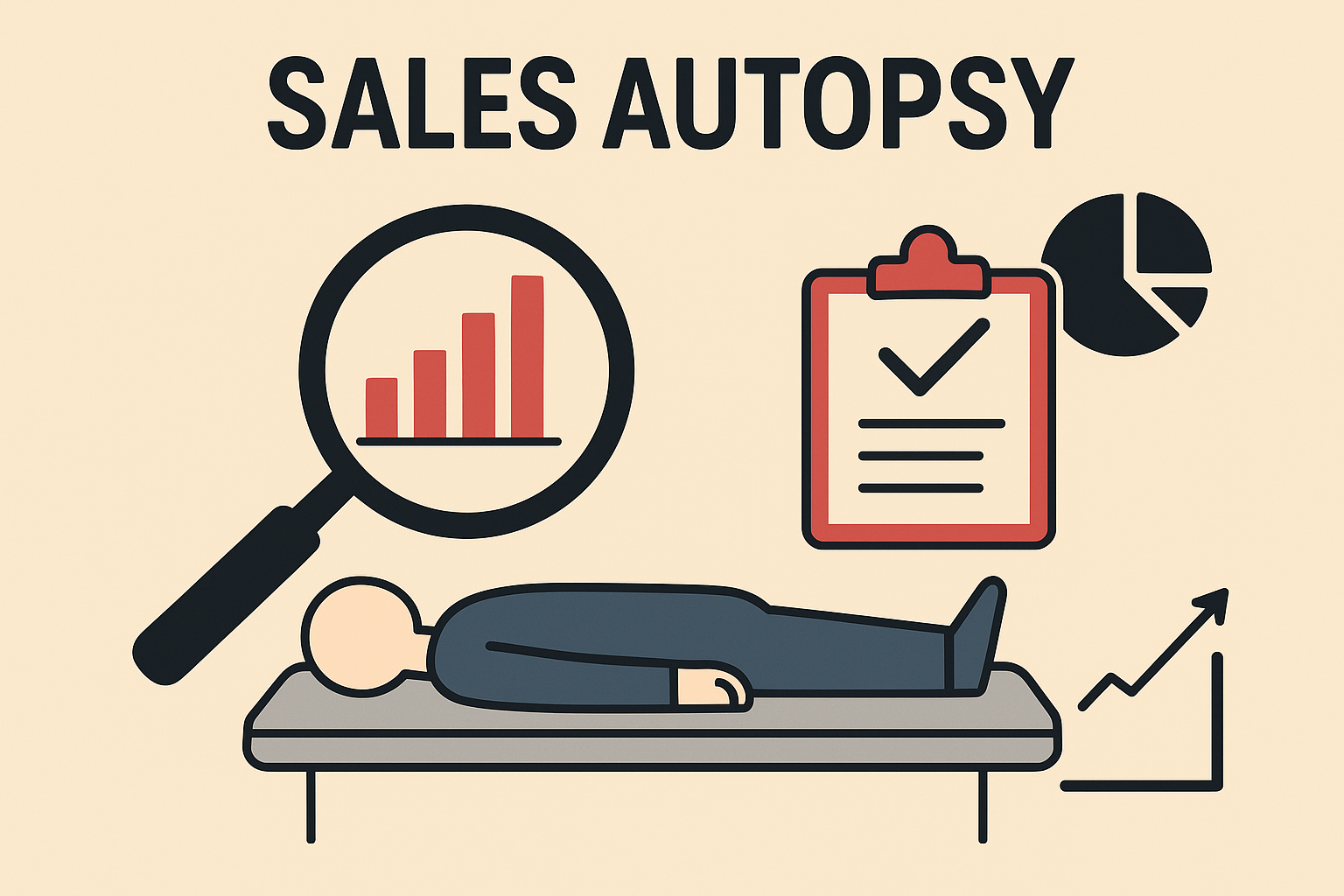
Industrial companies cannot win every sales opportunity, but every meaningful opportunity should produce useful information.
A lost deal may reveal a qualification problem, missing stakeholder, pricing issue, technical gap, weak value proposition, unrealistic timeline, competitive disadvantage, or breakdown in the sales process.
A won deal can be equally instructive. It may show that project timing, industry expertise, technical support, customer references, implementation planning, or early access to decision-makers made the difference.
Win-loss analysis turns those outcomes into evidence. Instead of treating every win as proof that the process works and every loss as bad luck, the sales team examines what happened, why it happened, and what should change.
Glossary: Win-loss analysis: Win-loss analysis is the structured review of won, lost, delayed, and abandoned sales opportunities to identify patterns in targeting, qualification, competition, pricing, technical fit, buyer behavior, and sales execution.
What Is an Industrial Sales Post-Mortem?
An industrial sales post-mortem is a focused review conducted after an opportunity reaches a meaningful outcome.
That outcome may be:
- closed won
- closed lost
- cancelled
- delayed indefinitely
- lost to no decision
- lost to an incumbent supplier
- lost during procurement
- disqualified after deeper evaluation
The purpose is not to assign blame. It is to reconstruct the opportunity using CRM records, buyer feedback, sales notes, emails, proposals, call recordings, activity history, and available competitive information.
A useful post-mortem should answer:
- Was this the right account?
- Was there a real business need?
- Were the correct stakeholders involved?
- Was the project properly qualified?
- Did the proposed solution fit?
- Was the value communicated clearly?
- What caused the outcome?
- What should the company repeat or change?
Glossary: Sales post-mortem: A sales post-mortem is a structured review of a completed opportunity used to understand the decisions, events, actions, and conditions that influenced the outcome.
FAQ: Should every industrial sales opportunity receive a post-mortem?
Not every minor inquiry requires a full review. Post-mortems are most valuable for strategic accounts, large opportunities, important losses, unexpected wins, repeated objections, stalled projects, and deals that reveal useful process or market information.
Why Win-Loss Analysis Matters
Improve Win Rates
Patterns across multiple deals can reveal where opportunities are repeatedly lost.
Examples include:
- price objections in one market segment
- missing technical capabilities
- late access to procurement
- weak executive sponsorship
- unrealistic close dates
- poor follow-up after proposals
- insufficient proof of value
- weak qualification
Once the pattern is visible, leadership can improve training, messaging, targeting, product strategy, or process design.
Improve Sales Efficiency
Win-loss analysis helps distinguish promising opportunities from expensive distractions.
The company may discover that certain account types:
- rarely convert
- require excessive customization
- produce low margins
- have unusually long procurement cycles
- lack meaningful urgency
- generate weak retention
This information can help sales teams focus resources where the likelihood and value of success are stronger.
Capture Competitive Intelligence
Lost opportunities may reveal why buyers choose competitors.
Relevant factors may include:
- price
- technical performance
- lead time
- service coverage
- existing relationships
- warranty terms
- implementation support
- brand familiarity
- contract flexibility
The goal is not to collect gossip. It is to understand which competitive differences matter to actual buyers.
Identify Product and Service Gaps
If multiple qualified buyers cite the same missing feature, capacity limit, integration problem, service gap, or geographic limitation, the issue may extend beyond sales technique.
Win-loss findings can inform:
- product development
- service expansion
- technical documentation
- implementation planning
- partner strategy
- pricing and packaging
Glossary: Competitive intelligence: Competitive intelligence is ethically gathered information about competing companies, offerings, pricing, positioning, strengths, weaknesses, and buyer perceptions.
Win-Loss Analysis Should Include Wins
Companies often examine losses more carefully than wins, but success can hide weak assumptions.
A deal may have been won because:
- the buyer faced an emergency
- the incumbent supplier failed
- the company had an existing relationship
- the buyer needed immediate capacity
- a salesperson had unusually strong access
- the company was the only qualified bidder
Those conditions may not be repeatable.
A win review should determine which factors came from disciplined execution and which came from unusual circumstances.
Ask:
- Why did the buyer choose us?
- Which proof mattered most?
- Who supported us internally?
- What concerns nearly stopped the deal?
- What did competitors do well?
- What should we repeat?
Glossary: Win review: A win review examines a successful opportunity to identify repeatable strengths, buyer priorities, effective actions, and unusual circumstances that influenced the result.
Start With Accurate Outcome Categories
Win-loss analysis becomes unreliable when every unsuccessful opportunity is marked simply as “lost.”
Useful outcome categories may include:
- lost on price
- lost on technical fit
- lost to competitor
- lost to incumbent supplier
- lost to no decision
- lost because funding was unavailable
- lost because timing changed
- lost because the project was cancelled
- lost because the account was unqualified
- lost because follow-up failed
- lost because procurement terms were unacceptable
The category should reflect the primary cause, not the easiest explanation.
“Price” is often selected when the deeper cause was unclear value, weak differentiation, an incomplete scope comparison, or poor qualification.
Glossary: Loss reason: A loss reason is the primary documented explanation for why a sales opportunity did not result in a purchase.
FAQ: Why are accurate loss reasons important?
Accurate loss reasons help companies identify repeatable patterns. Vague or convenient labels such as “price” can hide deeper problems involving value, qualification, timing, stakeholders, technical fit, or sales execution.
Collect Buyer Feedback Whenever Possible
Internal sales notes are useful, but they reflect the seller’s perspective.
A buyer interview may reveal:
- which criteria mattered most
- when the preferred vendor emerged
- which concerns were unresolved
- whether the proposal was clear
- how the seller compared with competitors
- what nearly changed the decision
- whether the sales process helped or hindered evaluation
The interview should be framed as a request for learning, not an attempt to reopen the sale.
Useful questions include:
- What originally caused you to evaluate a solution?
- Which decision criteria mattered most?
- How did our proposal compare with the alternatives?
- What did we do particularly well?
- Where did we create uncertainty?
- When did the decision begin leaning toward the selected option?
- What could we have done differently?
- Would you consider working with us on a future project?
When possible, someone other than the primary salesperson should conduct the interview. Buyers may speak more openly to a neutral interviewer.
Glossary: Win-loss interview: A win-loss interview is a structured conversation with a buyer used to understand the reasons, criteria, perceptions, and events that influenced a sales decision.
Review the Complete Deal Timeline
The final decision is often influenced by events that occurred weeks or months earlier.
Reconstruct the timeline using:
- first contact
- discovery meetings
- stakeholder introductions
- technical reviews
- proposal delivery
- pricing discussions
- follow-up activity
- procurement involvement
- changes in scope
- changes in close date
- customer engagement
Look for the moment when momentum changed.
Possible inflection points include:
- a key stakeholder stopped participating
- the buyer requested information that was never supplied
- a competitor introduced a stronger option
- the project lost funding
- the proposal changed scope
- follow-up slowed
- the buying committee added a new requirement
The inflection point may reveal a correctable process gap. It may also reveal an external event that the sales team could not control.
Glossary: Deal inflection point: A deal inflection point is the moment when an opportunity’s direction, momentum, probability, or buyer engagement changes significantly.
Separate Root Causes From Symptoms
The first stated reason may not be the root cause.
Examples:
- Symptom: The buyer chose a lower-priced competitor.
Possible root cause: The value difference was not established. - Symptom: The buyer stopped responding.
Possible root cause: The project lost priority or the salesperson never reached the decision-maker. - Symptom: The project was delayed.
Possible root cause: Funding was never approved. - Symptom: The proposal was rejected.
Possible root cause: Discovery failed to identify a technical requirement.
A useful method is to ask “why?” several times until the team reaches a cause that can be addressed.
Glossary: Root-cause analysis: Root-cause analysis is the process of identifying the underlying reason a problem occurred rather than stopping at the most visible symptom.
Segment the Analysis
An overall win rate can hide important differences.
Segment results by:
- industry
- region
- company size
- deal value
- product or service
- project type
- lead source
- new versus existing customer
- salesperson
- sales-cycle length
- competitor
- pipeline stage
Segmentation may reveal that:
- one industry converts well but takes longer
- one region produces many leads but few wins
- larger deals fail during procurement
- one lead source creates faster opportunities
- existing customers close at a much higher rate
- one service loses repeatedly on technical fit
The objective is not to segment every possible variable indefinitely. Start with the factors most likely to influence the result.
Glossary: Sales segmentation: Sales segmentation is the process of grouping opportunities by shared characteristics so differences in performance, behavior, and outcomes can be analyzed.
Review Qualification Quality
Many lost deals were never strong opportunities.
Review whether the opportunity had:
- a defined business problem
- credible urgency
- technical fit
- access to decision-makers
- realistic timing
- budget or a path to funding
- a known decision process
- a reason to change
If these conditions were missing, the loss may reflect weak qualification rather than weak closing.
This distinction matters because the corrective action is different.
Glossary: Opportunity qualification: Opportunity qualification is the process of determining whether a sales opportunity has sufficient fit, need, timing, authority, funding, and potential value to justify active pursuit.
Analyze Stakeholder Coverage
Industrial sales often involve engineers, plant managers, operations leaders, procurement, finance, safety teams, maintenance personnel, and executives.
Review:
- Which stakeholders were identified?
- Which roles were missing?
- Who supported the solution?
- Who opposed it?
- Who had final authority?
- Who introduced new requirements?
- Did the team rely too heavily on one contact?
A salesperson may have a strong relationship with a technical champion while lacking access to finance or procurement.
Glossary: Stakeholder coverage: Stakeholder coverage describes how completely the sales team has identified and engaged the people who influence, evaluate, approve, purchase, implement, or use the solution.
Review the Value Proposition
Evaluate whether the buyer understood the business value of the proposed solution.
Did the sales team connect the offering to:
- production capacity
- downtime reduction
- labor efficiency
- maintenance costs
- safety
- quality
- compliance
- energy use
- implementation risk
- return on investment
If the proposal focused mainly on features, the buyer may have lacked a compelling reason to select the company or approve the expense.
Glossary: Value proposition: A value proposition explains why a buyer should choose a particular solution and how it addresses important operational, financial, technical, or strategic priorities.
Examine Pricing and Commercial Terms
When price influenced the outcome, examine the complete commercial picture.
Review:
- whether competing proposals covered the same scope
- total cost of ownership
- payment terms
- discounting
- warranty
- service commitments
- delivery timing
- implementation responsibilities
- contract terms
A loss to price may reflect a true cost disadvantage. It may also reflect poor differentiation or an incomplete comparison.
Review Technical Fit and Implementation Risk
Industrial buyers may reject a solution because of:
- capacity limitations
- integration issues
- materials
- dimensions
- safety requirements
- software compatibility
- environmental conditions
- service limitations
- implementation risk
- lead time
Determine whether the issue was:
- a genuine limitation
- a misunderstanding
- missing documentation
- late technical involvement
- an unaddressed buyer concern
Measure Sales Execution
The review should examine observable actions rather than personalities.
Relevant questions include:
- Was discovery complete?
- Were next steps documented?
- Was follow-up timely?
- Were stakeholders mapped?
- Did the salesperson provide relevant proof?
- Was the CRM current?
- Was the proposal reviewed with the buyer?
- Were objections clarified?
- Did leadership become involved when appropriate?
The purpose is coaching and process improvement, not a public trial with fluorescent lighting.
Glossary: Sales execution: Sales execution is the quality and consistency with which salespeople perform prospecting, qualification, discovery, follow-up, stakeholder management, proposal development, negotiation, and closing activities.
FAQ: How can win-loss analysis improve sales coaching?
It gives managers specific examples of discovery quality, stakeholder coverage, follow-up, qualification, proposal strategy, and objection handling, allowing coaching to focus on observable behavior rather than vague criticism.
Build a Standard Win-Loss Scorecard
A consistent scorecard makes results easier to compare.
Possible fields include:
- account
- industry
- deal value
- project type
- lead source
- sales-cycle length
- outcome
- primary loss or win reason
- competitor
- decision criteria
- stakeholders
- technical fit
- pricing position
- implementation concerns
- inflection point
- lesson learned
- recommended action
Keep the scorecard detailed enough to be useful but simple enough that teams will actually complete it.
Glossary: Win-loss scorecard: A win-loss scorecard is a standardized record used to compare the characteristics, decisions, actions, and causes associated with completed opportunities.
Track Win-Loss Data in the CRM
The CRM should capture more than “won” or “lost.”
Useful fields include:
- primary outcome reason
- secondary outcome reason
- competitor selected
- no-decision reason
- technical gap
- pricing concern
- stakeholders involved
- project status
- buyer interview completed
- lesson learned
Standardized fields allow leadership to analyze patterns over time without rereading every opportunity note.
Look Beyond One Quarter
A single quarter may be distorted by:
- one unusually large deal
- temporary market conditions
- a product launch
- a new salesperson
- a competitor disruption
- seasonality
Quarterly reviews are useful for current action, but longer periods help identify durable patterns.
Depending on sales volume and cycle length, companies may review six months, twelve months, or multiple years.
The timeframe should contain enough comparable opportunities to support meaningful conclusions.
Do Not Confuse Correlation With Cause
A pattern does not automatically explain why the pattern exists.
For example:
- larger deals may have lower win rates because they involve more competition
- one region may convert poorly because lead quality is weaker
- one salesperson may have a lower win rate because they handle more difficult accounts
Use quantitative data to find the pattern, then interviews and deal reviews to understand the cause.
Glossary: Correlation: Correlation is a relationship between two variables that does not necessarily prove that one variable caused the other.
Turn Findings Into Action
A win-loss report that produces no change is only decorative analysis.
Possible actions include:
- revise qualification criteria
- improve proposal templates
- create new case studies
- develop competitive comparison tools
- improve technical documentation
- change pricing or packaging
- train salespeople on stakeholder mapping
- adjust the Ideal Customer Profile
- improve CRM fields
- change product priorities
Each recommended action should have:
- an owner
- a deadline
- a success measure
- a review date
FAQ: How often should industrial companies conduct win-loss analysis?
Strategic deals can be reviewed individually, while broader patterns should be reviewed quarterly or semiannually. Companies with long sales cycles may need twelve months or more of data to identify reliable trends.
Apply Win Patterns to Future Targeting
Win-loss analysis can help clarify which companies, projects, and buyer situations are most promising.
Useful patterns may include:
- industries with stronger conversion
- facility types with urgent needs
- project stages associated with better timing
- account sizes with stronger profitability
- buyer roles that become effective champions
- technical requirements the company serves well
- lead sources that produce qualified opportunities
Those findings can refine the Ideal Customer Profile and future prospecting strategy.
Through Prospecting Services, Industrial SalesLeads can help define target accounts, identify relevant contacts, conduct outreach, qualify interest, and schedule appointments.
Through Industrial Market Intelligence, sales teams can identify companies planning construction, expansion, relocation, modernization, equipment upgrades, and other industrial investments.
Win-loss analysis explains which opportunities tend to succeed. Market intelligence and prospecting help find more accounts with those characteristics.
How Industrial SalesLeads Can Help
Industrial SalesLeads helps companies apply sales insights to new pipeline development.
Industrial Market Intelligence provides information about planned industrial projects, facility activity, project timing, companies, and contacts.
Prospecting Services can help:
- define target markets
- identify decision-makers
- verify contact information
- conduct outreach
- qualify interest
- schedule sales appointments
Contact Industrial SalesLeads to discuss how project intelligence and targeted prospecting can help your team pursue more opportunities that resemble its strongest wins.
Final Thoughts
Industrial win-loss analysis should not be a blame exercise or a ceremonial spreadsheet completed at the end of the quarter.
It should help the company understand its buyers, competitors, process, strengths, and weaknesses more clearly.
Review the outcome. Interview the buyer when possible. Reconstruct the timeline. Identify the root cause. Segment the results. Then turn the findings into specific changes.
A lost deal may not become revenue, but it should still become intelligence.
Applying Wins to New Customers
Now that you have some basic analysis done, you can extend it to understand the patterns of the ‘who’ wins and ‘why’. Industrial SalesLeads can help with that and other key information. This information can be applied to help find new business that has those similar traits. Take a look at our Prospecting Services, and you’ll understand how to improve industrial sales for your company.
Want a predictable flow of qualified leads?
Let’s talk about how we can build it for you.
Latest Posts
-
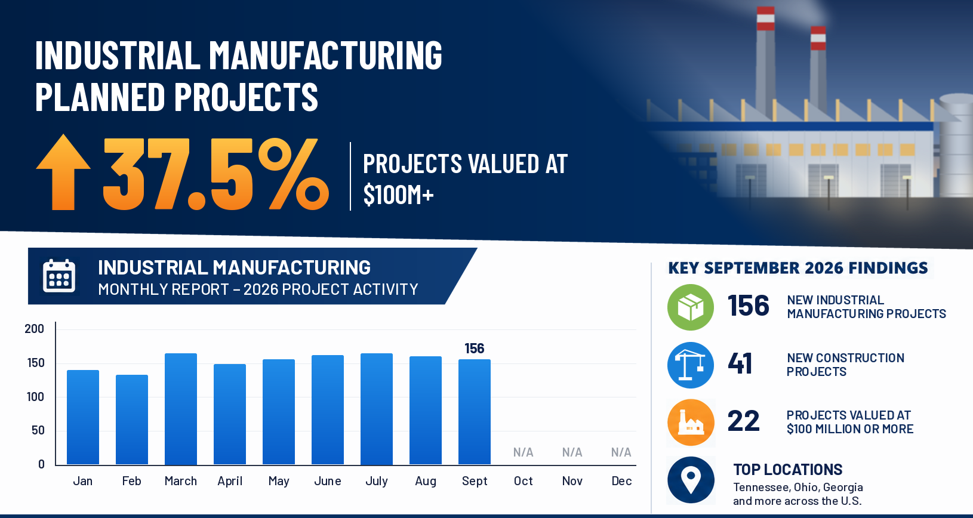
37.5% Growth in $100M New Industrial Planned Projects MoM for September 2026
-
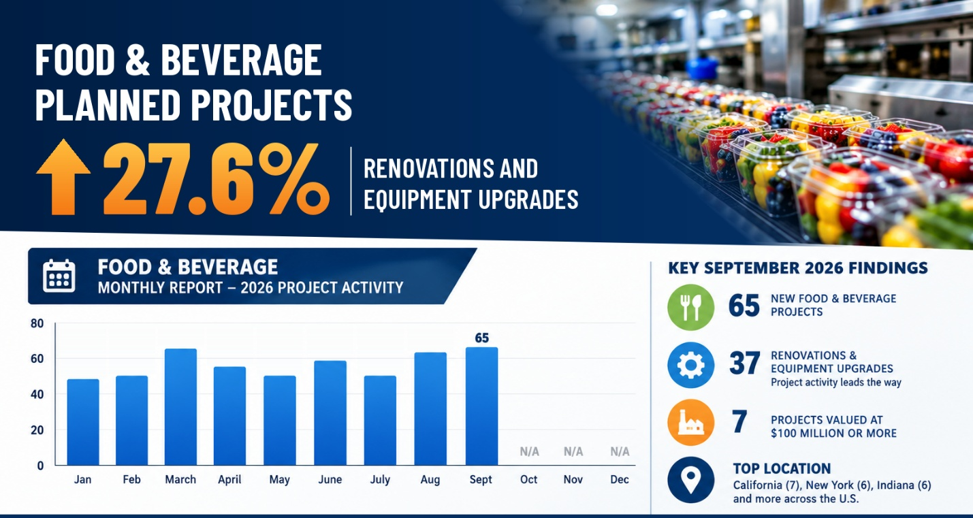
27.6% MoM Increase in Industrial Planned Projects for Renovations and Equipment Upgrades for September 2026
-
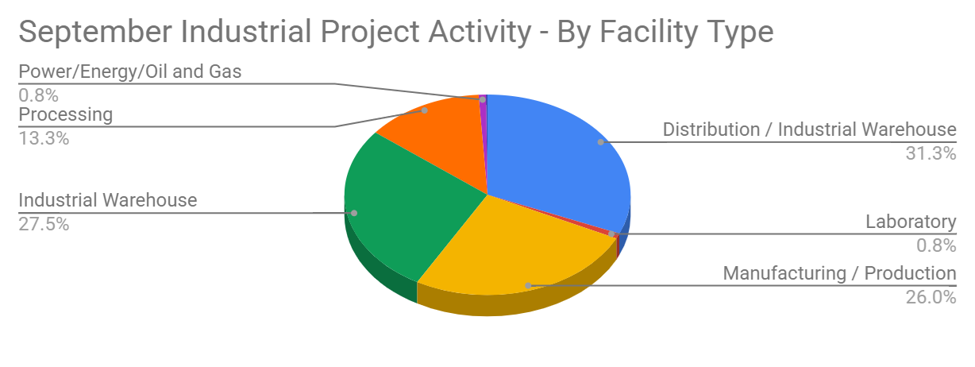
392 New Planned Industrial Projects Tracked in September 2026
-
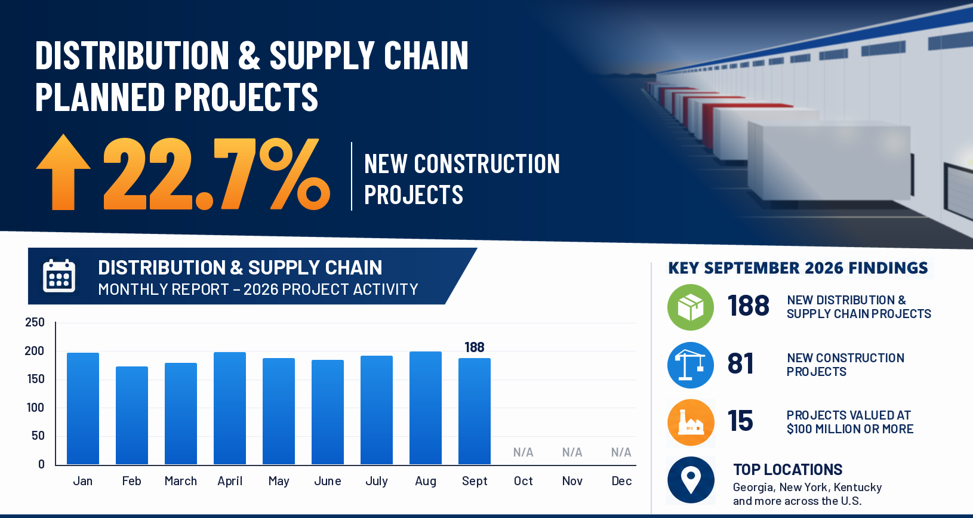
22.7% Increase in September 2026 for New Planned Distribution and Supply Chain Projects Over August 2026
