

Industrial business development is about more than chasing short-term sales activity. It focuses on creating long-term value through new markets, strategic partnerships, qualified opportunities, project intelligence, customer relationships, and stronger pipeline growth.
That kind of work can be harder to measure than traditional sales activity. A sales team may track calls, quotes, proposals, and closed deals. Business development often involves earlier-stage work, including relationship building, market research, channel development, lead qualification, and identifying opportunities before competitors are aware of them.
That is why Key Performance Indicators, or KPIs, are essential. The right KPIs help industrial companies measure progress, evaluate lead quality, improve accountability, and connect business development activity to strategic growth goals.
What KPIs Mean in Industrial Business Development
KPIs are measurable indicators that show whether a team is making progress toward an important business objective. In industrial business development, KPIs can help companies understand whether sales and marketing activity is producing meaningful pipeline, better opportunities, stronger relationships, and profitable growth.
Industrial business development KPIs may track:
-
qualified leads
-
sales pipeline value
-
opportunity conversion rates
-
new market activity
-
strategic partnerships
-
account engagement
-
project opportunities
-
sales cycle progress
-
customer acquisition cost
-
customer lifetime value
-
revenue from new segments
-
lead source performance
The goal is not to measure everything. The goal is to measure the right things.
Glossary: Key Performance Indicator: A Key Performance Indicator, or KPI, is a measurable value used to evaluate progress toward a specific business goal, such as pipeline growth, lead quality, revenue, market expansion, or sales efficiency.
Why KPIs Matter for Industrial Growth
KPIs give business development teams a clearer way to decide what is working and what needs improvement. Without them, teams may rely too heavily on instinct, anecdotal feedback, or activity volume.
For example, a team may generate many leads, but if few become qualified opportunities, the lead volume is not necessarily useful. Another team may generate fewer leads but produce stronger opportunities with higher close rates and better long-term value.
KPIs help clarify that difference.
Strong KPI tracking can help industrial companies:
-
make better decisions
-
improve accountability
-
prioritize high-value opportunities
-
identify weak points in the pipeline
-
evaluate marketing and sales channels
-
measure new market progress
-
track partnership performance
-
improve forecasting
-
focus business development resources
FAQ: Why are KPIs important in industrial business development?
KPIs are important because industrial business development often involves long sales cycles, complex buying processes, and early-stage opportunity development. KPIs help teams measure progress, evaluate quality, improve accountability, and align activity with strategic growth goals.
Benefits of KPIs for Business Development
KPIs act like a compass for business development teams. They help show whether the team is moving toward valuable opportunities or simply staying busy.
Accountability and Transparency
Clear KPIs create accountability because team members understand what success looks like. Instead of vague expectations, teams can track defined goals such as qualified opportunities created, pipeline value generated, target accounts engaged, or new market milestones reached.
This also improves transparency for leadership. Managers can see where progress is happening, where support is needed, and whether business development activity is contributing to growth.
Better Decision-Making
KPIs support data-driven decisions. If certain industries, regions, campaigns, or lead sources produce stronger opportunities, teams can invest more attention there. If a channel produces activity but not qualified pipeline, teams can adjust or stop wasting effort.
Continuous Improvement
KPIs also create a feedback loop. By monitoring results consistently, business development teams can test new outreach strategies, improve qualification criteria, refine target markets, and optimize sales processes over time.
Glossary: Sales pipeline: A sales pipeline is the organized view of potential sales opportunities as they move from early prospecting and qualification toward active proposals, negotiations, and closed business.
Selecting the Best KPIs
Selecting the right KPIs depends on the company’s strategic priorities. A company entering a new market may need different KPIs than a company improving lead quality, expanding partnerships, or increasing revenue from existing accounts.
Good KPIs should be:
-
measurable
-
relevant
-
tied to business goals
-
easy to understand
-
reviewed consistently
-
useful for decision-making
-
connected to sales or revenue outcomes
Industrial companies should avoid choosing KPIs only because they are easy to count. Activity metrics can be useful, but only when connected to quality and outcomes.
Pipeline and Opportunity Development KPIs
Pipeline and opportunity development KPIs help industrial companies understand whether business development activity is creating real sales potential.
Useful KPIs may include:
-
number of qualified leads
-
qualified lead conversion rate
-
sales-qualified opportunities created
-
total pipeline value
-
pipeline value by industry
-
pipeline value by region
-
opportunity-to-close rate
-
average deal size
-
sales cycle length
-
lead source conversion rate
For industrial companies, pipeline quality matters as much as pipeline size. A large pipeline full of poor-fit accounts can waste sales time. A smaller pipeline with stronger fit, better timing, and clearer project context may be more valuable.
Glossary: Qualified lead: A qualified lead is a prospect that matches the company’s target market and shows signs of fit, need, timing, authority, budget, or relevant business activity.
FAQ: What KPIs should industrial sales teams track?
Industrial sales teams should track KPIs such as qualified leads, pipeline value, opportunity conversion rate, sales cycle length, lead source quality, average deal size, customer acquisition cost, customer lifetime value, and revenue from target markets.
Partnership Management KPIs
Strategic partnerships can be important in industrial business development. Partners may include distributors, manufacturers’ representatives, contractors, engineering firms, technology providers, industry associations, or channel partners.
Partnership KPIs may include:
-
number of new strategic partners
-
partner-generated leads
-
partner-generated revenue
-
partner engagement score
-
referral volume
-
referral conversion rate
-
joint opportunities created
-
revenue by partner type
-
partner retention
-
co-marketing activity
These KPIs help companies understand whether partnerships are producing real business value or simply existing on paper.
Market Expansion KPIs
Market expansion KPIs help companies measure progress in new regions, industries, applications, or customer segments.
Examples include:
-
revenue from new markets
-
qualified leads from new segments
-
target account engagement
-
market entry milestones
-
new industry pipeline value
-
geographic pipeline growth
-
first meetings with target accounts
-
first proposals in a new market
-
first closed deals in a new segment
These KPIs are especially useful when business development is focused on long-term growth rather than immediate sales quotas.
Glossary: Market expansion: Market expansion is the process of growing into new regions, industries, applications, customer segments, or product/service categories.
Financial and Efficiency KPIs
Business development should ultimately support profitable growth. Financial and efficiency KPIs help connect activity to business outcomes.
Common financial KPIs include:
-
Customer Acquisition Cost
-
Customer Lifetime Value
-
revenue from new accounts
-
gross margin by account type
-
cost per qualified lead
-
cost per opportunity
-
revenue per lead source
-
marketing-sourced pipeline
-
sales-sourced pipeline
-
return on investment
These metrics help leadership understand whether business development spending is producing enough value.
Glossary: Customer Acquisition Cost: Customer Acquisition Cost, or CAC, is the total cost of acquiring a new customer, including sales, marketing, technology, labor, and campaign expenses.
Glossary: Customer Lifetime Value
Customer Lifetime Value, or CLV, is the estimated total revenue or profit a customer may generate over the full duration of the business relationship.
Common KPI Downfalls
KPIs are useful only when they are chosen and reviewed properly. Poor KPI selection can create confusion, false confidence, or bad incentives.
Inconsistent Monitoring
KPI tracking needs a consistent review process. If metrics are checked irregularly, the team may miss trends, delays, pipeline problems, or performance changes.
A monthly or quarterly KPI review can help keep business development aligned with goals.
Overly Complex KPI Selection
Some teams choose too many KPIs or create metrics that are too complicated to use. When KPIs become confusing, teams may ignore them or focus on the wrong behaviors.
A better approach is to select a smaller group of KPIs tied directly to business outcomes.
Measuring Activity Instead of Quality
Activity metrics such as calls, emails, meetings, or form fills can be useful, but they do not tell the whole story. Industrial companies should also measure quality, fit, timing, and pipeline outcomes.
A team can be very busy and still fail to create valuable opportunities.
FAQ: What are common mistakes when choosing business development KPIs?
Common mistakes include tracking too many KPIs, measuring activity without quality, reviewing metrics inconsistently, choosing KPIs that do not connect to business goals, and ignoring whether leads become real opportunities.
Using KPIs to Improve Industrial Business Development
The best KPI programs do more than report numbers. They help teams improve performance.
If qualified lead volume is low, the team may need better targeting, stronger content, improved prospecting, or more accurate market intelligence. If pipeline value is high but close rates are low, the team may need better qualification. If customer acquisition cost is rising, leadership may need to review channel performance and lead quality.
Industrial market intelligence can make KPI tracking more useful by connecting business development activity to real project opportunities. Instead of tracking generic leads, companies can track opportunities tied to facility expansions, equipment upgrades, relocations, maintenance shutdowns, new construction, or modernization projects.
How Industrial SalesLeads Can Help
Industrial SalesLeads helps industrial companies improve business development performance by providing industrial market intelligence, project reports, prospecting support, and lead generation services.
For teams tracking KPIs such as qualified leads, pipeline value, lead source quality, project opportunities, and new market growth, Industrial SalesLeads can help identify companies with planned projects and relevant sales triggers.
These project-based opportunities can give sales teams a stronger starting point because the prospect may already be planning construction, expansion, relocation, modernization, or equipment investment.
If your KPIs need improvement, Industrial SalesLeads can help your team identify better-fit industrial sales leads and move more qualified opportunities into the sales cycle.
Final Thoughts
KPIs are essential in industrial business development because they turn long-term growth activity into measurable progress.
The right KPIs help companies evaluate pipeline health, lead quality, market expansion, partnership performance, sales efficiency, and strategic growth. They also help teams improve over time by showing what is working, what is not, and where resources should be focused.
For industrial companies that want stronger business development performance, KPI tracking should be connected to real opportunities, qualified leads, and measurable pipeline growth.
Using KPIs to Benefit Your Business
One of the best ways to measure success is with KPIs. If you know your KPIs need improving especially on business development, contact Industrial SalesLeads. You can start with our Industrial Market Intelligence, to help identify industrial sales leads that have identified projects. These projects are ready to be called and into the sales cycle. Contact us today to begin moving your KPIs to a place of profitability.
Want a predictable flow of qualified leads?
Let’s talk about how we can build it for you.
Latest Posts
-
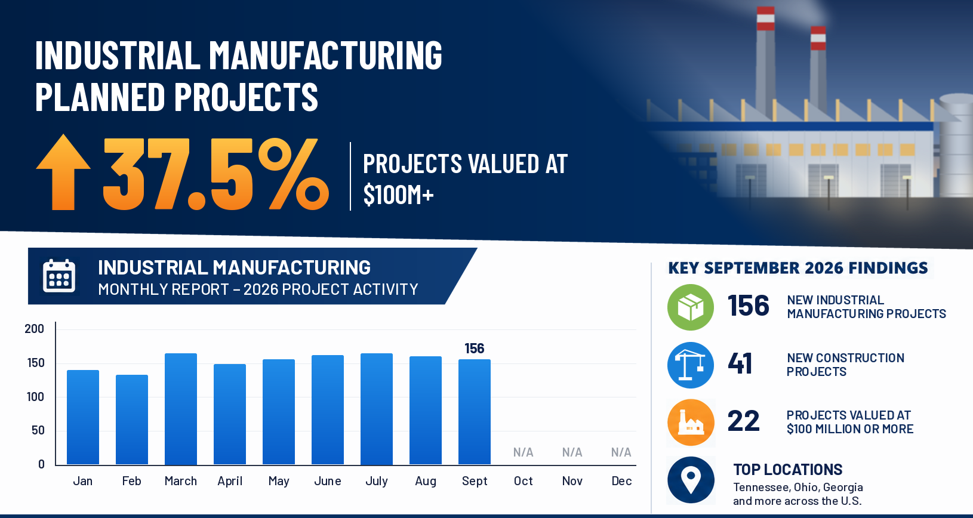
37.5% Growth in $100M New Industrial Planned Projects MoM for September 2026
-
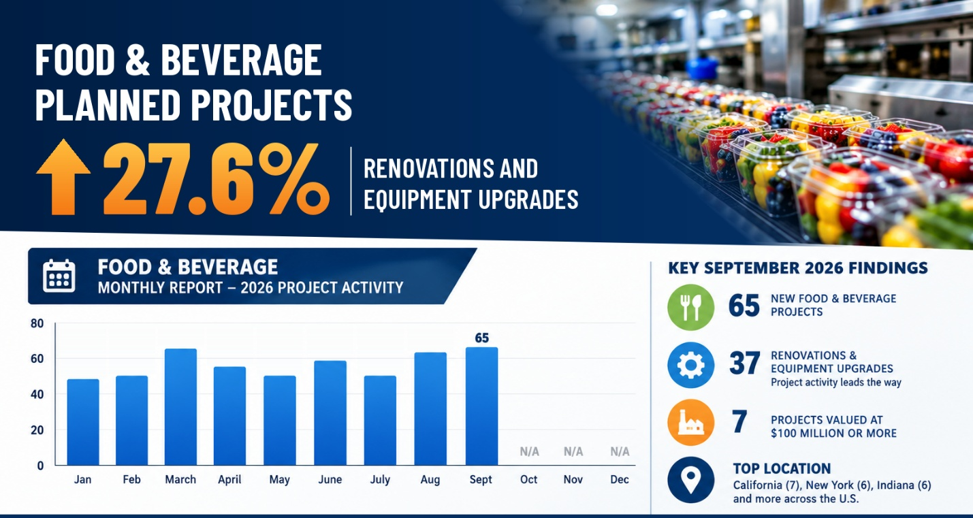
27.6% MoM Increase in Industrial Planned Projects for Renovations and Equipment Upgrades for September 2026
-
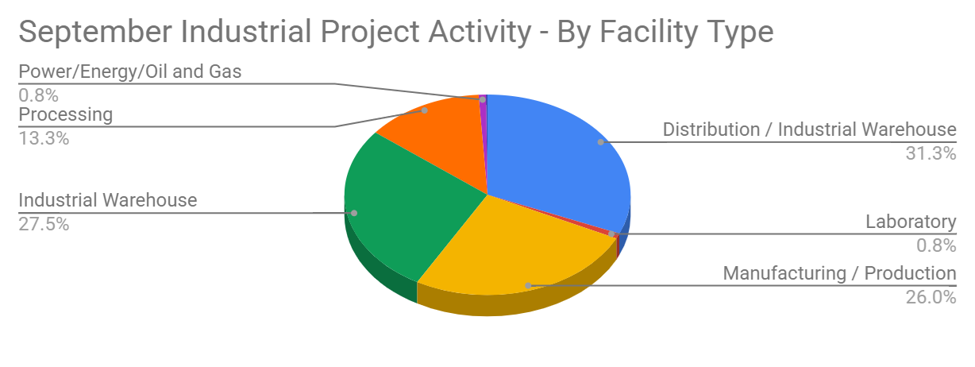
392 New Planned Industrial Projects Tracked in September 2026
-
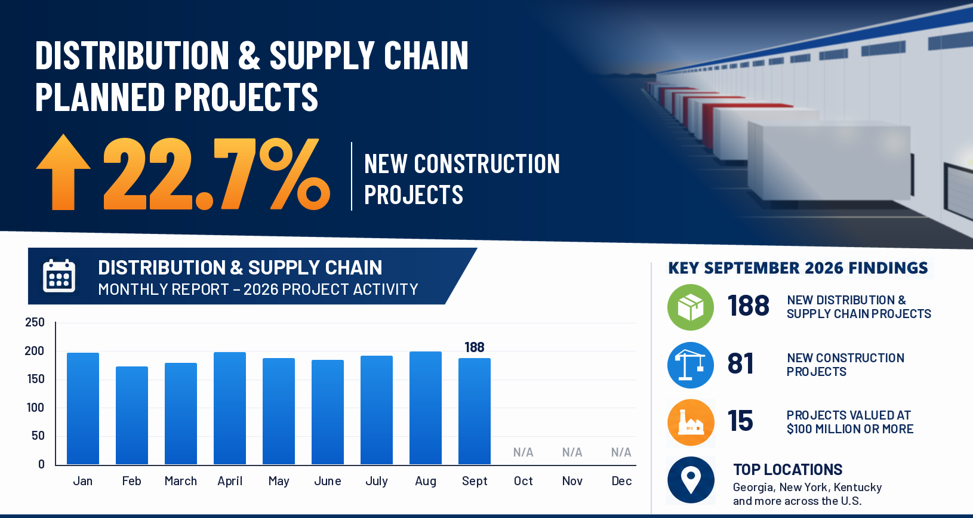
22.7% Increase in September 2026 for New Planned Distribution and Supply Chain Projects Over August 2026
