

Every experienced industrial seller knows the moment: a plant manager, procurement lead, or engineering director starts talking, really talking, and the conversation shifts from a pitch into a partnership. That shift almost never happens by accident. That's why we want to know how great industrial sales questions win deals.
Industrial sales questions are more than a way to gather information. They're the mechanism through which sellers build trust, surface unspoken needs on the plant floor or in the supply chain, reframe how buyers see their own operational problems, and ultimately guide a capital purchase or vendor decision forward. The best industrial sellers don't rely on a single killer question, they move through a sequence, starting broad and personal, then narrowing toward business impact, uptime, throughput, and, eventually, commitment.
Two Basic Tools: Open and Closed Questions
Before diving into specific industrial sales questions, it helps to understand the two fundamental types.
Open-ended questions have no fixed answer. They invite buyers whether that's an operations manager, a maintenance supervisor, or a purchasing director, to talk at length, revealing what's on their mind. These break down further into broad questions ("What's going on with your production line these days?") that simply get someone talking, and specific questions that dig into a particular area a buyer has already hinted at. Specific questions are especially valuable because they can expose needs the buyer hasn't consciously articulated yet, sometimes a buyer will realize mid-answer that a bottleneck or maintenance issue exists they hadn't previously named.
Closed-ended questions, by contrast, invite a yes or no. In industrial sales they get an undeserved reputation as amateur tools, but used well they're excellent for diagnosis. A crisp yes-or-no question can force a buyer to take a real position on a spec, a timeline, or a budget, and whichever way they answer, a natural follow-up opens the door to elaboration.
The skill isn't picking one type over the other, it's knowing when each serves the conversation.
Start with Genuine Rapport
Buyers on the industrial side plant managers, engineers, procurement teams — won't open up about real operational problems until they trust the person asking. That trust starts with authentic rapport, not small talk for its own sake. Asking about someone's weekend, their career path before the current role on the floor, or what they're planning for retirement isn't filler it reveals what a person actually values, and it signals that the industrial seller is curious about them as a human being, not just as a revenue target.
Rapport questions work best when they're specific to something the seller has actually noticed a comment made during a previous plant walkthrough, something visible on the shop floor, a detail about the company's safety culture or shift schedule. Generic rapport-building reads as scripted; noticing something real and asking about it reads as genuine interest.
Uncover Both Pain and Ambition
Conventional industrial sales training obsesses over "pain points," pushing sellers to diagnose what's broken downtime, scrap rates, a failing piece of equipment and pitch the fix. That's only half the picture. The strongest industrial sales conversations balance afflictions (what's not working on the line) with aspirations (what the buyer is hoping to achieve, whether that's higher throughput, tighter tolerances, or a safer plant).
Asking only about problems can make a conversation feel negative and transactional; asking about goals and possibilities alongside the problems creates a more complete, more energizing dialogue.
Useful questions here include asking what's holding a buyer back from a production or efficiency goal, what they've already tried that didn't work, and, critically, what would make a meeting or conversation worthwhile in the buyer's own words. That last question is powerful because it hands control of the agenda to the buyer while still keeping the conversation focused.
Make the Impact Concrete
Industrial buyers rarely act on vague possibilities. They act when the cost of inaction a line down, a missed shipment, a failed audit or the reward of action becomes specific and personal. This is where impact questions come in: asking a buyer to calculate, out loud, what solving a problem would mean for revenue, competitiveness, plant uptime, or their own standing inside the company.
There's a subtle but important distinction between telling a buyer what a solution is worth and getting the buyer to work out that value themselves. When a buyer does the math on cost-per-hour of downtime or scrap reduction, the number becomes theirs and something people calculate themselves feels far more real and urgent than a number they were simply told. Questions like "What would happen to your company's financial position if this were solved?" or "What happens if you don't move forward with this equipment upgrade?" push buyers to internalize both the upside and the risk of standing still.
Paint the Picture of What's Different
Once a buyer has articulated pain and impact, the next job is helping them see, specifically, what a new reality looks like on the plant floor. This is where "magic wand" style questions shine: asking a buyer to imagine three years down the road, or to describe what success looks like for them personally, for their maintenance or production team, and for the business as a whole.
This matters because people ultimately buy on emotion and justify with logic, even in heavy industrial and manufacturing sales. A buyer who can vividly describe a better-running operation, and who feels some personal stake in reaching it, is far more likely to champion a purchase internally than one who's only seen a spec sheet.
Use Questions to Shift Perspective
Some of the most valuable industrial sales questions aren't about gathering information at all they're about changing how a buyer thinks. This is often called insight selling, and it depends on questions that gently challenge assumptions: "Why is that your maintenance strategy?" "Have you considered another approach to sourcing this component, and if not, why not?" "What do you think is missing from your current process?"
These questions work because they ask buyers to justify a belief or a plan. Sometimes buyers have a strong answer, and that's useful information too. Often, though, the act of trying to justify a decision reveals gaps in reasoning precisely the opening an industrial seller needs to introduce new information or a different way of framing the problem.
Keep the Conversation Moving with Simple Follow-Ups
It's easy to overcomplicate industrial sales questioning. In reality, a handful of simple follow-up prompts "How so?" "Can you tell me more about that?" "Why?" can unlock more detail than almost any elaborately worded question. These work precisely because they're unobtrusive; they invite the buyer to keep talking without redirecting the conversation.
Stay Aligned on Process and Perception
Finally, no industrial sales conversation succeeds on questions and content alone. Sellers also need clarity on the practical mechanics of the deal: who else needs to sign off, engineering, procurement, plant management to move forward, whether the seller's summary of the conversation matches the buyer's understanding, and how the buyer is feeling about progress at any given moment. Checking in on perception regularly "Is there anything about our process that gives you pause?" surfaces hidden objections before they can quietly kill a deal.
Ask Thoughtful Questions
None of this means an industrial seller should only ask questions. The most effective industrial sales conversations is asking thoughtful questions, then following up with real technical expertise, ideas, and guidance. Ask too many questions without offering value in return, and buyers start to feel interrogated rather than helped.
Used well, though, a well-sequenced set of industrial sales questions does something a product pitch never can: it lets buyers discover their own reasons to act, articulate their own vision of a better-running operation, and arrive at a decision that feels like their own. That's what separates industrial sellers who close deals from those who merely present.
Getting the Right Conversations Started
Of course, even the best industrial sales questions only matter once you're in front of the right buyer. That's where a dedicated prospecting partner can make a real difference. Industrial SalesLeads' Prospecting Services focus on identifying key decision-makers within industrial and manufacturing companies, engaging them through phone, email, and social outreach, nurturing the ones who aren't yet ready to talk, and handing industrial sales teams a qualified prospect with a meeting already on the calendar. For sellers who've sharpened their questioning technique, a steady pipeline of well-matched, ready-to-engage industrial buyers is what turns great conversations into a repeatable, high-growth industrial sales engine.
Are you ready to learn how great industrial sales questions win deals with our Prospecting Services? Contact us today!
Want a predictable flow of qualified leads?
Let’s talk about how we can build it for you.
Latest Posts
-
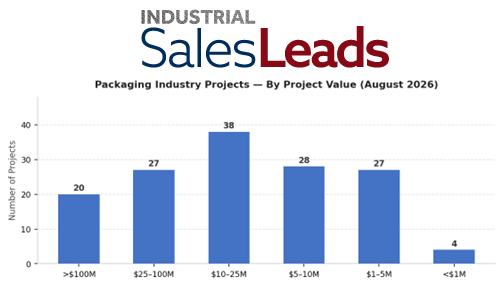
184 New Packaging Industry Projects Drive $17B+ Capital Pipeline in August 2026
-
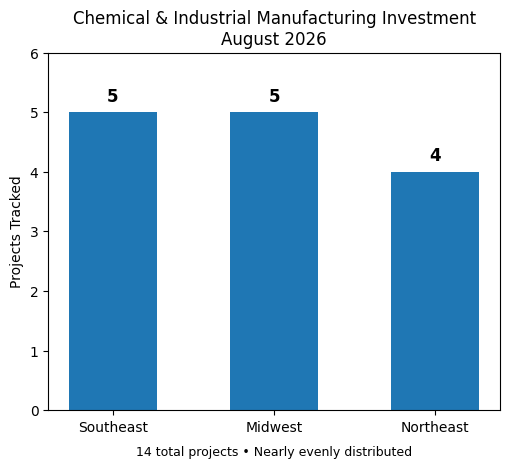
Chemical & Industrial Manufacturing Investment Spans Southeast, Midwest and Northeast in August 2026, with 14 Projects Tracked
-
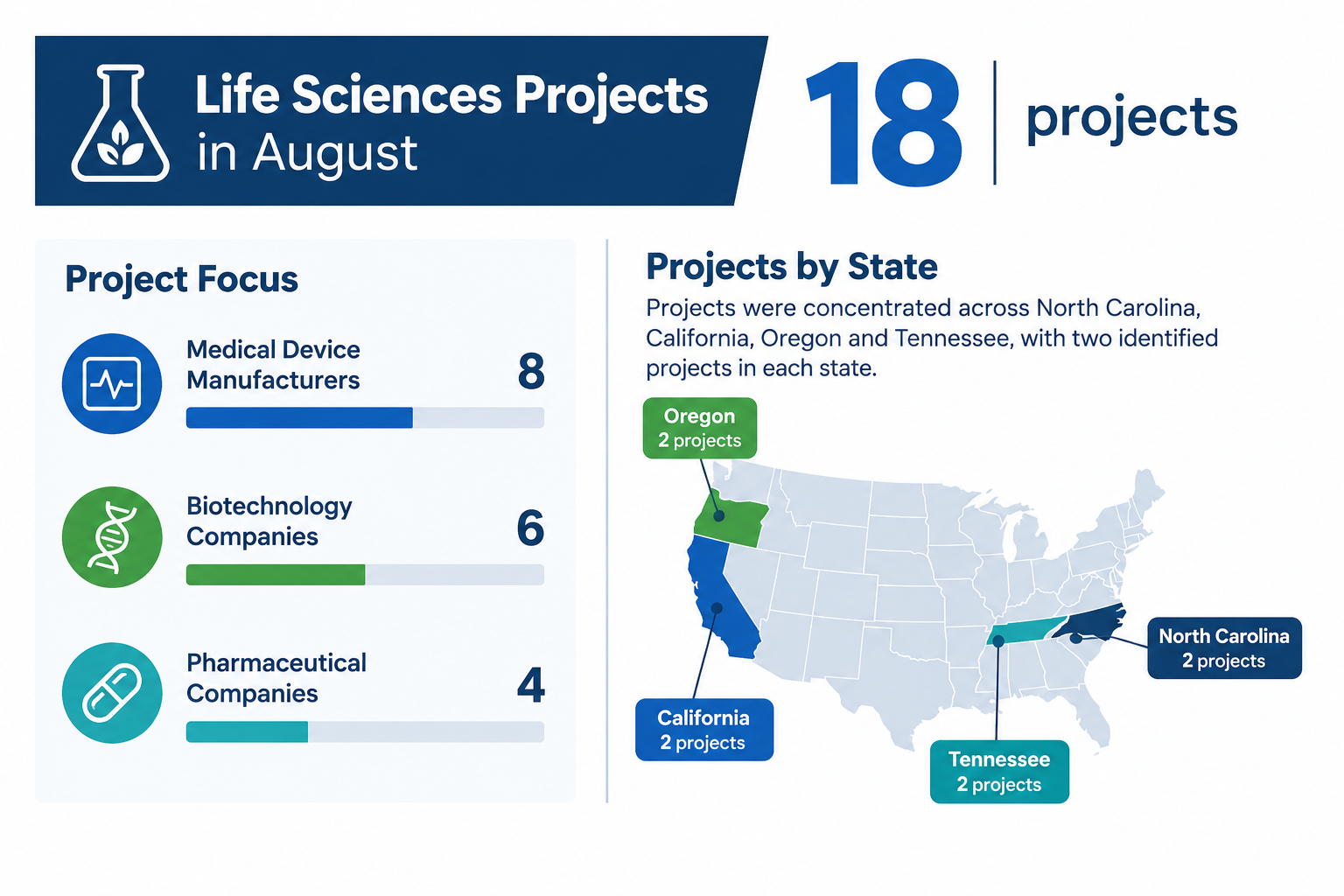
Life Sciences Manufacturing Investment Maintains Investment Momentum with 18 New Projects Identified in August 2026
-
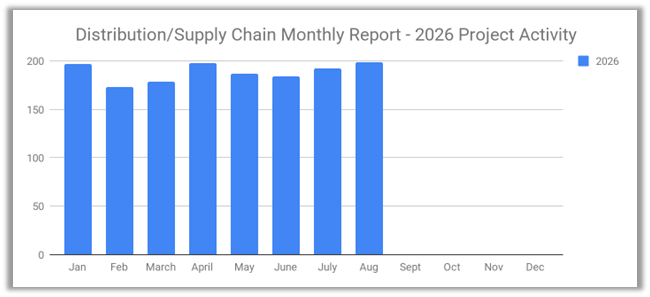
Distribution and Supply Chain Investment Hits 2026 Peak in August, Fueled by Three Months of Accelerating Growth
