
In B2B manufacturing and heavy industry, the buying journey has moved decisively online. Engineers, procurement teams, operations leaders, and plant managers often research vendors, compare technical capabilities, review product information, and evaluate supplier credibility before they ever request a quote.
That is why PPC industrial online advertising has become an important part of modern industrial sales growth. For companies with long sales cycles and technical buyers, a generic digital advertising strategy usually does not hold up. Industrial PPC campaigns need to be targeted, technically useful, measurable, and tied to real pipeline development.
The goal is not just more clicks. The goal is to reach the right industrial buyers, support their research process, qualify intent, and turn paid traffic into sales conversations.
Why Industrial PPC Is Different
PPC advertising for industrial companies is not the same as PPC for consumer products or simple B2B services. Industrial purchases are often high-value, technical, and slow-moving. Buyers may compare vendors over weeks or months, involve multiple departments, and require confidence before speaking with sales.
A strong PPC industrial online advertising strategy must account for:
-
long sales cycles
-
technical search intent
-
multiple decision-makers
-
high-value products and services
-
complex specifications
-
limited target markets
-
regional or vertical targeting
-
quote-based sales processes
-
sales and marketing alignment
-
measurable pipeline contribution
Industrial PPC should not be judged only by click volume or form fills. It should be judged by whether it helps attract qualified prospects and move real opportunities forward.
Glossary: PPC industrial online advertising: PPC industrial online advertising is paid digital advertising designed to reach manufacturing, construction, engineering, facility, logistics, and other industrial buyers through platforms such as Google Ads, LinkedIn, display networks, and video advertising.
Strategies for PPC Industrial Online Advertising Success
To compete effectively as cost-per-click rates rise, industrial companies need more than basic keyword targeting. Successful campaigns often combine account-based marketing, strong creative assets, first-party data, landing pages, lead scoring, and sales feedback.
The best industrial PPC campaigns are built around buyer intent and business outcomes, not vanity metrics.
FAQ: Why does PPC matter for industrial companies?
PPC matters for industrial companies because it helps them reach buyers who are actively researching products, services, vendors, and solutions online. When campaigns are well targeted, PPC can support lead generation, brand visibility, account-based marketing, and pipeline development.
1. Account-Based Marketing Integration
Account-based marketing, or ABM, is especially valuable in industrial advertising because many companies already know the types of accounts they want to reach.
Instead of advertising broadly to anyone who matches a general demographic profile, ABM focuses campaigns around specific target companies, industries, regions, or buyer roles.
Industrial companies can use platforms such as LinkedIn Ads, Google Ads, and CRM-integrated advertising tools to reach people connected to target accounts. This helps put messaging in front of the companies most likely to match the ideal customer profile.
ABM-based PPC campaigns may target:
-
specific companies
-
selected industries
-
plant managers
-
operations leaders
-
procurement teams
-
engineers
-
maintenance leaders
-
facility managers
-
executives at target accounts
-
regions with industrial growth
This approach is especially useful when the total addressable market is narrow. A highly focused campaign may generate fewer clicks, but the clicks may be more relevant.
Glossary: Account-based marketing: Account-based marketing is a B2B strategy where sales and marketing teams focus on specific target accounts instead of broad, general audiences.
2. Quality Creative Assets
Industrial buyers want to understand what a product does, how it performs, and whether it can solve their problem. PPC ads may create the first touchpoint, but the creative and landing page experience determine whether the prospect keeps engaging.
Strong industrial campaigns often use creative assets such as:
-
product videos
-
equipment-in-operation footage
-
technical diagrams
-
application guides
-
case study summaries
-
comparison charts
-
specification sheets
-
ROI examples
-
project photos
-
short explainer videos
-
industry-specific landing pages
The destination page matters just as much as the ad. Sending every click to a generic contact form can waste paid traffic. Industrial landing pages should give buyers useful information and a clear next step.
A strong landing page may include:
-
a clear statement of the problem solved
-
relevant industries served
-
technical details
-
proof points
-
case examples
-
downloadable resources
-
FAQ content
-
contact options
-
quote or consultation CTAs
FAQ: What makes a good landing page for industrial PPC campaigns?
A good industrial PPC landing page gives technical buyers useful information before asking for contact details. It should explain the product or service, show relevant applications, include proof points, answer common questions, and provide a clear conversion path.
3. First-Party Data
First-party data is one of the strongest advantages industrial companies can build into their PPC strategy. It includes information collected directly from customers, prospects, website visitors, CRM records, form submissions, calls, email engagement, and sales activity.
As advertising platforms become more automated, the quality of the data sent back into those platforms matters more. Industrial companies can use first-party data to improve targeting, retarget engaged visitors, create audience segments, and help ad platforms optimize toward better-fit prospects.
Useful first-party data sources may include:
-
CRM contacts
-
closed-won opportunities
-
qualified leads
-
customer lists
-
quote requests
-
form submissions
-
call tracking data
-
newsletter subscribers
-
webinar attendees
-
content downloads
-
ROI calculator submissions
-
website engagement behavior
For example, an industrial company might use an ROI calculator for compressor efficiency, conveyor throughput, energy savings, equipment replacement, or production capacity. The calculator gives the buyer useful information while also collecting valuable intent data.
Glossary: First-party data: First-party data is information a company collects directly from its own customers, prospects, website visitors, CRM, forms, calls, email interactions, and sales activity.
Bridging the Marketing and Sales Gap
Industrial PPC becomes more valuable when marketing and sales work from the same definition of quality. A campaign that generates many low-quality leads may look successful in an ad dashboard but fail in the sales pipeline.
Two mechanisms help make PPC industrial online advertising genuinely profitable rather than merely active: automated lead scoring and closed-loop feedback.
Automated Lead Scoring
Automated lead scoring helps industrial companies prioritize PPC-driven leads before they reach sales. Not every click or form submission deserves the same level of attention.
A visitor who clicks an ad, reads a technical case study, views a product page, downloads a guide, and returns later may be more valuable than someone who quickly bounces from a generic page.
Lead scoring can evaluate signals such as:
-
pages viewed
-
time on site
-
technical content engagement
-
case study views
-
guide downloads
-
form submissions
-
repeat visits
-
company fit
-
job title
-
industry
-
geography
-
source campaign
This helps sales teams focus on prospects who have shown stronger intent.
Glossary: Automated lead scoring: Automated lead scoring is the process of assigning value to leads based on behavior, fit, engagement, and other qualification signals so sales teams can prioritize follow-up.
FAQ: How does lead scoring improve industrial PPC results?
Lead scoring improves industrial PPC results by helping sales teams separate casual visitors from higher-intent prospects. It uses behavior and fit signals to identify which paid leads are more likely to become qualified opportunities.
Shortening the Feedback Loop
PPC platforms are good at finding more of what they are told to value. If a campaign optimizes only for cheap form submissions, the platform may find more cheap form submissions. That does not always mean more revenue.
Industrial companies need to feed meaningful sales data back into their advertising systems. Closed-won data, qualified opportunity data, and CRM feedback help campaigns optimize for business outcomes rather than surface-level activity.
This can shift optimization from:
-
lowest cost per click
-
lowest cost per form fill
-
highest traffic volume
Toward:
-
qualified lead rate
-
opportunity creation
-
revenue per click
-
deal quality
-
customer fit
-
pipeline contribution
That is especially important in industrial markets, where one strong opportunity may be worth far more than dozens of weak leads.
Glossary: Closed-loop reporting: Closed-loop reporting connects marketing data with sales outcomes so companies can see which campaigns, keywords, channels, and leads actually contribute to qualified opportunities and revenue.
How PPC Supports the Industrial Buying Journey
Industrial PPC can support multiple stages of the buying journey. It does not need to focus only on immediate quote requests.
At the awareness stage, paid campaigns can introduce a company to buyers researching problems, applications, or industry-specific needs.
At the consideration stage, campaigns can promote technical guides, product information, case studies, comparison content, and webinars.
At the decision stage, campaigns can support quote requests, consultations, demos, sample requests, and direct contact with sales.
A strong PPC strategy may include:
-
search campaigns for high-intent keywords
-
LinkedIn campaigns for target accounts
-
retargeting campaigns for returning visitors
-
display campaigns for awareness
-
video campaigns for product demonstrations
-
landing pages for specific industries
-
remarketing for long sales cycles
-
campaign tracking inside the CRM
This creates a more complete system than one-off ads.
FAQ: What PPC channels work best for industrial companies?
The best PPC channels depend on the audience and offer. Google Ads can capture search intent, LinkedIn Ads can support account-based targeting, retargeting can keep a company visible during long sales cycles, and video or display ads can help explain technical products.
How Industrial SalesLeads Can Help
Industrial SalesLeads helps industrial companies connect performance marketing with pipeline development. For manufacturers, suppliers, contractors, equipment providers, and industrial service firms, PPC works best when advertising strategy is supported by accurate targeting, qualified prospect data, useful content, and sales follow-up.
Through performance marketing and prospecting support, Industrial SalesLeads can help companies reach decision-makers, generate more qualified interest, and connect digital campaigns to real sales opportunities.
Learn more about our Performance Marketing services today.
Final Thoughts
Industrial products are technical, high-value, and sold to buyers who do their homework. PPC industrial online advertising can help companies appear during that research process, reach the right decision-makers, and measure which campaigns contribute to pipeline growth.
The strongest campaigns combine precise targeting, useful creative assets, first-party data, automated lead scoring, and closed-loop reporting. When those pieces work together, PPC becomes more than an advertising expense. It becomes a measurable pipeline development system.
Learn more about our Performance Marketing today!
Want a predictable flow of qualified leads?
Let’s talk about how we can build it for you.
Latest Posts
-
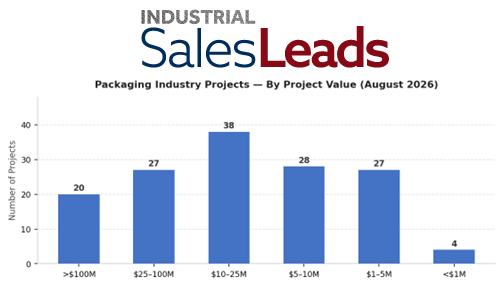
184 New Packaging Industry Projects Drive $17B+ Capital Pipeline in August 2026
-
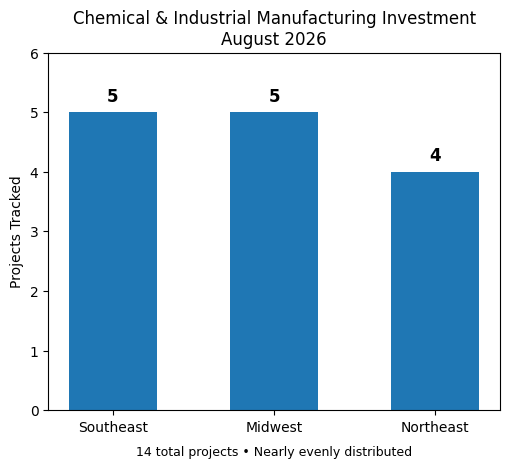
Chemical & Industrial Manufacturing Investment Spans Southeast, Midwest and Northeast in August 2026, with 14 Projects Tracked
-
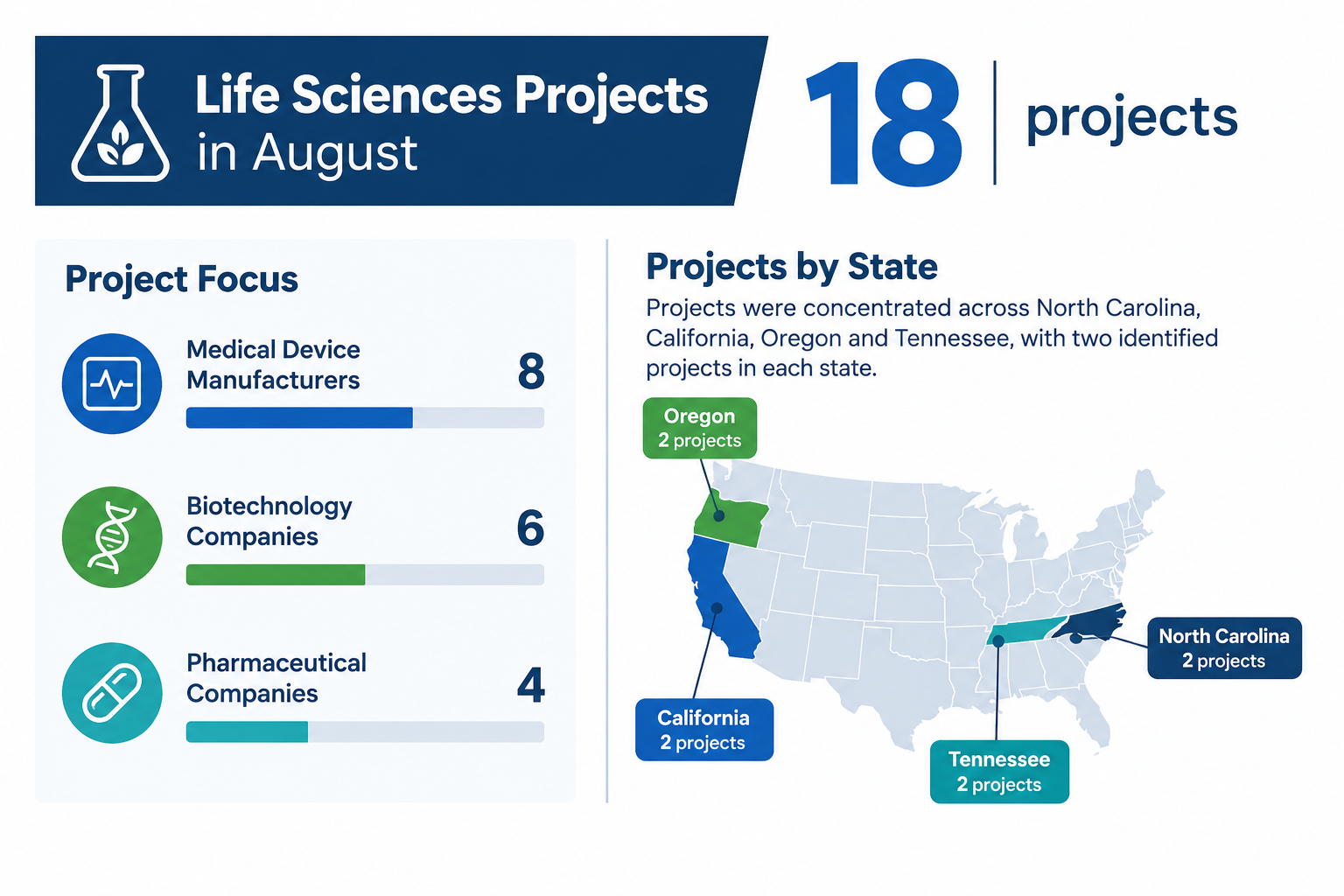
Life Sciences Manufacturing Investment Maintains Investment Momentum with 18 New Projects Identified in August 2026
-
Distribution and Supply Chain Investment Hits 2026 Peak in August, Fueled by Three Months of Accelerating Growth
