

Industrial contractors, suppliers, and service providers need more than word of mouth or public bid alerts. They need early visibility into planned projects, facility investments, and capital spending activity before those opportunities are widely known.
That is why industry leaders are increasingly turning to IPRs, or Industrial Project Reports, as a primary sourcing tool for industrial construction sales leads. These specialized data resources help companies identify, track, qualify, and pursue significant project opportunities with greater precision.
Industrial construction sales is often won before the formal bid process begins. Companies that learn about a planned expansion, modernization project, equipment upgrade, or new facility early can begin building relationships, understanding the project scope, and positioning their capabilities before competitors enter the conversation.
What Are Industrial Project Reports?
Industrial Project Reports, commonly called IPRs, track planned and active capital projects throughout the industrial sector.
These projects may involve:
- manufacturing facilities
- food and beverage plants
- distribution and logistics centers
- chemical-processing facilities
- energy projects
- oil and gas operations
- pharmaceutical manufacturing
- data centers
- warehouses
- other facility-intensive industries
Unlike general news updates, high-quality Industrial Project Reports provide specific information about projects that may create sales opportunities.
This may include:
- new facility construction
- plant expansions
- facility relocations
- renovations
- equipment upgrades
- production-line changes
- major maintenance shutdowns
- modernization projects
- other capital investments
For contractors, suppliers, equipment providers, and industrial service companies, this information provides a clearer picture of where industrial spending is moving and which companies may soon need outside vendors.
Glossary: Industrial Project Reports
Industrial Project Reports, or IPRs, are reports that track planned and active industrial projects, including facility construction, plant expansions, relocations, equipment upgrades, maintenance shutdowns, modernization, and capital investment.
Why IPRs Matter for Industrial Construction Sales
Industrial construction opportunities are often complex.
A single project may involve:
- facility owners
- engineering firms
- general contractors
- specialty subcontractors
- procurement teams
- plant managers
- maintenance leaders
- safety teams
- operations executives
- corporate decision-makers
By the time a project appears through a public bid notice or formal Request for Proposal, many important conversations may already be underway.
Vendors that discover the opportunity late may have less influence, less context, and less time to position their company effectively.
Industrial Project Reports help solve that problem by giving sales teams earlier visibility into project activity.
FAQ: Why are Industrial Project Reports useful for industrial construction sales?
Industrial Project Reports are useful because they help companies identify planned projects earlier, understand project scope, find relevant contacts, and prioritize opportunities that match their services, geography, and technical capabilities.
Converting IPRs Into High-Value Opportunities
The core value of an IPR is its ability to surface industrial construction sales leads before competitors know a project exists or before the opportunity becomes widely circulated.
A strong IPR gives sales teams more than a company name or project headline. It helps answer practical business-development questions such as:
- What company is planning the project?
- What type of facility is involved?
- Is the project new construction, expansion, renovation, relocation, or modernization?
- What is the estimated project value or scope?
- Where is the project located?
- Which contacts are associated with the project?
- What stage has the project reached?
- What products, services, equipment, or contractors may be needed?
- Does the opportunity fit the sales team’s capabilities and territory?
This turns project data into a focused industrial sales process.
Early-Stage Project Visibility
Strong Industrial Project Reports track projects during the planning, design, budgeting, site-selection, pre-bid, or early development stages.
This gives contractors, suppliers, and service providers the opportunity to begin conversations before a formal Request for Proposal is issued.
Early-stage visibility matters because industrial buyers often shape project requirements long before public bidding begins.
A supplier may be able to educate the owner about better equipment options. A contractor may help identify phasing or scheduling concerns. A service provider may help the project team understand safety, compliance, maintenance, installation, or operating risks.
Companies that enter the conversation early may be better positioned when the buying process becomes formal.
Glossary: Early-stage project visibility
Early-stage project visibility means identifying a planned industrial project while it is still in the planning, design, budgeting, site-selection, pre-bid, or early development stage.
Verified Decision-Maker Contacts
Finding the correct contact is one of the largest obstacles in industrial sales.
A company may know that a project exists but still struggle to determine who influences the decision, controls the budget, writes the specifications, manages the facility, or approves the vendor.
Industrial Project Reports can help by providing relevant contact information for people such as:
- project managers
- plant managers
- procurement leaders
- chief engineers
- facility directors
- maintenance managers
- operations executives
- capital-project leaders
- corporate real-estate executives
- other stakeholders connected to the project
The right contact often depends on the type of project.
A maintenance shutdown may involve plant operations and maintenance leadership. A new facility may involve corporate real estate, engineering, construction management, procurement, and executive leadership. A plant expansion may involve production managers, facility leadership, engineering teams, and capital-project managers.
Glossary: Verified decision-maker contacts
Verified decision-maker contacts are confirmed people associated with a company or project who may influence, evaluate, approve, purchase, or manage a planned industrial opportunity.
FAQ: What contacts are usually helpful for industrial construction sales leads?
Helpful contacts may include project managers, plant managers, procurement leaders, chief engineers, operations executives, maintenance managers, facility directors, and corporate leaders involved in capital planning or project approval.
Detailed Project Scopes
Industrial construction requires specialized skills, equipment, safety standards, and technical capabilities.
Not every project is a good fit for every contractor, supplier, or service provider.
A useful IPR should help the sales team understand the project well enough to qualify the opportunity.
Relevant details may include:
- facility type
- project stage
- construction type
- estimated investment
- equipment requirements
- technical specifications
- expected timeline
- operational purpose
- project location
- known stakeholders
A project scope may point to needs such as:
- specialized welding
- high-capacity HVAC systems
- electrical upgrades
- process piping
- modular assembly
- cleanroom construction
- automation integration
- conveyor systems
- material-handling equipment
- structural steel
- concrete work
- fire and safety systems
- maintenance-shutdown support
- environmental-compliance support
This helps sales teams avoid wasting time on poor-fit projects while prioritizing opportunities that align with their capabilities.
Glossary: Project scope
Project scope describes the work, requirements, facility needs, technical details, timeline, budget, and deliverables involved in a construction, expansion, modernization, relocation, or maintenance project.
Qualifying Industrial Construction Sales Leads
An Industrial Project Report identifies an opportunity, but the sales team must still determine whether the project deserves active pursuit.
Useful qualification questions include:
- Does the company match our Ideal Customer Profile?
- Is the project located within our service territory?
- Does the project require products or services we provide?
- Is the project still active?
- What stage has the project reached?
- Has funding been approved?
- Which stakeholders are involved?
- Is a general contractor, engineering firm, or consultant already involved?
- What is the expected purchasing or construction timeline?
- What should our next step be?
Project intelligence should improve qualification, not replace it.
A planned project may be relevant but too early. Another may be active but outside the seller’s capabilities. A third may be an excellent fit but require contact with a different stakeholder.
Prioritizing Leads by Fit, Timing, and Value
Industrial sales teams should not treat every project report as equally valuable.
A practical prioritization system may consider:
- industry fit
- geographic fit
- project type
- estimated project value
- current project stage
- expected timing
- contact availability
- technical fit
- competitive position
- likelihood that the seller’s offering will be needed
High-priority opportunities may deserve immediate account research and outreach. Earlier or less certain projects may enter a longer-term nurturing process.
FAQ: How do IPRs help companies prioritize industrial construction leads?
IPRs help companies prioritize leads by showing project type, location, timing, industry, estimated scope, and relevant contacts. This helps sales teams focus on opportunities that match their capabilities instead of chasing broad, low-context lists.
Using Project Intelligence Before the Formal Bid
Early project intelligence can help a sales team take useful steps before a formal bid opportunity appears.
These actions may include:
- researching the company and facility
- identifying likely project stakeholders
- reviewing similar projects
- preparing relevant case studies
- introducing technical capabilities
- learning how the project will be purchased
- monitoring project milestones
- building relationships with owners, engineers, or contractors
- preparing for future bid or quotation activity
The objective is not to pressure an early-stage buyer. It is to become relevant before the project reaches the crowded end of the funnel.
Why Precision Matters in Industrial Prospecting
The industrial market is changing quickly.
Technology infrastructure, AI data centers, renewable-energy facilities, semiconductor investments, pharmaceutical manufacturing, logistics facilities, food-processing expansions, and advanced-manufacturing projects are creating new waves of industrial activity.
These projects often involve:
- tight schedules
- specialized technical requirements
- large capital budgets
- complex stakeholder groups
- safety and compliance requirements
- long purchasing cycles
A generic prospecting strategy may miss the timing, contacts, and technical context necessary to compete effectively.
Sourcing industrial construction sales leads through IPRs gives companies a level of precision that broad cold outreach and traditional networking cannot consistently provide.
For example, if IPR data shows rising pharmaceutical-manufacturing activity in the Midwest, a contractor may shift business-development resources toward that region and sector.
If project data shows increased food-processing expansions in the Southeast, a supplier may prioritize outreach involving equipment, safety, sanitation, automation, refrigeration, or facility needs relevant to food manufacturing.
Spending-Trend Analysis and Market Focus
Industrial Project Reports can also help companies understand broader investment patterns.
Individual project leads are valuable, but patterns across many reports may be even more useful.
When sales leaders see repeated activity in a region, sector, or facility category, they can adjust their strategy accordingly.
Spending-trend analysis may reveal:
- growth in specific industrial sectors
- rising project activity in certain regions
- increased capital investment by facility type
- recurring maintenance and shutdown needs
- emerging demand for specialized contractors
- new construction in manufacturing corridors
- increased equipment-modernization activity
- warehouse, distribution, and logistics expansion
- new demand created by regulatory or technology changes
This gives leadership a better way to allocate sales resources, territory coverage, marketing spend, and business-development time.
Glossary: Spending-trend analysis
Spending-trend analysis is the process of reviewing project and investment data to identify where industrial companies are increasing capital activity by sector, region, facility type, or project category.
Building a Repeatable IPR Sales Workflow
Industrial Project Reports create the most value when the sales team uses a consistent process.
A practical workflow may include:
- Review new reports. Identify projects that match the company’s industries, regions, services, and capabilities.
- Research the account. Learn about the company, facility, project history, and current operations.
- Confirm the project stage. Determine whether the project is conceptual, budgeted, designed, bidding, under construction, or being implemented.
- Identify stakeholders. Determine who influences the technical, operational, commercial, and purchasing decisions.
- Prioritize the opportunity. Evaluate fit, timing, value, access, and competitive position.
- Prepare relevant outreach. Connect the message to the project and the seller’s actual capabilities.
- Record activity in the CRM. Document the project, contacts, next steps, and timing.
- Monitor changes. Track new stakeholders, scope changes, schedule changes, approvals, and bid activity.
- Nurture appropriately. Stay useful when the project is real but not yet ready for purchasing.
This creates a repeatable system rather than a loose stack of project alerts.
Using the CRM to Track IPR Opportunities
Project leads should be recorded in the CRM with enough context to support follow-up and reporting.
Useful fields may include:
- company
- facility location
- project type
- project stage
- estimated value
- expected timeline
- industry
- known contacts
- products or services that may be relevant
- next action
- next-action date
- lead source
- qualification status
Tracking project leads consistently helps the company understand which reports produce conversations, opportunities, proposals, and revenue.
How to Measure IPR Performance
Industrial Project Reports should be evaluated by their contribution to the sales process.
Useful metrics include:
- projects reviewed
- projects matching the Ideal Customer Profile
- contacts identified
- verified-contact rate
- outreach attempts
- response rate
- qualified conversations
- meetings scheduled
- opportunities created
- proposals generated
- pipeline value
- revenue won
- sales-cycle length by project stage
The objective is not simply to collect more projects. It is to convert relevant project intelligence into measurable business-development activity.
How Industrial SalesLeads Can Help
Industrial SalesLeads provides Industrial Market Intelligence that helps sales teams identify planned industrial construction, expansion, relocation, modernization, and capital-investment opportunities.
For contractors, suppliers, equipment providers, manufacturers, facility-service companies, and industrial sales teams, these reports can help uncover opportunities before competitors become aware of them.
Industrial Project Reports can help sales teams understand:
- which companies are investing
- where projects are located
- what type of work is planned
- what stage the project has reached
- which contacts may be relevant
- when outreach may be appropriate
With accurate project information, sales teams can reach out proactively, qualify the opportunity, and begin building relationships earlier in the process.
Industrial SalesLeads also offers Prospecting Services to help companies define target accounts, identify and verify contacts, conduct outreach, qualify interest, nurture prospects, and schedule appointments.
Together, project intelligence and prospecting support can help companies move from simply knowing a project exists to creating a qualified sales conversation.
Contact Industrial SalesLeads to discuss how Industrial Project Reports and targeted prospecting can support your construction sales pipeline.
Final Thoughts
Word of mouth still matters. Existing relationships, referrals, and reputation remain important in industrial construction sales.
But relying on word of mouth alone leaves too many opportunities to chance.
Industrial Project Reports give sales teams a more proactive way to find, qualify, prioritize, and pursue industrial construction sales leads.
They provide early visibility, project context, decision-maker contacts, scope information, and market-trend insight.
For companies that want to grow instead of waiting for the phone to ring, IPRs can provide a measurable advantage.
Learn more about Industrial Project Reports and Industrial Market Intelligence.
Want a predictable flow of qualified leads?
Let’s talk about how we can build it for you.
Latest Posts
-
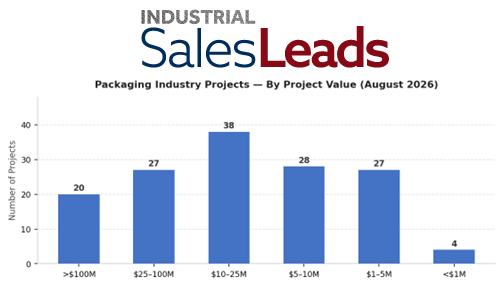
184 New Packaging Industry Projects Drive $17B+ Capital Pipeline in August 2026
-
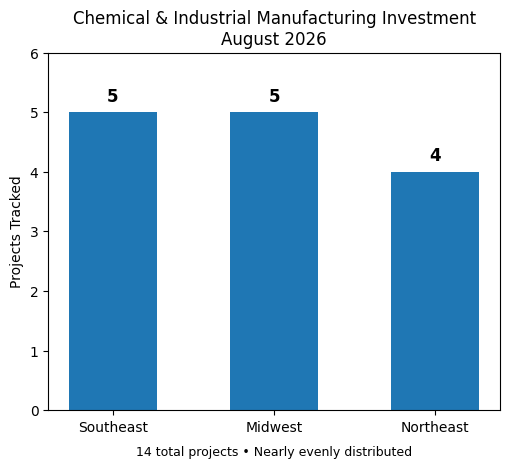
Chemical & Industrial Manufacturing Investment Spans Southeast, Midwest and Northeast in August 2026, with 14 Projects Tracked
-
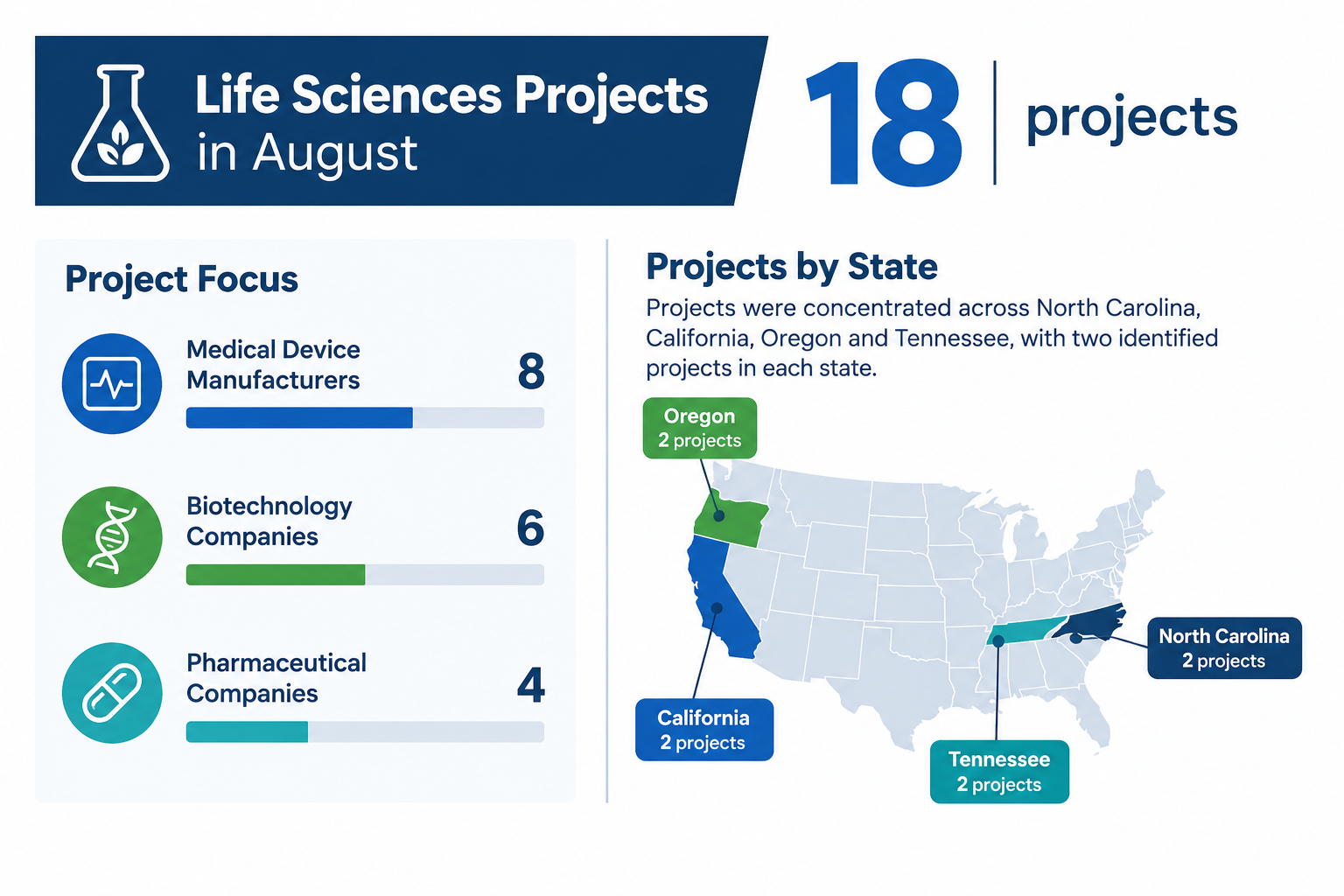
Life Sciences Manufacturing Investment Maintains Investment Momentum with 18 New Projects Identified in August 2026
-
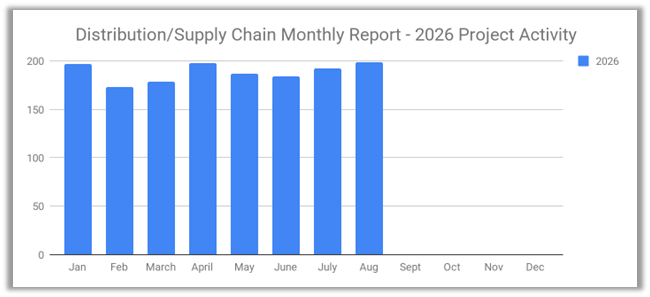
Distribution and Supply Chain Investment Hits 2026 Peak in August, Fueled by Three Months of Accelerating Growth
