
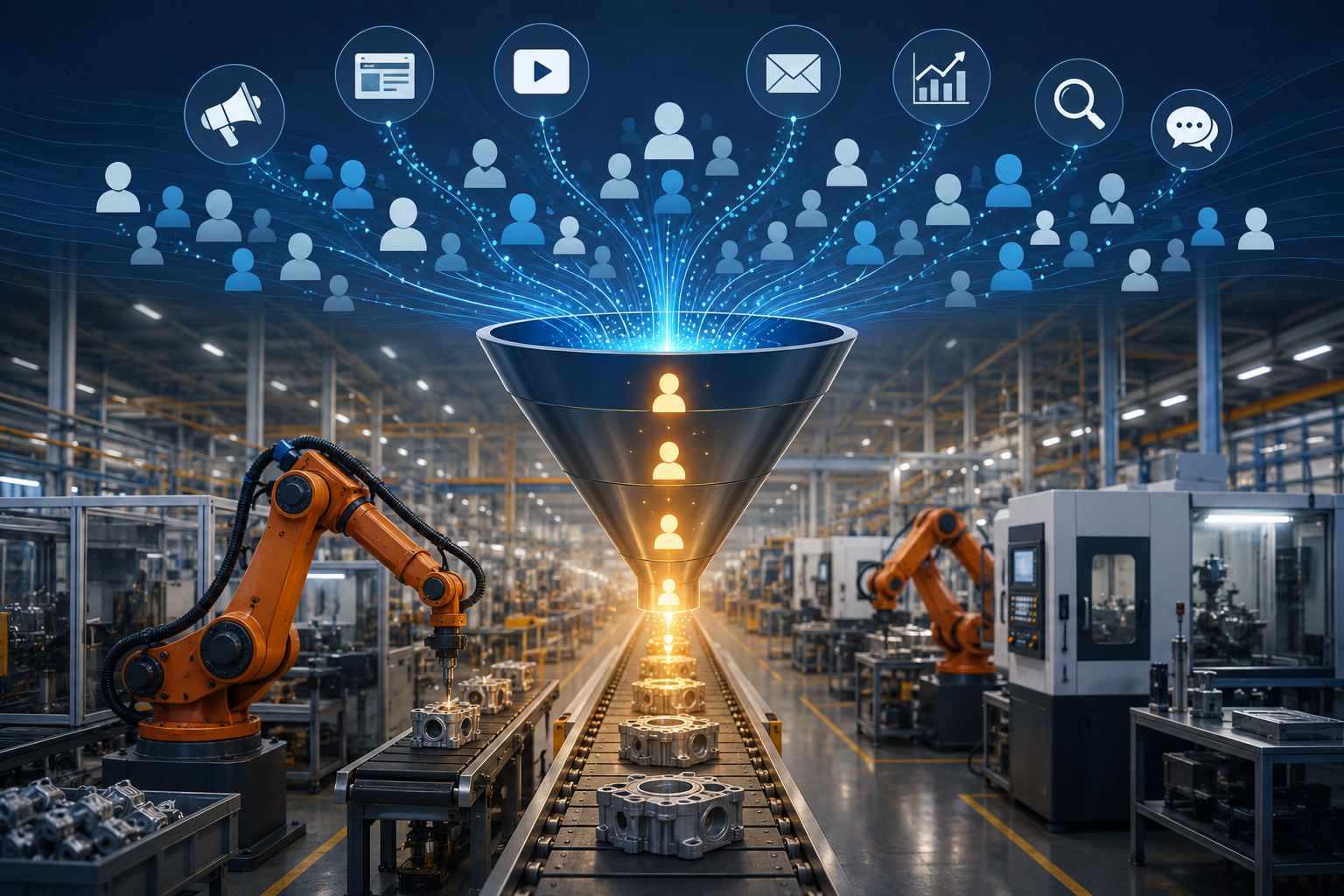
For manufacturers looking to grow sustainably, demand generation manufacturing has become an essential strategy. Global supply chains are shifting, buyers are doing more independent research, and traditional lead sources like trade shows and referrals are not enough on their own.
What Demand Generation Manufacturing Means
Demand generation manufacturing is the practice of building processes that create awareness, educate prospects, and move qualified buyers toward a sales conversation, often before the first call is ever made. Unlike traditional lead generation, which primarily finds leads who are already in-market, demand generation helps manufacturers engage the right accounts earlier in their buyer journey. It's about earning trust before a prospect is ready to buy, so that when they are, your company is already top of mind.
This distinction is important in manufacturing, where purchasing decisions can be technical and typically involve multiple stakeholders across sourcing, engineering, and operations.
Why Manufacturers Can't Afford to Skip It
Buyers now complete roughly 70% of their research before contacting a vendor. That means by the time a prospect reaches out, they've already shortlisted competitors, evaluated technical specs, and formed an opinion about your brand or haven't heard of you at all. Without a demand generation strategy, manufacturers risk being invisible during the most critical phase of the buying process.
Sales teams that rely solely on cold outreach often struggle when there's no existing brand recognition among prospects. Demand generation works to fix this by building familiarity and credibility long before a sales rep picks up the phone.
The Core Building Blocks
A strong demand generation manufacturing strategy typically combines several interconnected tactics. It starts with a clearly defined Customer Profile, encompassing not just the industry and company size, but the specific pain points, buying triggers, and job titles of decision makers you're targeting.
From there, create content. Educational blog posts, application specific case studies, videos, ROI calculators, and email campaigns. The content must be technical enough to earn credibility with engineers, but accessible enough to resonate with procurement leaders focused on ROI.
Outbound prospecting remains essential alongside inbound. Effective outbound in manufacturing is about using intent data and buyer signals to reach out at the right time with the right message.
While That Builds Credibility Over Time
Not everyone can wait months before sales leads start producing, which is where Industrial SalesLeads comes into play. Here, you can utilize our Prospecting Services which provides face-to-face meetings with industry decision makers that have identified projects. Now you can fill your sales funnel with high quality sales leads. Using various channels to develop sales leads is the best way to keep sales moving.
Results Manufacturers Are Seeing
Demand generation manufacturing isn't about chasing every lead, but building a repeatable system that puts your brand in front of the right buyers at the right time. Manufacturers that invest in this approach are generating more leads, but better ones, with shorter sales cycles and more predictable revenue to show for it.
Want a predictable flow of qualified leads?
Let’s talk about how we can build it for you.
Latest Posts
-
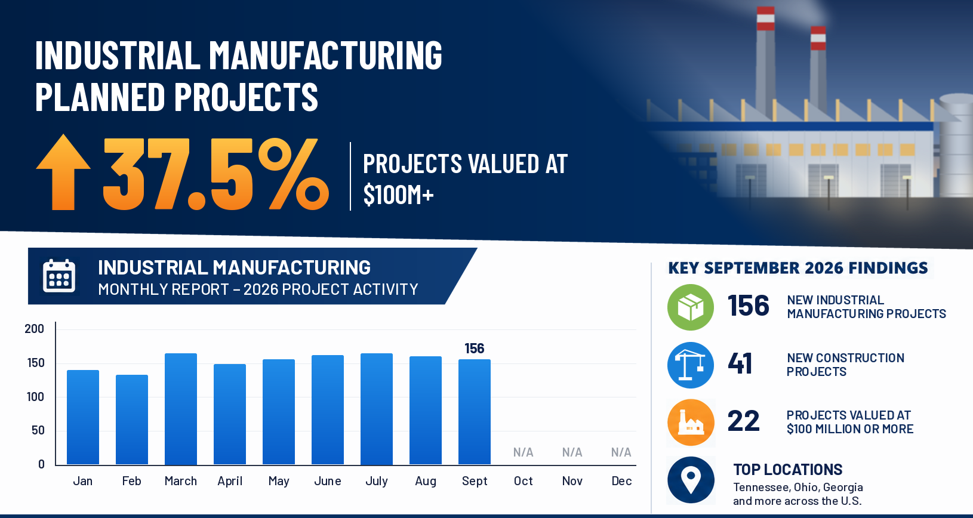
37.5% Growth in $100M New Industrial Planned Projects MoM for September 2026
-
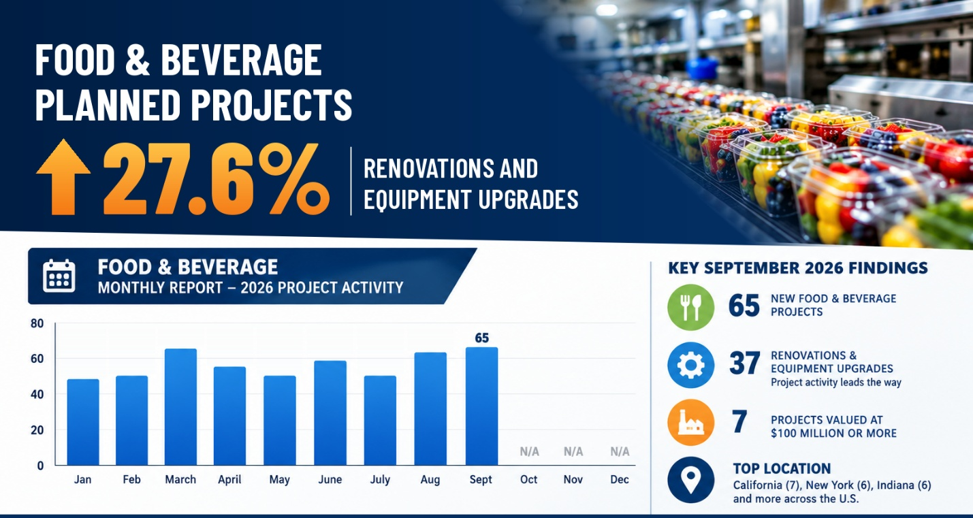
27.6% MoM Increase in Industrial Planned Projects for Renovations and Equipment Upgrades for September 2026
-
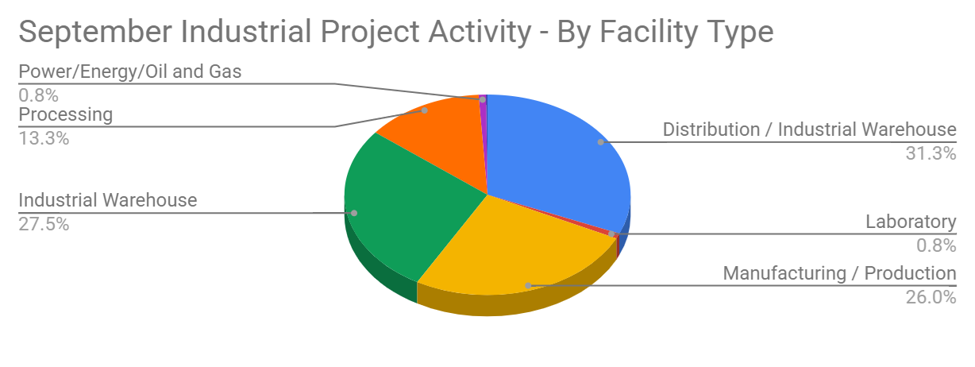
392 New Planned Industrial Projects Tracked in September 2026
-
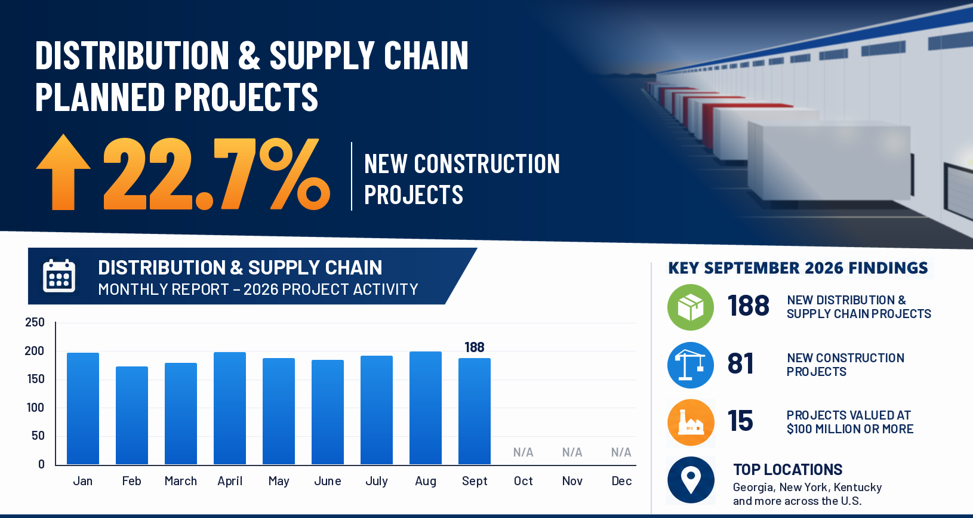
22.7% Increase in September 2026 for New Planned Distribution and Supply Chain Projects Over August 2026
