

AI sales development representatives are becoming a larger part of modern sales technology, but their value is often misunderstood.
An AI SDR is not a complete replacement for a human sales development representative. It is better understood as a software assistant that can help with repetitive research, data organization, outreach preparation, follow-up, call summaries, lead scoring, and other structured tasks.
For industrial sales teams, that distinction matters. Industrial buyers often have technical requirements, long sales cycles, multiple stakeholders, and complex operational needs. Automation can improve speed and consistency, but human judgment remains essential for qualification, credibility, problem-solving, and relationship development.
The strongest approach combines AI-assisted sales development with experienced salespeople who understand the market, the solution, and the customer.
Glossary: AI sales development representative: An AI sales development representative, or AI SDR, is software that uses automation, data processing, and language models to assist with sales-development tasks such as account research, outreach drafting, lead qualification, sequencing, scheduling, and follow-up.
What Is AI Sales Development?
AI sales development refers to the use of artificial intelligence and automation to support the early stages of the sales process.
These systems may help with tasks such as:
- researching companies and contacts
- organizing account information
- drafting initial outreach
- personalizing message variations
- managing follow-up sequences
- summarizing calls
- transcribing meetings
- scoring leads
- identifying engagement signals
- scheduling meetings
- updating CRM records
- flagging stalled opportunities
Some AI SDR platforms operate inside customer relationship management systems. Others connect with email, call-recording tools, sales-engagement software, data providers, calendars, and analytics platforms.
The value comes from reducing repetitive administrative work. Salespeople can spend less time copying data, organizing notes, drafting routine messages, and manually tracking every follow-up.
Glossary: Sales development: Sales development is the process of identifying prospects, researching accounts, conducting outreach, qualifying interest, and creating opportunities for the sales team.
FAQ: What does an AI sales development representative do?
An AI SDR can assist with account research, outreach drafting, follow-up sequences, CRM updates, call summaries, lead scoring, scheduling, and other repetitive sales-development tasks.
Where AI SDR Tools Can Help Industrial Sales Teams
Industrial sales teams often work with large amounts of fragmented information. Useful details may be spread across websites, project announcements, CRM records, call notes, email threads, trade show lists, and contact databases.
AI can help organize and summarize that information before a salesperson begins outreach.
Useful applications include:
- summarizing a target company’s operations
- identifying relevant facilities or locations
- organizing known decision-makers
- highlighting recent company activity
- drafting industry-specific outreach
- preparing discovery-call notes
- summarizing previous interactions
- suggesting follow-up reminders
- classifying leads by fit
- identifying missing CRM fields
This can make prospecting more efficient, especially when the sales team already has reliable data and a clearly defined target market.
AI cannot create strong targeting from weak inputs. If the contact data is inaccurate, the qualification criteria are vague, or the company has not defined its ideal customer profile, automation may simply produce poor outreach faster.
Glossary: Sales automation: Sales automation uses software to complete repetitive sales tasks such as data entry, message sequencing, reminders, routing, scheduling, and reporting.
AI Works Best With Reliable Data
An AI SDR depends heavily on the quality of the information it receives.
Poor data can lead to:
- messages sent to the wrong person
- outdated job titles
- irrelevant personalization
- duplicate outreach
- incorrect company information
- poor lead scoring
- confusing CRM records
- damaged credibility
Before expanding AI-assisted outreach, industrial companies should improve their data foundation.
That may include:
- verified contact information
- clear account ownership
- consistent industry classification
- accurate facility information
- defined lead stages
- lead-source tracking
- qualification criteria
- project timing
- lost-opportunity reasons
- closed-won feedback
AI becomes more useful when it works from accurate company, contact, project, and engagement data.
Glossary: Data enrichment: Data enrichment is the process of adding or updating useful information about companies, contacts, facilities, industries, roles, and business activity.
FAQ: Why does data quality matter for AI sales tools?
AI sales tools rely on the data provided to them. Inaccurate contacts, weak qualification criteria, duplicate records, and missing account information can produce irrelevant outreach and unreliable lead scoring.
The Human and AI Sales Partnership
The most effective sales teams treat AI as a teammate rather than an autonomous replacement.
The AI can provide speed, consistency, organization, and pattern recognition. The human salesperson provides context, judgment, technical expertise, credibility, and emotional intelligence.
A practical division of responsibility may look like this:
AI-assisted tasks:
- research preparation
- first-draft emails
- sequence reminders
- call transcription
- meeting summaries
- CRM updates
- activity reporting
- basic lead classification
Human-led tasks:
- final message approval
- technical qualification
- complex discovery
- objection handling
- relationship-building
- commercial judgment
- proposal strategy
- negotiation
- closing
Industrial sales often involve nuanced questions about equipment, facility constraints, implementation, safety, compliance, timing, and operational risk. Those conversations require human expertise.
AI can prepare the salesperson for the conversation. It should not pretend to be the expert when it is not.
Glossary: Human-in-the-loop: Human-in-the-loop is an operating model where people review, approve, correct, or guide AI-generated work before it affects customers or business decisions.
Why Fully Automated Outreach Can Fail
Automation can create efficiency, but it can also create scale without relevance.
Common problems include:
- generic personalization
- incorrect facts
- overly frequent follow-up
- messages that ignore technical context
- outreach to irrelevant roles
- claims the company cannot support
- duplicate messages from different systems
- robotic tone
- poor timing
Industrial buyers are often experienced, technically informed, and skeptical of vague sales language. A message that appears automated or uninformed can reduce trust quickly.
AI-generated outreach should therefore be reviewed against:
- the target account
- the buyer’s role
- known project activity
- the company’s actual capabilities
- technical accuracy
- message frequency
- privacy and compliance requirements
FAQ: Can an AI SDR replace a human sales representative?
An AI SDR can automate repetitive tasks, but it cannot fully replace the technical judgment, empathy, negotiation, relationship-building, and situational awareness required in complex industrial sales.
How AI Can Support Lead Qualification
AI tools can help sales teams organize qualification signals, but they should not make final decisions without oversight.
Potential qualification inputs include:
- industry
- company size
- facility type
- geography
- job title
- website engagement
- email response
- project activity
- equipment needs
- known expansion plans
- timing
- previous sales interactions
AI can help rank or route leads based on these signals. Human sales professionals should still review whether the opportunity is technically appropriate and commercially realistic.
Glossary: Lead scoring: Lead scoring is the process of assigning a value or priority to a prospect based on fit, behavior, engagement, timing, and sales potential.
Using AI to Improve Sales Follow-Up
One of the clearest uses of AI in sales development is follow-up management.
Sales teams frequently lose opportunities because next steps are unclear, reminders are missed, notes are incomplete, or prospects are contacted without useful context.
AI can help by:
- summarizing the last conversation
- identifying promised next steps
- creating follow-up reminders
- drafting a recap email
- highlighting unanswered questions
- flagging opportunities without recent activity
- suggesting relevant content
- organizing stakeholder information
This can improve consistency without turning follow-up into a barrage of automatic emails.
The salesperson should still determine whether the timing, tone, and message are appropriate.
Measuring Whether an AI SDR Is Working
An AI SDR should be evaluated by business outcomes, not by the number of emails it sends.
Useful measurements include:
- time saved per salesperson
- CRM completion rate
- response rate
- qualified meeting rate
- lead-to-opportunity conversion
- appointment-to-opportunity rate
- pipeline created
- sales-cycle length
- data accuracy
- human correction rate
- unsubscribe or complaint rate
- revenue influenced
If the system increases activity while reducing lead quality or damaging response rates, it is not improving sales development.
Glossary: Human correction rate: Human correction rate measures how often AI-generated sales content, data, classifications, or summaries require meaningful correction before use.
FAQ: How should companies measure AI SDR performance?
Companies should measure time saved, data accuracy, qualified meetings, opportunity conversion, pipeline created, response quality, human correction rate, and revenue influence rather than total automated activity alone.
How to Implement AI SDR Tools Carefully
Industrial companies should begin with a limited, supervised use case rather than automating the entire outbound process at once.
A practical implementation sequence may include:
- Define the ideal customer profile.
- Clean and verify account and contact data.
- Select one repetitive workflow to improve.
- Create message and approval rules.
- Require human review for customer-facing content.
- Measure quality and sales outcomes.
- Collect feedback from the sales team.
- Expand only after the workflow proves useful.
Good starting points may include call summaries, CRM updates, account research, meeting preparation, or follow-up reminders.
These tasks can produce efficiency without placing the company’s reputation entirely in the hands of automated outreach.
Industrial Market Intelligence Gives AI Better Context
Sales automation becomes more useful when it is connected to real business activity.
Industrial SalesLeads’ Industrial Market Intelligence helps identify companies involved in planned construction, plant expansions, relocations, modernization, equipment upgrades, and other industrial projects.
These project signals can give both AI tools and human salespeople a stronger reason for outreach.
Instead of contacting a company only because it belongs to a target industry, the sales team may know that the company is:
- planning a new facility
- expanding production
- relocating operations
- upgrading equipment
- adding warehouse capacity
- investing in modernization
- changing a production line
That context makes research, prioritization, qualification, and messaging more relevant.
Industrial project intelligence should not be treated as a list of companies to blast with automated email. It should be used to help sales teams identify timing, understand likely needs, and prepare more informed outreach.
Glossary: Industrial market intelligence: Industrial market intelligence is information about industrial companies, facilities, projects, contacts, investments, expansions, relocations, and other business activity that can create sales opportunities.
How Industrial SalesLeads Can Help
Industrial SalesLeads helps industrial sales teams combine reliable prospect information, project intelligence, verified contacts, and human-led business development.
Through Industrial Market Intelligence, companies can identify planned industrial projects and facility activity that may create a need for products or services.
Through Prospecting Services, Industrial SalesLeads can help define target accounts, identify decision-makers, conduct outreach, qualify interest, and schedule appointments.
AI tools can help teams organize and process this information, but experienced researchers and sales professionals remain essential for verification, qualification, and meaningful conversations.
Contact Industrial SalesLeads to discuss how industrial project intelligence and prospecting support can help your sales team build a stronger pipeline.
Final Thoughts
An AI sales development representative can be a valuable teammate when it is used for the right tasks.
AI can improve research, organization, drafting, follow-up, CRM discipline, lead scoring, and reporting. It cannot replace technical expertise, judgment, trust, empathy, negotiation, or the human relationships that drive complex industrial sales.
The best sales teams will not choose between humans and AI. They will use AI to reduce repetitive work so their people can spend more time understanding customers, solving problems, and advancing qualified opportunities.
Want a predictable flow of qualified leads?
Let’s talk about how we can build it for you.
Latest Posts
-
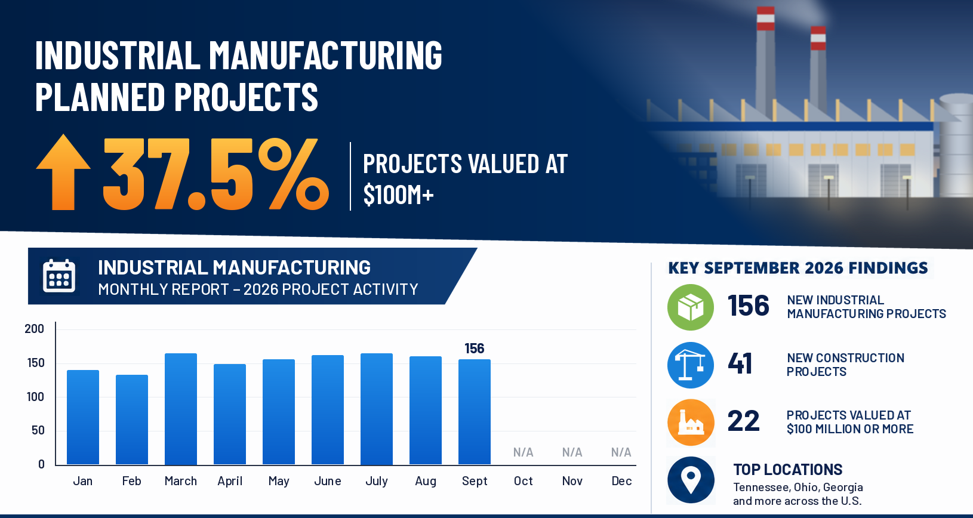
37.5% Growth in $100M New Industrial Planned Projects MoM for September 2026
-
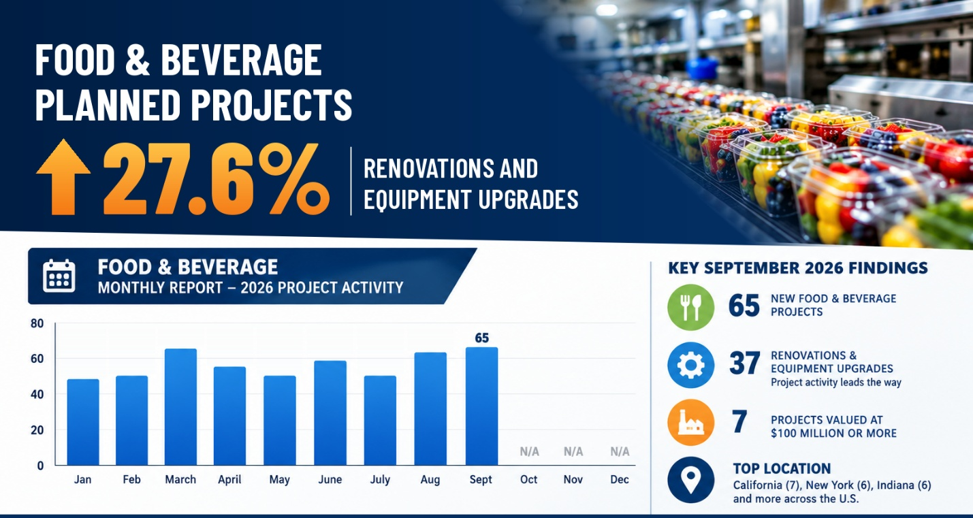
27.6% MoM Increase in Industrial Planned Projects for Renovations and Equipment Upgrades for September 2026
-
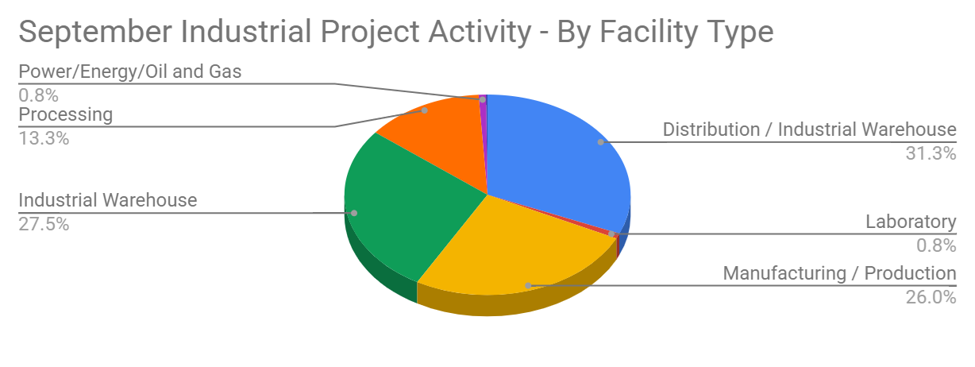
392 New Planned Industrial Projects Tracked in September 2026
-
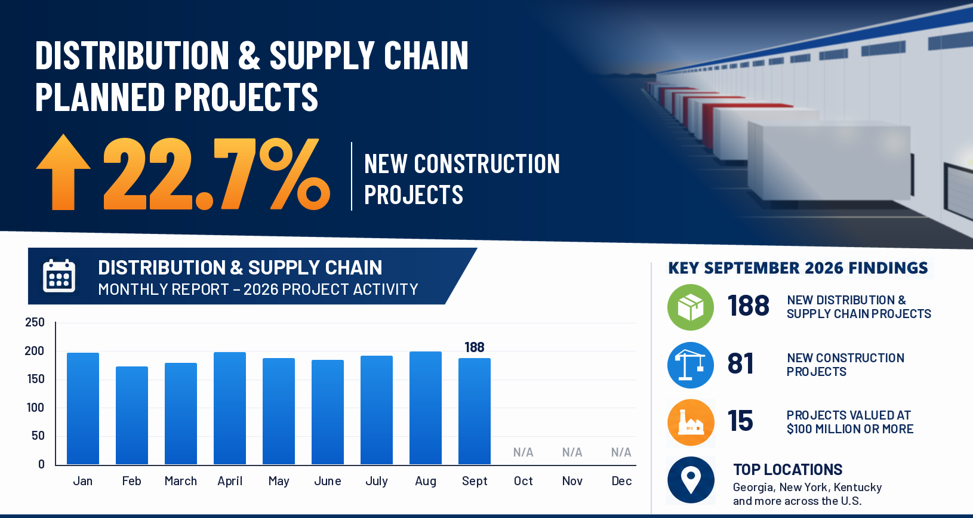
22.7% Increase in September 2026 for New Planned Distribution and Supply Chain Projects Over August 2026
