
AI sales forecasting promises faster analysis, better pipeline visibility, and more accurate revenue projections.
That promise is attractive to industrial companies managing long sales cycles, complex buying committees, uneven project timing, and large opportunities that can materially affect quarterly results.
However, AI does not automatically fix poor forecasting. A forecasting model cannot produce dependable insight from incomplete CRM records, inconsistent sales stages, unrealistic close dates, or opportunity values based on optimism rather than evidence.
AI sales forecasting is most useful when it strengthens an already disciplined sales process. It can help identify patterns, surface risk, compare scenarios, and challenge assumptions. It should support management judgment, not replace it.
Glossary: AI sales forecasting: AI sales forecasting uses machine learning, statistical analysis, automation, and sales data to estimate future revenue, opportunity outcomes, pipeline risk, and likely sales performance.
What Is AI Sales Forecasting?
AI sales forecasting uses software models to analyze historical sales data, active opportunities, buyer engagement, sales activity, pipeline movement, and other available signals.
Depending on the platform and available data, the system may help estimate:
- which opportunities are most likely to close
- which deals are at risk
- expected revenue by month or quarter
- how long opportunities may remain in the pipeline
- which sales stages create bottlenecks
- whether individual close dates appear realistic
- how forecast outcomes may change under different assumptions
Traditional forecasting often depends heavily on sales-representative judgment, manager review, spreadsheets, and manually assigned probability percentages.
AI adds pattern analysis and automation, but it still depends on the quality of the underlying process and data.
FAQ: Does AI sales forecasting replace sales managers?
No. AI can identify patterns, risks, and probabilities, but sales managers still need to evaluate account context, technical complexity, customer relationships, market changes, and information the model may not understand.
How AI Sales Forecasting Differs From Traditional Forecasting
Traditional forecasting commonly relies on:
- historical revenue
- sales-representative estimates
- pipeline-stage percentages
- manager judgment
- weighted opportunity values
- manual spreadsheet updates
AI-assisted forecasting may incorporate a broader set of signals, including:
- stage duration
- sales-cycle length
- buyer engagement
- email and meeting activity
- number of identified stakeholders
- changes in expected close dates
- opportunity value
- industry and account characteristics
- previous win and loss patterns
- historical performance by salesperson, region, or product
The difference is not that traditional forecasting uses no intelligence and AI forecasting uses perfect intelligence.
The difference is that AI can process more variables consistently and identify relationships that may be difficult to detect manually.
Glossary: Predictive sales analytics: Predictive sales analytics uses historical and current sales data to estimate future outcomes such as deal probability, revenue, sales-cycle timing, and pipeline risk.
What AI Sales Forecasting Can Do Well
1. Identify Stalled Opportunities
AI tools can flag opportunities that have remained in one pipeline stage longer than similar successful deals.
A stalled opportunity may show signs such as:
- no recent buyer activity
- repeatedly changed close dates
- missing next steps
- limited stakeholder involvement
- long periods without communication
- a proposal without follow-up activity
This does not prove that the deal is dead, but it can prompt a useful review.
2. Challenge Unrealistic Close Dates
Salespeople may choose close dates based on hope, pressure, or the buyer’s informal language.
An AI model can compare the active opportunity with historical deals that had similar:
- values
- sales stages
- industries
- activity levels
- stakeholder counts
- cycle lengths
If similar deals usually require another three months, a close date next week may deserve scrutiny.
3. Improve Revenue Scenarios
Forecasting tools can model different outcomes instead of presenting one supposedly certain number.
Examples include:
- commit forecast
- best-case forecast
- most-likely forecast
- downside scenario
- forecast by territory
- forecast by product line
- forecast by sales representative
This can help leadership plan inventory, staffing, installation resources, cash flow, and production capacity.
4. Reveal Pipeline Patterns
AI analysis may reveal patterns such as:
- one lead source producing faster sales cycles
- certain industries showing higher win rates
- specific pipeline stages causing delays
- large deals requiring more stakeholders
- some product categories producing frequent forecast misses
These patterns can support process improvement beyond the forecast itself.
Glossary: Pipeline risk: Pipeline risk is the possibility that expected opportunities will be delayed, reduced, lost, or incorrectly forecast because of weak qualification, missing information, inactivity, competition, or changing buyer conditions.
FAQ: What problems can AI sales forecasting help identify?
AI forecasting can help identify stalled opportunities, unrealistic close dates, inconsistent stage movement, weak engagement, missing stakeholders, and patterns associated with won or lost deals.
What Data Does AI Sales Forecasting Use?
The model may analyze data from several categories.
Historical Sales Data
- won and lost opportunities
- deal value
- sales-cycle length
- close dates
- discounting
- product or service category
- customer industry
Active Pipeline Data
- current stage
- expected value
- assigned probability
- time in stage
- next action
- target close date
- stakeholders
- known risks
Engagement Data
- email responses
- meeting activity
- call frequency
- proposal engagement
- website activity
- content interaction
Account and Market Data
- company size
- industry
- location
- facility type
- project activity
- economic conditions
- competitive factors
Not every platform uses every signal. Some tools are mainly CRM forecasting systems. Others incorporate external market or intent data.
Glossary: Forecasting input: A forecasting input is any historical, pipeline, account, engagement, or market data used by a model to estimate future sales outcomes.
Data Quality Determines Forecast Quality
AI forecasting is not immune to bad data.
Common data problems include:
- opportunities left open after they are inactive
- missing next steps
- inaccurate close dates
- inflated opportunity values
- inconsistent pipeline stages
- duplicate accounts
- missing lost-deal reasons
- incomplete contact roles
- poor lead-source tracking
If salespeople update the CRM only before forecast meetings, the model will learn from a distorted version of the pipeline.
Before investing in AI forecasting, companies should improve:
- CRM hygiene
- stage definitions
- close-date discipline
- opportunity qualification
- activity tracking
- lost-reason documentation
- account ownership
- stakeholder records
Glossary: CRM hygiene: CRM hygiene is the ongoing process of keeping account, contact, activity, opportunity, and pipeline data accurate, current, complete, and consistent.
FAQ: Can AI forecasting work with poor CRM data?
It can still produce outputs, but those outputs may be unreliable. Incomplete stages, inaccurate close dates, inactive deals, and weak opportunity data reduce forecast quality.
AI Does Not Remove Human Bias Completely
AI is often described as unbiased, but that claim is too broad.
Models can inherit bias from:
- historical sales decisions
- uneven account coverage
- past qualification standards
- missing data
- sales-representative behavior
- the way outcomes are labeled
- the variables selected for analysis
For example, if the company historically neglected a particular market, the model may interpret limited success there as evidence that the market is weak rather than evidence that the company invested too little effort.
Human review remains necessary to distinguish a meaningful pattern from a historical habit.
Glossary: Model bias: Model bias is a systematic distortion in an AI system caused by historical data, assumptions, missing information, labels, or design choices.
AI Sales Forecasting for Long Industrial Sales Cycles
Industrial forecasting presents special challenges because opportunities may involve:
- capital approval
- technical evaluation
- engineering reviews
- procurement
- construction schedules
- shutdown timing
- multiple facilities
- vendor qualification
- long implementation periods
An industrial opportunity may be real but still far from purchase.
Forecasting systems should therefore distinguish between:
- early-stage project intelligence
- qualified pipeline
- active evaluation
- proposal-stage opportunities
- commercial negotiation
- committed purchases
Without these distinctions, early opportunities can inflate near-term revenue expectations.
Glossary: Forecast horizon: A forecast horizon is the future period covered by a sales forecast, such as the next month, quarter, year, or project cycle.
When Is AI Sales Forecasting Worth the Investment?
AI forecasting may be a good fit when the company has:
- a meaningful volume of sales data
- consistent CRM usage
- defined pipeline stages
- multiple salespeople or territories
- long or complex sales cycles
- significant inventory or staffing decisions tied to revenue
- a need for scenario planning
- frequent forecast misses
The investment may be premature when:
- the CRM is rarely updated
- the company has very little historical data
- sales stages are undefined
- only a small number of opportunities exist
- most revenue comes from one or two unpredictable customers
- lead sources and outcomes are not tracked
- leadership expects the software to repair the process automatically
FAQ: When should a company invest in AI sales forecasting?
A company should consider it when it has enough historical and pipeline data, consistent CRM use, defined sales stages, meaningful forecast complexity, and business decisions that depend on improved revenue visibility.
How to Evaluate AI Sales Forecasting Software
Before selecting a platform, ask:
- Which data sources does it use?
- How much historical data is required?
- Does it integrate with the existing CRM?
- Can users understand why a deal was scored a certain way?
- Can managers adjust assumptions?
- Does it support scenario planning?
- How does it handle missing data?
- Can it identify forecast changes over time?
- Does it measure forecast accuracy?
- How are user permissions and data security handled?
A useful tool should produce understandable insight, not merely a mysterious confidence score.
Glossary: Explainable forecasting: Explainable forecasting provides understandable reasons for a model’s prediction, such as stage duration, engagement changes, close-date movement, or historical similarity.
How to Implement AI Forecasting
A practical implementation process may include:
- Define the forecasting problem.
- Audit CRM and historical data.
- Standardize sales stages and exit criteria.
- Choose a limited pilot group.
- Establish a baseline forecast.
- Compare AI and existing forecasts.
- Review errors and exceptions.
- Train managers and salespeople.
- Measure business impact.
- Expand only after the pilot proves useful.
Start with a specific goal, such as improving quarterly forecast accuracy or identifying stalled opportunities.
Do not begin with the vague goal of “using more AI.” That is a technology shopping trip, not an implementation plan.
Measure Forecasting Performance
An AI forecasting system should be judged by measurable outcomes.
Useful metrics include:
- forecast accuracy
- forecast error
- difference between predicted and actual revenue
- accuracy by sales representative
- accuracy by product or territory
- percentage of slipped deals
- percentage of unexpected losses
- time saved preparing forecasts
- stalled opportunities identified
- improvement in close-date accuracy
Forecast accuracy should be measured consistently over time.
A model that performs well in one quarter may weaken as products, markets, staffing, or economic conditions change.
Glossary: Forecast error: Forecast error is the difference between predicted sales results and actual sales results during the forecast period.
Human Oversight Still Matters
Sales leaders may know things the model does not.
Examples include:
- a champion is leaving the company
- a project has lost executive support
- a technical issue is close to resolution
- the buyer is waiting for a permit
- a competitor has changed pricing
- the account is reorganizing
- a verbal commitment is weaker than it appears
The strongest forecasting process combines:
- model output
- sales-representative context
- manager review
- documented evidence
- clear override rules
Glossary: Human-in-the-loop forecasting: Human-in-the-loop forecasting combines AI predictions with review, context, correction, and approval from salespeople and managers.
How Industrial Market Intelligence Can Strengthen Forecasting
Forecasting becomes more useful when pipeline data includes real project context.
Industrial SalesLeads’ Industrial Market Intelligence can help identify companies involved in:
- new facility construction
- plant expansions
- relocations
- equipment modernization
- warehouse projects
- production-line changes
- capital investment
Project information can help sales teams understand:
- why an opportunity may exist
- what stage the project has reached
- which stakeholders may be involved
- whether timing appears near-term or long-term
- what products or services may be relevant
This information should not be treated as proof that a sale will close. It can improve qualification and provide useful context for pipeline review.
Applying Forecast Insights to New Sales Development
Forecast analysis may reveal which customers, industries, project types, and opportunity characteristics are associated with stronger outcomes.
Those insights can support better targeting.
Through Prospecting Services, Industrial SalesLeads can help companies:
- define target accounts
- identify relevant contacts
- conduct outbound outreach
- qualify interest
- nurture prospects
- schedule sales appointments
Forecasting tells the company what appears likely to happen within the current pipeline. Prospecting helps create the next generation of opportunities.
The two functions support different parts of sales growth and should not be confused.
Contact Industrial SalesLeads to discuss how industrial project intelligence and prospecting support can help build a stronger, more visible sales pipeline.
Final Thoughts
AI sales forecasting can improve sales planning, but it is not a crystal ball with a software subscription.
Its value comes from processing patterns, highlighting risk, challenging assumptions, and helping leadership compare possible outcomes.
The investment makes the most sense when the company already has disciplined CRM usage, useful historical data, defined pipeline stages, and managers who understand that the model is an advisor rather than an oracle.
Good forecasting combines technology, clean data, sales context, and human judgment.
Applying it to New Sales
The result of the information is a great start to targeting who your potential best customers are. Work with Industrial SalesLeads to get these targeted prospects and we’ll work with you to use multiple ways to contact, including calling, to set high value appointments. Interested in how this can happen? Contact us today, and we’ll walk you through our unique approach and process to helping you achieve your sales goals.
Want a predictable flow of qualified leads?
Let’s talk about how we can build it for you.
Latest Posts
-
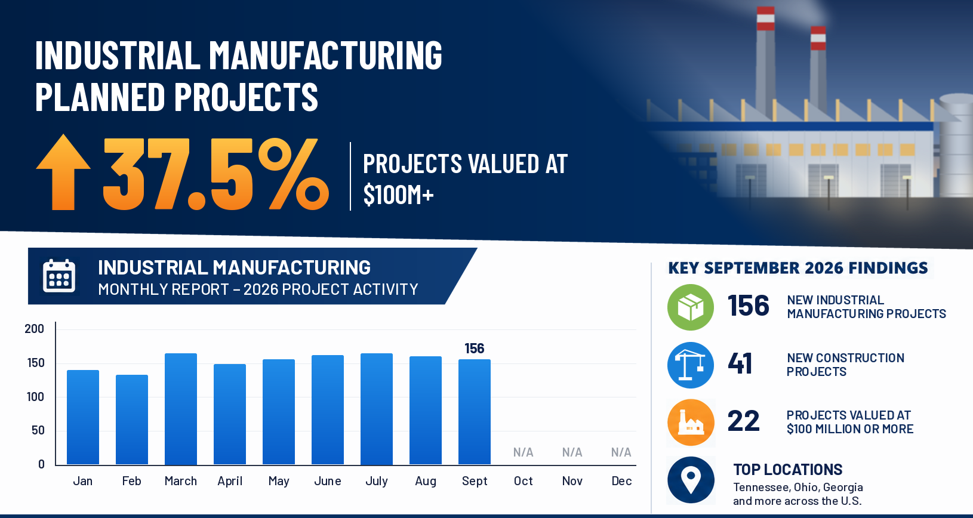
37.5% Growth in $100M New Industrial Planned Projects MoM for September 2026
-
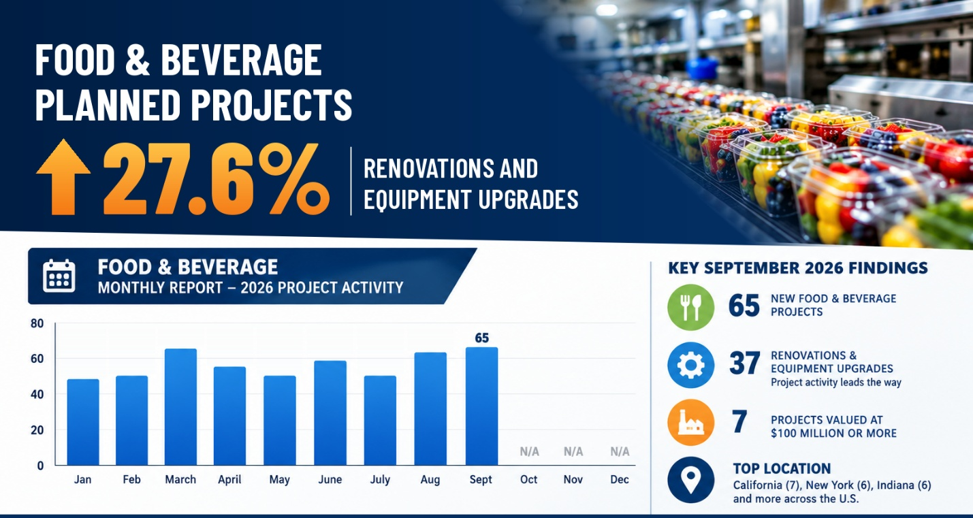
27.6% MoM Increase in Industrial Planned Projects for Renovations and Equipment Upgrades for September 2026
-
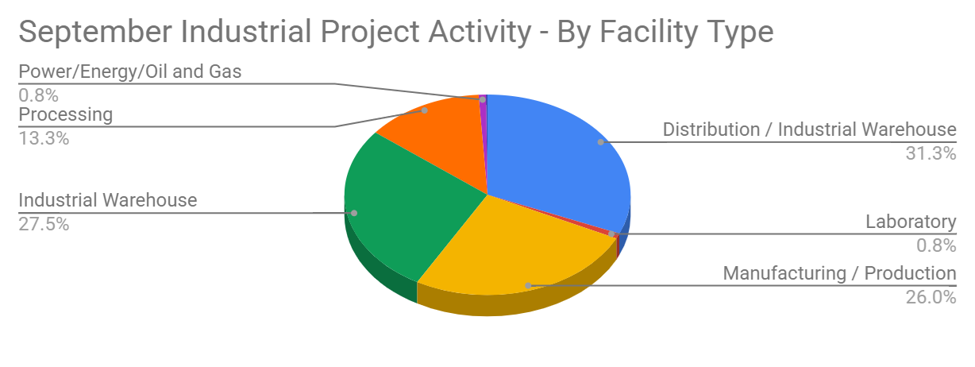
392 New Planned Industrial Projects Tracked in September 2026
-
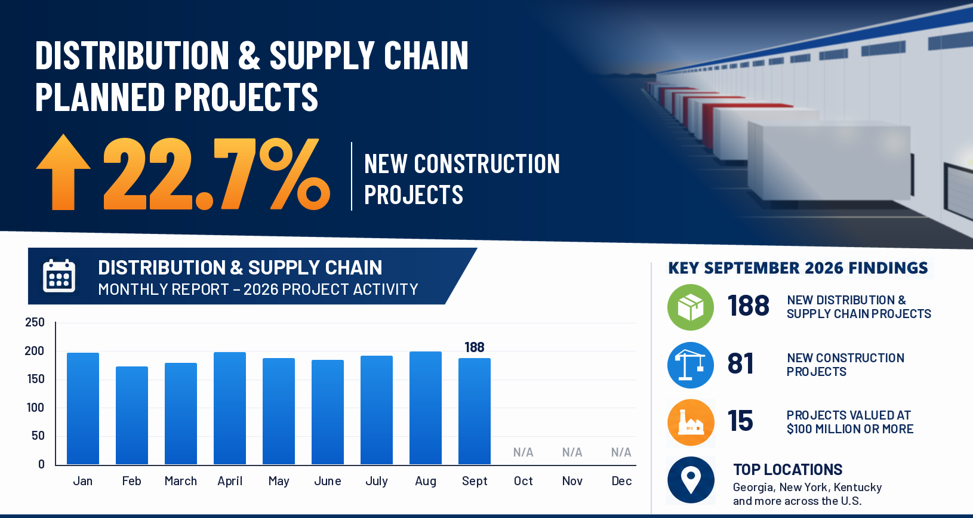
22.7% Increase in September 2026 for New Planned Distribution and Supply Chain Projects Over August 2026
