
In industrial B2B sales, “trust me” isn’t a strategy. In the Industrial B2B sales model, showing your value is of high importance. Buyers are protecting uptime, budgets, safety, and reputations, and that means they’re allergic to vague promises. One of the fastest ways to prove you can deliver is with industrial case studies.
Industrial case studies aren’t just marketing collateral. They’re evidence: a documented example of how your solution solved a real problem for a real client, under real-world constraints. When done correctly, case studies reduce perceived risk, shorten decision cycles, and give champions inside the account something they can confidently circulate.
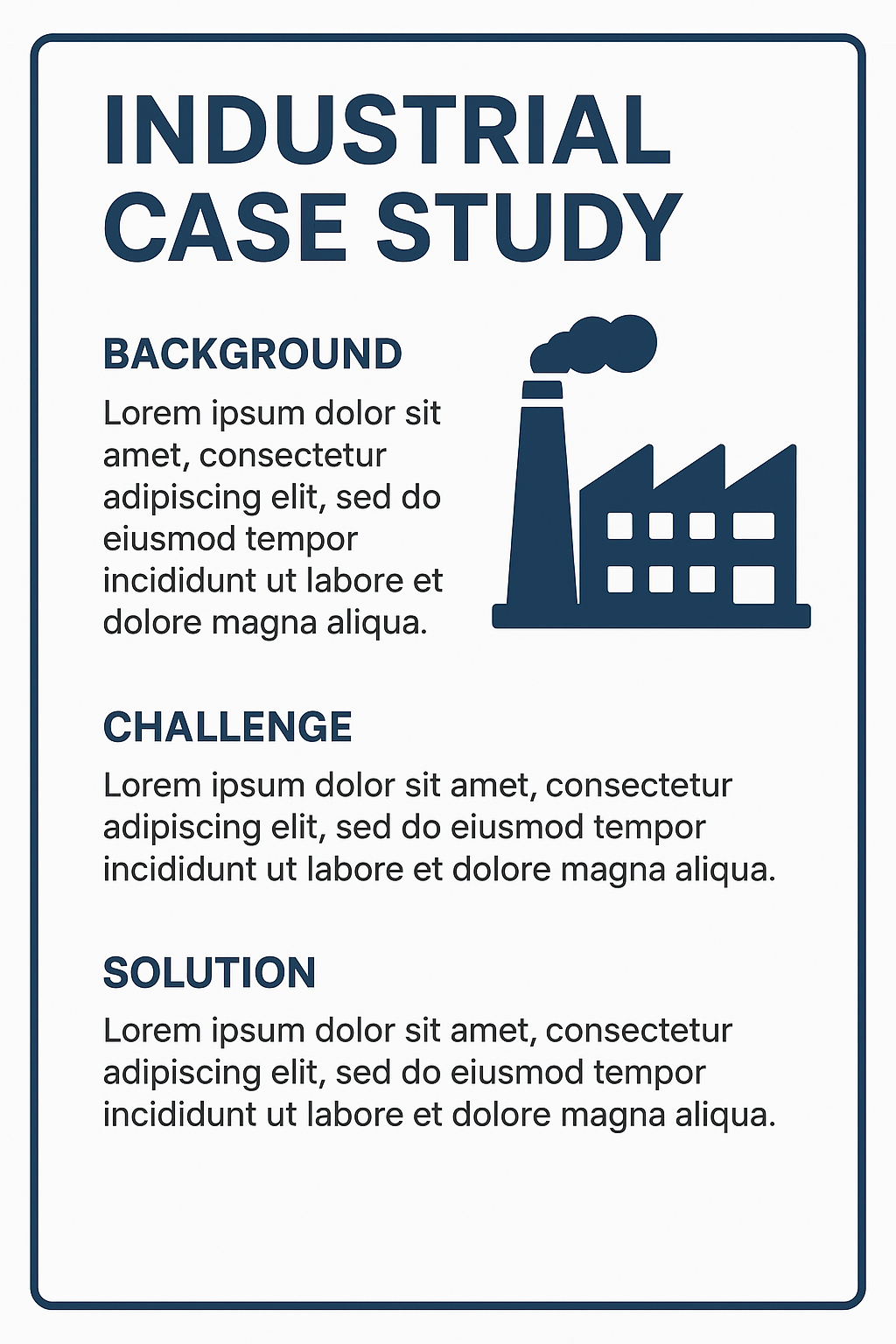
Case studies are a showcase of how your products or services have successfully solved real world problems for your clients. They are a crucial component in helping close a deal.
Q: Do industrial case studies really help close deals?
A: Yes, especially in longer-cycle industrial sales where risk reduction matters. Case studies provide proof of outcomes and help internal champions justify decisions.
Case Study: A structured story showing a client’s problem, your solution, and measurable results.
Producing the Best Industrial Case Study
A case study should move a potential customer from "This sounds good" to "This will work for us." A well made case study tells a compelling story, starting with a client's initial problem. It should then end with your solution and a review in quantifiable results. The narrative helps potential buyers see themselves in the story, envisioning a similar positive outcome for their own business.
A great case study should move a prospect from:
“This sounds good.”
to
“This will work for us.”
That only happens when your case study reads like a clear, credible story with measurable outcomes.
The structure that closes deals
A high-performing industrial case study usually follows this flow:
1) The Situation
What kind of operation was it? What constraints existed (downtime limits, compliance, legacy systems, budget windows)?
2) The Problem
What was broken, slow, expensive, unsafe, or inconsistent? What were the stakes?
3) The Solution
What did you implement, change, or improve, and why that approach (not just what you sold)?
4) The Results
What changed, and how do you know? Quantify outcomes wherever possible.
5) Proof
A quote or validation from the client that confirms the results and the experience.
Industrial buyers want to recognize themselves in the story. If they can picture their facility, their constraints, and their internal objections inside your narrative, you’re not “marketing.” You’re pre-answering the questions they’ll ask in procurement, operations, engineering, and leadership review.
Q: What should an industrial case study include?
A: Situation, problem, solution, implementation details, measurable results, and a client quote or validation.
Social Proof: Evidence from others (quotes, testimonials, outcomes) that increases buyer confidence.
Identifying the Story
For an industrial case study to actually help close a sale, it has to be credible. Credibility comes from specifics, not adjectives. This is where data and statistics become important. Including specific metrics—such as a 40% increase in efficiency or a 25% reduction in costs—backs up the claims made in the narrative. Client quotes and testimonials further enhance the credibility, providing a human voice that adds weight to the success story.
This is where data and statistics earn their keep. Metrics like:
-
40% increase in efficiency
-
25% reduction in costs
-
18% less downtime
-
12% faster cycle times
-
scrap rate reduced from X to Y
Those kinds of details turn a nice story into proof.
Client quotes and testimonials also matter, but only when they sound like real operational feedback, not vague praise. The best testimonials reference the problem, implementation experience, and measurable results.
Q: How long should an industrial case study be?
A: Long enough to be credible, short enough to be used. Many teams publish a full version on the website and a one-page PDF summary for sales follow-up.
Sales Enablement: Content built specifically to help sales teams move prospects forward (one-pagers, PDFs, proof assets).
Why Industrial Case Studies Are Different
Industrial case studies often involve complex environments: production schedules, safety requirements, training needs, legacy systems, and multiple stakeholders. That complexity is precisely why case studies work so well in industrial B2B.
This makes the narrative structure and the use of data add more value. A company in the manufacturing sector, for example, needs to understand a clear and detailed account of how a new piece of equipment or software improved their production line, not just a vague claim of success. The industrial case study becomes a technical document and a marketing asset, speaking the language of the industry and addressing specific pain points.
A manufacturing prospect doesn’t want a vague success story. They want a clear account of:
-
what the process looked like before
-
what changed
-
what implementation required
-
what the measurable outcome was
-
how quickly results showed up
In other words, a strong industrial case study becomes both a technical document and a sales asset. It speaks the language of the industry and directly addresses common pain points like downtime, throughput, compliance, quality, and cost control.
Q: What metrics matter most in industrial case studies?
A: The ones tied to business outcomes: uptime, throughput, cycle time, scrap rate, cost reduction, safety/compliance improvements, lead times, and labor hours saved.
Stakeholders: Everyone involved in the decision (operations, engineering, procurement, finance, leadership).
Client Testimonials
Client feedback functions as social proof, but it also serves a practical purpose: it gives internal stakeholders a human, credible line they can repeat. Take note of client quotes in your case study, and to ensure approval of the story and their quotes. The client testimonials, which are derived from the industrial case study can be used beyond the story. These client testimonials can be used on the website, in press releases, brochures or even emails. That’s why gaining their approvals is essential for sales and marketing.
When gathering testimonials:
-
document quotes during the project, not months later
-
confirm which metrics can be shared publicly
-
get written approval for quotes, names/titles, and company references
Once approved, testimonials don’t have to live only inside the case study. They can be repurposed across:
-
service and solution pages
-
proposal templates
-
press releases
-
brochures and one-pagers
-
follow-up emails
Approval matters because industrial sales is relationship-driven. A case study should build trust, not trigger a legal cleanup.
Q: What if we can’t share exact numbers?
A: Use ranges, indexed improvements, or relative comparisons (before/after). You can still be specific without disclosing confidential details.
Implementation: The real-world work of deploying a solution (integration, training, commissioning, rollout).
Distribution
Industrial case study distribution is key to its effectiveness in promoting your businesses solutions. Place case studies on your website, promote on social media, and include it in email marketing campaigns which ensures that it reaches the right audience at the right time. A well-placed case study can be the final nudge a hesitant prospect needs. A case study only helps close deals if it’s easy to find and used at the right moment. Best practice distribution:
-
Website: create a case studies hub, and also place relevant case studies on solution pages
-
Sales enablement: build a one-page PDF version for reps to attach in follow-ups
-
Email marketing: include case studies in mid-funnel sequences where trust-building matters most
-
Social media: repurpose one key metric + a short “problem → solution → result” story
The goal is to make the case study available exactly when a prospect is deciding whether to take the next step.
A well-placed case study can be the final nudge a hesitant decision-maker needs.
Q: Where should we publish case studies?
A: On a case studies hub, on relevant solution pages, inside proposal templates, and in follow-up emails after discovery calls.
Quantifiable Results: Measured outcomes like reduced downtime, higher throughput, lower scrap rate, lower costs, faster cycle times.
Use in Cold Calling Efforts
Cold calling is rarely “one-and-done” in industrial sales. It’s a longer process: calls, follow-up emails, voicemail touches, and ongoing qualification while the prospect is still juggling their current priorities. That’s where case studies help. Sending a relevant case study after a first touch adds credibility and keeps the follow-up grounded in proof rather than pressure.
Q: How do case studies help with cold outreach?
A: They turn follow-up into evidence-based messaging: “Here’s a similar situation and what the outcome looked like.” That builds trust faster than repeated generic touches.
Mid-Funnel: The stage where prospects are considering options and evaluating risk, proof, and fit.
Champion: An internal supporter at the prospect company who pushes the decision forward and needs “proof assets” to sell internally.
Using industrial case studies in cold calling efforts as a follow up lends you credibility for what you are selling. However, making the calls, sending follow up emails is a longer process and can be slow going, especially when you need to continue to sell what’s in your current sale cycle. If you need additional assistance, be sure to contact us for our Prospecting Services.
What to learn more? Get in Touch
Latest Posts
-
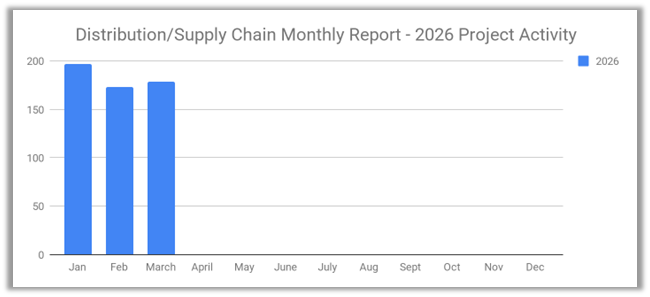
U.S. Distribution and Supply Chain Sector Records 179 New Capital Projects in March 2026, Driven by Warehouse Construction and Equipment Upgrades
-
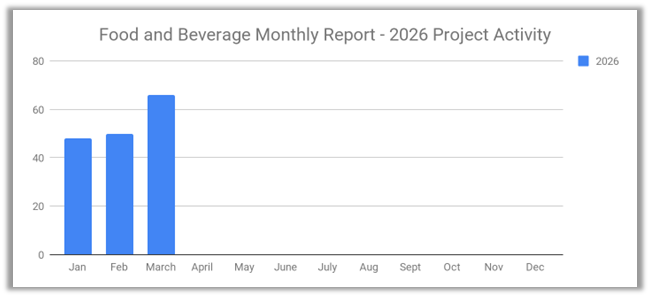
Food and Beverage Capital Investment Remains Strong in March 2026 with 66 New Projects Spanning Processing, Expansion, and Modernization
-
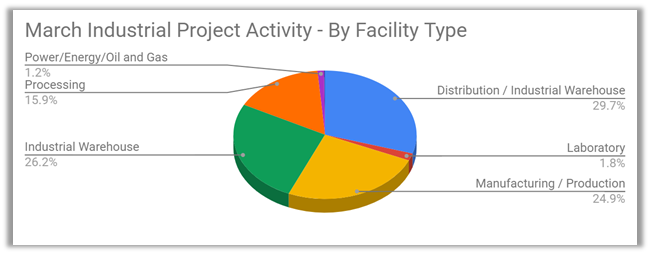
U.S. Industrial Construction Activity Rises 9% in March 2026, Tracked 419 New Planned Projects Across North America
-
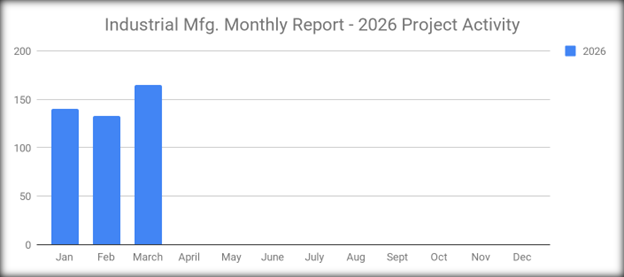
U.S. Industrial Manufacturing Sector Tracked 165 New Capital Projects in March 2026, Topping $8.6B in Combined Investment
