

Industrial B2B sales success is often reduced to one question: Did the sales team hit its revenue target?
Revenue matters, but it does not tell the entire story. A team can reach a short-term quota while weakening its future pipeline, losing valuable customers, discounting too aggressively, or spending too much time pursuing poor-fit opportunities.
Sustainable industrial sales success requires a broader measurement framework. Companies need to evaluate closed revenue, qualified pipeline, account growth, customer retention, sales-cycle efficiency, profitability, and the strength of long-term customer relationships.
The most useful sales measurements answer three questions:
- Is the sales team creating enough qualified opportunities?
- Is it converting those opportunities efficiently and profitably?
- Is it building customer relationships that produce lasting value?
Glossary: Industrial B2B sales success: Industrial B2B sales success is the ability to generate profitable revenue, develop qualified pipeline, retain valuable customers, expand accounts, and build long-term buyer relationships.
Why Closed Revenue Is Not Enough
Closed revenue is a lagging indicator. It shows what the sales team accomplished during a completed period, but it does not necessarily show whether future performance is healthy.
For example, a strong quarter may depend heavily on one large transaction. If the qualified pipeline behind that deal is thin, the following quarter may be much weaker.
Revenue figures also need context. Leadership should understand:
- how much pipeline was required to produce the revenue
- how long deals took to close
- which lead sources produced the best customers
- whether discounts reduced profitability
- how many customers renewed or purchased again
- whether strategic accounts expanded
- how much it cost to acquire each customer
Revenue remains essential, but it should be evaluated alongside indicators of pipeline health, customer quality, and sales efficiency.
FAQ: Is revenue the best measure of industrial sales success?
Revenue is an essential measure, but it should not be used alone. Industrial companies should also track qualified pipeline, conversion rates, sales-cycle length, profitability, customer retention, account growth, and customer lifetime value.
1. Qualified Pipeline Creation
A healthy industrial sales organization consistently creates new opportunities that match the company’s target market and capabilities.
Raw lead volume can be misleading. A database may contain thousands of contacts while producing very few serious opportunities. The more useful question is whether the sales team is developing prospects with relevant needs, realistic timing, suitable budgets, and access to decision-makers.
Useful pipeline measurements include:
- number of qualified leads
- sales-qualified opportunities created
- total qualified pipeline value
- pipeline value by industry
- pipeline value by territory
- pipeline coverage ratio
- percentage of leads matching the ideal customer profile
- project-based opportunities identified
- qualified meetings scheduled
A strong pipeline should contain enough qualified value to support future revenue goals without being inflated by weak or inactive opportunities.
Glossary: Qualified sales pipeline: A qualified sales pipeline is the total collection of credible opportunities that match the company’s target market and have demonstrated sufficient fit, need, timing, authority, or potential value.
FAQ: What makes an industrial sales opportunity qualified?
A qualified industrial opportunity generally matches the target market, has a relevant operational or project need, involves an appropriate decision-maker, fits the seller’s capabilities, and has credible timing or purchasing potential.
2. Conversion Rates Through the Sales Funnel
Conversion rates show how efficiently prospects move through the industrial sales process.
Instead of measuring only closed deals, teams should examine conversion between major pipeline stages.
These may include:
- lead-to-qualified-lead conversion rate
- qualified-lead-to-meeting rate
- meeting-to-opportunity rate
- opportunity-to-proposal rate
- proposal-to-close rate
- appointment-to-opportunity rate
- overall win rate
Stage-by-stage conversion reveals where opportunities are being lost. If many leads fail qualification, targeting may be too broad. If meetings rarely become opportunities, discovery or account selection may need improvement. If proposals rarely close, pricing, competitive positioning, technical fit, or follow-up may be the issue.
Glossary: Sales conversion rate: A sales conversion rate measures the percentage of prospects or opportunities that successfully move from one stage of the sales process to another.
3. Sales-Cycle Length and Pipeline Velocity
Industrial sales cycles are often long because purchases may involve technical requirements, capital approvals, engineering reviews, procurement, safety considerations, and multiple decision-makers.
That makes sales-cycle measurement especially important.
Teams should track:
- average time from lead to qualification
- average time from first meeting to proposal
- average time from proposal to close
- average total sales-cycle length
- time spent in each pipeline stage
- percentage of stalled opportunities
- pipeline velocity
Long sales cycles are not automatically a problem. Some industrial purchases require time. The issue is whether opportunities are advancing appropriately or becoming stuck without a defined next step.
Sales teams can improve velocity through clearer qualification, better stakeholder mapping, useful technical content, consistent follow-up, and earlier identification of project timing.
Glossary: Pipeline velocity: Pipeline velocity measures how quickly qualified sales opportunities move through the pipeline and generate revenue.
FAQ: How can industrial companies shorten long sales cycles?
Industrial companies can improve sales-cycle efficiency by qualifying prospects earlier, identifying all relevant stakeholders, clarifying technical requirements, tracking project timing, providing useful sales materials, and maintaining consistent follow-up.
4. Customer Retention and Repeat Business
Industrial sales success does not end when the first purchase closes. Existing customers often represent substantial future value through repeat orders, maintenance, replacement equipment, additional locations, new projects, and referrals.
Customer retention metrics may include:
- customer retention rate
- renewal rate
- repeat-purchase rate
- revenue retained
- customer churn rate
- average customer tenure
- service contract renewal
- customer satisfaction
- referral activity
High retention can indicate reliable delivery, strong support, technical competence, and effective relationship management.
Low retention may reveal problems that new-customer revenue temporarily hides.
Glossary: Customer retention rate: Customer retention rate measures the percentage of existing customers that continue doing business with a company during a defined period.
5. Account Growth and Share of Customer
Industrial companies should also measure whether valuable accounts are expanding over time.
Account growth may come from:
- additional products or services
- new departments
- additional facilities
- larger project scopes
- maintenance agreements
- equipment replacements
- upgrades and modernization
- cross-selling
- renewals
- referrals to affiliated companies
These measurements show whether the sales organization is becoming more valuable to the customer rather than merely completing isolated transactions.
Useful account-growth KPIs include revenue by account, year-over-year account growth, products purchased per account, location penetration, and expansion revenue.
Glossary: Account growth: Account growth is the increase in revenue, products, services, projects, locations, or relationship depth generated from an existing customer.
6. Customer Lifetime Value
Customer Lifetime Value, or CLV, estimates the total value a customer may generate over the duration of the business relationship.
CLV is especially useful in industrial sales because the first transaction may represent only a fraction of the customer’s potential value.
A customer may later purchase:
- replacement equipment
- additional systems
- maintenance support
- upgrades
- installation services
- products for additional facilities
- new project support
Understanding CLV helps companies make better decisions about customer acquisition cost, account management, retention programs, and sales resources.
Glossary: Customer Lifetime Value: Customer Lifetime Value, or CLV, is the estimated total revenue or profit a customer may generate throughout the complete business relationship.
7. Customer Acquisition Cost and Profitability
Revenue growth is less meaningful when the cost of producing that revenue is unsustainable.
Customer Acquisition Cost, or CAC, includes the sales and marketing expenses required to acquire a new customer.
Those costs may include:
- advertising
- prospecting labor
- sales salaries and commissions
- technology
- trade shows
- content production
- travel
- sales engineering
- proposal development
Industrial companies should compare acquisition cost with customer lifetime value, deal margin, and retention.
A high acquisition cost may still be acceptable for a valuable long-term customer. It becomes a problem when expensive acquisition repeatedly produces low-value or short-lived accounts.
Glossary: Customer Acquisition Cost: Customer Acquisition Cost, or CAC, is the total sales and marketing cost required to acquire a new customer.
8. Customer-Centric Sales Behaviors
Not every indicator of industrial sales success appears immediately in a financial report. Sales behaviors also influence long-term performance.
Strong industrial sales teams understand the buyer’s operational environment, technical needs, business goals, and decision process.
Customer-centered behaviors include:
- asking useful discovery questions
- listening carefully
- communicating technical value clearly
- setting realistic expectations
- following through on commitments
- coordinating with service and operations teams
- providing useful information
- responding consistently
- helping buyers navigate internal decisions
These behaviors support trust, retention, referrals, and account growth.
Glossary: Consultative selling: Consultative selling is a sales approach focused on understanding the buyer’s problems, requirements, goals, and decision process before recommending a solution.
9. Sales Forecast Accuracy
Forecast accuracy is another important sign of a healthy industrial sales process.
A reliable forecast helps leadership plan staffing, inventory, production, cash flow, installation schedules, and business investment.
Poor forecast accuracy may indicate:
- weak qualification
- inflated pipeline stages
- unclear purchasing timelines
- missing stakeholders
- insufficient CRM discipline
- overconfidence about verbal interest
- inactive opportunities remaining open too long
Sales forecasts improve when pipeline stages are clearly defined and opportunities are supported by evidence rather than optimism.
FAQ: Why is sales forecast accuracy important in industrial markets?
Forecast accuracy helps industrial companies plan production, staffing, inventory, installation resources, cash flow, and revenue expectations. It also reveals whether opportunities are being qualified and managed realistically.
Building an Industrial Sales Scorecard
The most useful sales dashboard combines leading and lagging indicators.
Leading indicators help predict future performance:
- qualified leads created
- target accounts engaged
- qualified meetings
- new project opportunities
- pipeline coverage
- stage conversion
- sales activity tied to target accounts
Lagging indicators confirm completed performance:
- closed revenue
- gross margin
- win rate
- customer retention
- account expansion
- customer lifetime value
- acquisition cost
A balanced scorecard prevents leadership from focusing only on past revenue or mistaking raw activity for future growth.
How Industrial SalesLeads Can Help
Industrial SalesLeads helps companies improve the front end of the sales process through Prospecting Services, qualified appointment setting, verified contacts, and industrial market intelligence.
Industrial Project Reports can help sales teams identify companies involved in planned construction, plant expansion, relocation, modernization, equipment upgrades, and other facility activity.
These project signals can improve several important sales measurements:
- qualified pipeline creation
- lead quality
- target-account engagement
- meeting volume
- opportunity development
- pipeline coverage
- sales-cycle timing
By identifying stronger-fit accounts and connecting outreach to real business activity, Industrial SalesLeads helps sales teams spend more time on opportunities with a clearer reason to buy.
Contact Industrial SalesLeads to discuss how prospecting services and industrial project intelligence can support a stronger, more measurable sales pipeline.
Final Thoughts
Industrial B2B sales success should not be measured through one number.
Revenue and closed deals remain essential, but sustainable performance also depends on qualified pipeline, conversion rates, sales-cycle efficiency, customer retention, account growth, profitability, customer lifetime value, and forecast accuracy.
The strongest industrial sales organizations measure both immediate results and the conditions that create future growth. That gives leadership a more accurate picture of sales performance and gives the sales team clearer guidance about where to improve.
Want a predictable flow of qualified leads?
Let’s talk about how we can build it for you.
Latest Posts
-
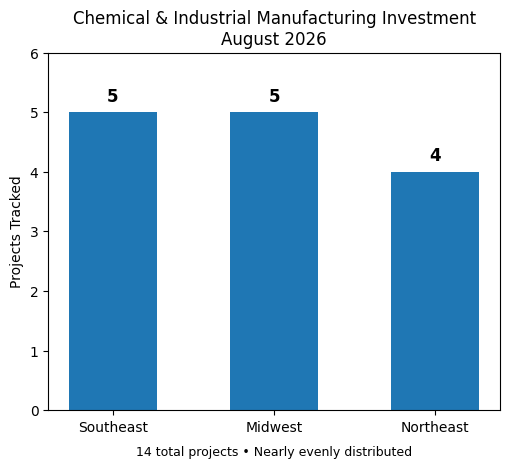
Chemical & Industrial Manufacturing Investment Spans Southeast, Midwest and Northeast in August 2026, with 14 Projects Tracked
-
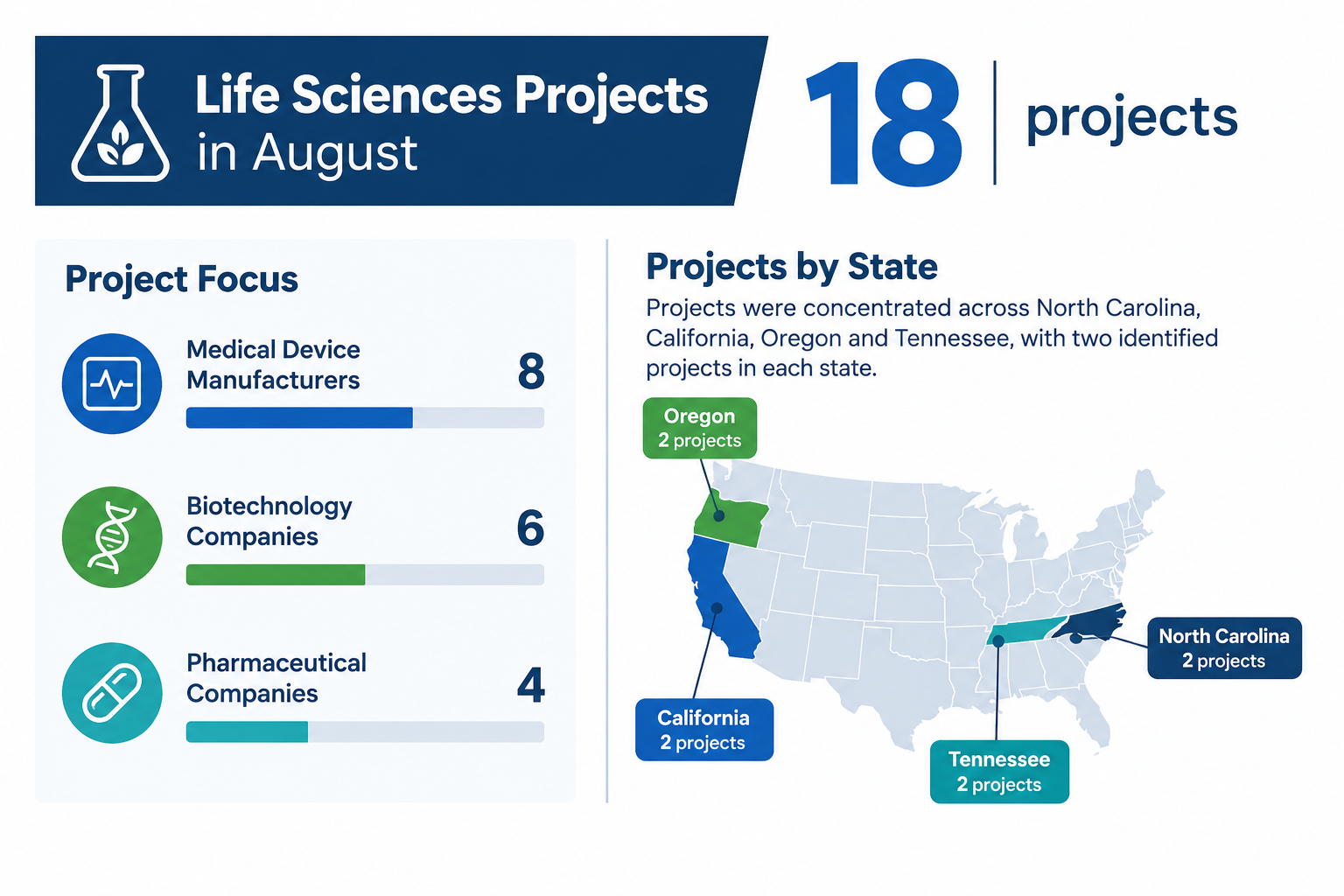
Life Sciences Manufacturing Investment Maintains Investment Momentum with 18 New Projects Identified in August 2026
-
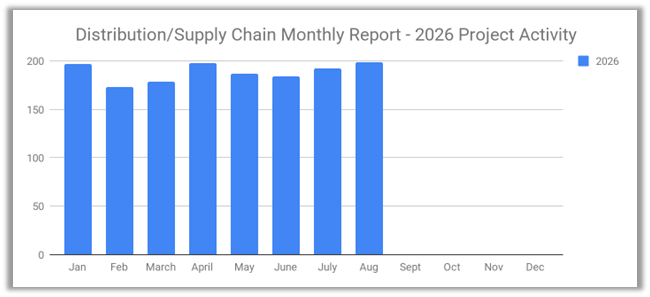
Distribution and Supply Chain Investment Hits 2026 Peak in August, Fueled by Three Months of Accelerating Growth
-
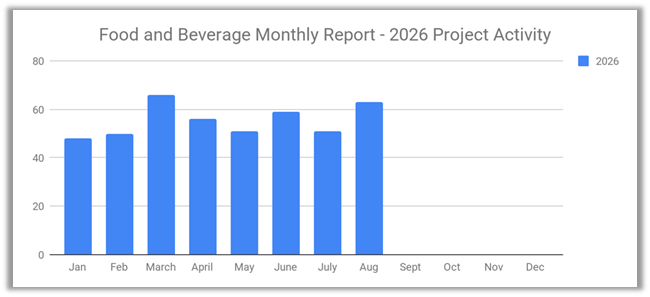
Food and Beverage Sector Surges to Second-Highest Month of 2026 with 63 New Planned Projects in August
