
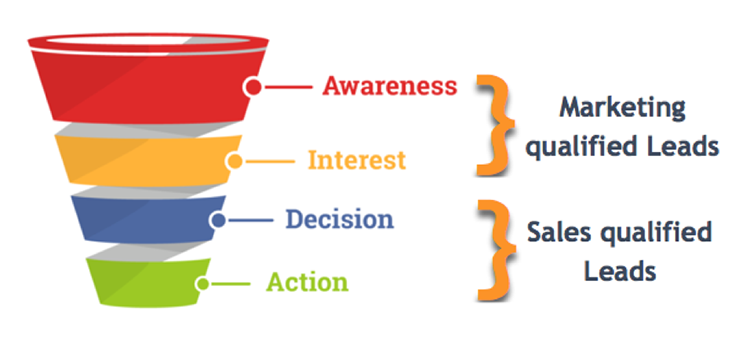
Qualifying a sales lead is one of the most critical steps in the sales process. In many cases, it will literally make or break your success. Have you ever poured time and energy into a lead that never became a customer? That’s usually a qualification problem, not a closing problem.
With a clear qualification process, your team can focus on the right opportunities, improve conversion rates, and build a more predictable pipeline—especially when you’re working with high-quality identified projects from SalesLeads.
Why Is Qualifying a Sales Lead So Important?
Lead qualification is the process of determining whether a prospect has the need, budget, authority, and timeline to make a purchasing decision. When you qualify leads well, you can prioritize the best-fit prospects and avoid spending cycles on those who are unlikely to convert.
Two-thirds of lost sales are often tied to poor or incomplete lead qualification. On the flip side, companies that consistently qualify their leads well typically see more accurate forecasting, higher close rates, and a stronger return on their sales and marketing investments.
Benefits of Qualifying a Sales Lead
- Reduces customer acquisition costs by focusing on the right prospects.
- Boosts conversion rates by aligning solutions with real business needs.
- Improves ROI on campaigns and outreach efforts.
- Personalizes the sales experience based on the lead’s pain points and priorities.
- Enhances data quality for more effective follow-up and lead nurturing.
- Shortens the sales cycle by removing poor-fit opportunities early.
Qualified Lead – A prospect who meets agreed-upon criteria (need, budget, authority, timing, and fit) and is considered likely to move forward in the sales process.
4 Steps to Qualifying a Sales Lead
Step 1: Create a Clear Buyer Profile
Before you can determine if a lead is qualified, you need a clear picture of your ideal customer. That starts with a detailed buyer profile that represents your best-fit prospects.
Your buyer profile should include:
- Business goals – What are they trying to achieve in the next 12–36 months?
- Pain points and challenges – Where are bottlenecks, inefficiencies, or growth barriers?
- Operational details – Industry, facility size, locations, and key technologies or processes.
- Decision-makers and influencers – Titles, roles, and how buying decisions are made.
- Budget and investment profile – Typical project size or spend range.
When you’re working with industrial project reports, many of these details are already identified, making it much easier to match a lead against your ideal customer profile.
Ideal Customer Profile (ICP) – A description of the type of company (industry, size, location, needs) that gets the most value from your solution and generates the highest long-term ROI for your business.
Step 2: Research Your Leads
Once you know who you’re looking for, it’s time to research your leads. Don’t go into qualification calls blind. Use tools and data sources to verify and enrich what you know about each account and contact.
Effective lead research can include:
- Reviewing company websites, press releases, and news about expansions, new facilities, and capital projects.
- Checking LinkedIn for decision-makers, org structure, and role changes.
- Leveraging SalesLeads project reports for active or planned industrial projects.
- Analyzing previous interactions logged in your CRM or marketing automation tools.
By researching ahead of time, you’ll ask better questions, build credibility faster, and qualify more efficiently.
Step 3: Ask Smart, Structured Questions
Great qualification conversations are driven by great questions. Your goal is to uncover the prospect’s needs, challenges, priorities, and constraints—without turning the call into an interrogation.
Focus on questions that help you understand:
- Need – “What operational challenges or projects are top-of-mind for you this year?”
- Impact – “What happens if this issue isn’t addressed in the next 6–12 months?”
- Budget – “Have you allocated budget or approval for this initiative?”
- Authority – “Who else is involved in evaluating and approving this type of project?”
- Timeline – “When does the project need to be completed or live?”
Don’t be afraid to dig deeper with follow-up questions, clarify vague answers, and gently challenge assumptions. The better the information you gather, the stronger your qualification decision will be.
Q: How long should a qualification call take?
A: It depends on deal size and complexity, but many effective qualification conversations take 15–30 minutes. The key is to stay focused on need, budget, authority, and timeline—not to deliver a full demo too early.
Step 4: Validate Interest and Next Steps
Once you’ve asked your questions and aligned the opportunity with your buyer profile, it’s time to validate whether there’s real interest in moving forward.
Ways to validate interest include:
- Confirming they see value in addressing the problem now, not “someday.”
- Securing agreement on the business impact of solving the issue.
- Scheduling a follow-up meeting, discovery session, or demo with additional stakeholders.
- Agreeing on what a successful solution would look like for their company.
If a prospect is unwilling to commit to a next step, that’s a strong signal they may not be a truly qualified sales lead—at least not yet.
Q: When should I disqualify a lead?
A: If the lead lacks clear need, has no realistic budget or timeline, or doesn’t have (or won’t involve) decision-makers, it’s usually better to disqualify or nurture them, rather than keep them in your active pipeline.
Refining Your Lead Qualification Process
Qualifying a sales lead is not a one-time exercise—it’s an ongoing process that gets better as you learn from wins, losses, and customer feedback. The goal is to build a repeatable, adaptable system that your entire team can use.
- Define your criteria: Invest time upfront to define your Ideal Customer Profile and the specific attributes that signal a high-quality lead.
- Automate the research process: Use tools and data providers to handle repetitive research and data enrichment so reps can focus on conversations.
- Monitor lead conversion: Compare conversion rates across different lead sources and scores. If high-scoring leads aren’t converting, review and refine your criteria.
- Embrace continuous improvement: Treat lead qualification as a living framework. Gather feedback from the sales team, analyze results regularly, and make adjustments.
Turn Better-Qualified Leads into Industrial Opportunities
When your qualification process is solid, your team can get maximum value from the leads and projects you pursue. That’s where SalesLeads comes in.
Our industrial project reports provide identified projects that already have defined capital plans or initiatives in motion, making it easier to:
- Focus on companies with active or upcoming industrial projects.
- Reach decision-makers earlier in the buying cycle.
- Apply your qualification framework to higher-quality opportunities.
Now that you’ve got a stronger process for qualifying a sales lead, put it to work on projects that are ready for outreach.
About Industrial SalesLeads
Since 1959, Industrial SalesLeads has been a leader in delivering industrial capital project intelligence and prospecting services for sales and marketing teams that need a predictable, scalable pipeline. Our Industrial Market Intelligence (IMI) identifies companies planning significant capital investments such as new construction, expansion, relocation, equipment modernization, and plant closings in industrial facilities.
Our Outsourced Prospecting Services act as an extension of your sales team, helping you secure qualified meetings and appointments so your reps can focus on closing. Visit us at SalesLeadsInc.com to learn how we can support your growth.
Each month, our team delivers hundreds of industrial project reports across key sectors, including:
- Industrial Manufacturing
- Plastics
- Food and Beverage
- Metals
- Power Generation
- Pulp, Paper, and Wood
- Oil and Gas
- Mining and Aggregates
- Chemical
- Research and Development
- Distribution and Supply Chain
- Pipelines
- Pharmaceutical
- Misc. Industrial Buildings
- Waste Water Treatment
- Data Centers
What to learn more? Get in Touch
Latest Posts
-
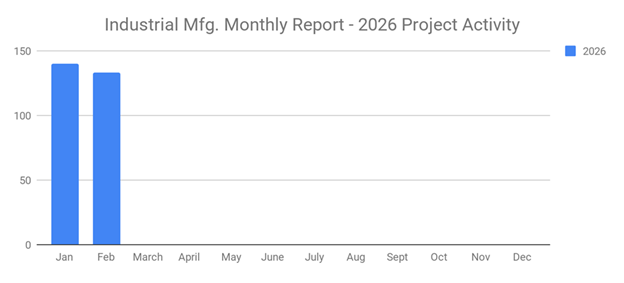
Renovations and Equipment Upgrades Fell 18% in February 2026; Other Capital Projects Remain Stable
-
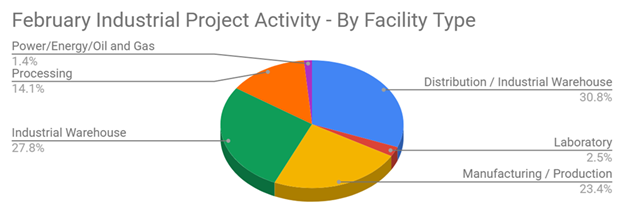
Planned Industrial Construction Projects Fell 7% MoM
-
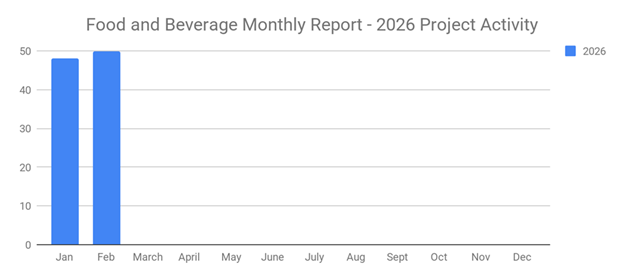
Food and Beverage Industry Posts Modest Growth with 50 New Planned Projects in February 2026
-
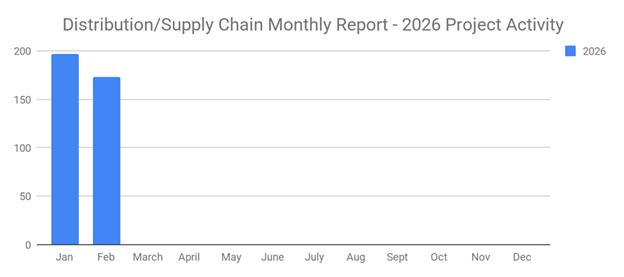
Distribution and Supply Chain Planned Industrial Projects Continue Decline at 12% MoM February 2026
