

Industrial sales meetings should not be limited to forecasts, activity reports, and pipeline inspection.
Those topics matter, but a strong sales meeting should also improve the team’s ability to discover buyer needs, handle objections, communicate technical value, manage complex stakeholders, use the CRM correctly, negotiate effectively, and advance opportunities with confidence.
Part 1 focused on topics that support immediate sales productivity. Part 2 focuses on long-term skill development through coaching, practice, feedback, and process improvement.
The goal is not to turn every meeting into a classroom. It is to use short, focused exercises that help industrial salespeople improve one practical skill at a time.
Glossary: Industrial sales coaching: Industrial sales coaching is the structured process of helping sales professionals improve discovery, technical communication, qualification, objection handling, negotiation, account planning, and opportunity management.
Why Skill Development Belongs in Sales Meetings
Salespeople rarely improve simply by being told to “ask better questions” or “close harder.” Improvement requires practice, observation, feedback, repetition, and clear examples.
Regular skill-development sessions can help teams:
- share successful approaches
- prepare for difficult conversations
- standardize qualification
- improve technical discovery
- reduce avoidable CRM errors
- build confidence
- strengthen collaboration
- identify coaching needs
- improve consistency across the sales process
The best training topics come from real opportunities, real objections, real lost deals, and real customer conversations.
FAQ: Why should industrial sales meetings include coaching?
Coaching helps salespeople practice difficult conversations, improve consistency, strengthen technical discovery, share successful approaches, and correct weak habits before they affect important opportunities.
1. Objection-Handling Role-Play
Objection handling is one of the most useful topics for an industrial sales meeting because the same concerns often appear repeatedly.
Common industrial objections include:
- “Your price is too high.”
- “We are satisfied with our current vendor.”
- “We do not have budget this year.”
- “The project is not approved yet.”
- “Send information and we will review it.”
- “We need to compare additional suppliers.”
- “Your lead time is too long.”
- “We are concerned about implementation risk.”
Choose one or two objections that the team is currently hearing. Assign one person to play the buyer and another to play the salesperson.
After the exercise, discuss:
- Did the salesperson acknowledge the concern?
- Did the response become defensive?
- Was a useful follow-up question asked?
- Was the objection understood correctly?
- Did the salesperson connect the response to business value?
- Was a clear next step established?
The objective is not to memorize a clever rebuttal. It is to understand the concern and respond with relevance.
Glossary: Objection handling: Objection handling is the process of understanding and responding to buyer concerns about price, timing, risk, competition, authority, technical fit, or business value.
FAQ: How should objection-handling role-play be structured?
Use a real objection, assign buyer and seller roles, limit the exercise to a few minutes, and evaluate whether the salesperson clarified the concern, responded credibly, and established a useful next step.
2. Discovery and Needs-Assessment Drills
Discovery is one of the most important stages of the industrial sales process. Weak discovery leads to generic proposals, poor qualification, missed stakeholders, and recommendations that do not fit the buyer’s actual situation.
A sales meeting can focus on one discovery category at a time:
- operational problems
- technical requirements
- project timing
- budget status
- decision process
- procurement requirements
- implementation risks
- success criteria
- cost of inaction
Ask team members to prepare questions that reveal useful information.
Examples include:
- What is driving the project now?
- What happens if the issue is not resolved?
- Which facilities, systems, or production lines are affected?
- Who will evaluate the technical solution?
- Has funding been approved?
- What implementation date is the team working toward?
- What would make the project successful?
- Which risks concern the buyer most?
Review which questions are open-ended, which are too vague, and which sound like an interrogation rather than a useful conversation.
Glossary: Sales discovery: Sales discovery is the process of learning about the buyer’s operational problem, technical requirements, priorities, stakeholders, budget, timing, risks, and decision process.
3. Sales-Cycle Stage Deep Dives
Instead of discussing the entire sales process in one meeting, choose one stage and examine it carefully.
Possible topics include:
- prospecting
- initial engagement
- qualification
- discovery
- technical evaluation
- proposal development
- stakeholder review
- negotiation
- procurement
- closing
- handoff and onboarding
For each stage, ask:
- What information must be gathered?
- What evidence shows the opportunity is ready to advance?
- What common mistakes occur?
- What should be documented in the CRM?
- What is the correct next step?
- What should disqualify or delay advancement?
This helps prevent opportunities from moving forward based only on optimism.
Glossary: Exit criteria: Exit criteria are the specific conditions that should be met before a sales opportunity advances from one pipeline stage to the next.
4. Closing and Next-Step Practice
Closing is not limited to asking for the final purchase order.
Industrial salespeople need to close for smaller commitments throughout the process, including:
- a second meeting
- a site visit
- technical documentation
- access to another stakeholder
- a budget discussion
- a proposal review
- a test or demonstration
- a target decision date
- a procurement introduction
Practice the final few minutes of a sales call or meeting.
The salesperson should be able to:
- summarize what was learned
- confirm the buyer’s priorities
- identify unresolved questions
- recommend a logical next step
- assign responsibility
- agree on timing
“I’ll follow up sometime next week” is not a strong close. A clear next step has an action, owner, and date.
Glossary: Micro-commitment: A micro-commitment is a small, specific agreement that advances a sales opportunity toward the next stage.
FAQ: What should industrial salespeople practice when working on closing skills?
They should practice summarizing the discussion, confirming priorities, asking for a specific next step, assigning responsibility, and agreeing on a date rather than relying on vague follow-up.
5. Negotiation Scenarios
Industrial negotiations often involve more than price.
Meeting exercises can cover:
- payment terms
- delivery schedules
- scope changes
- service levels
- warranty terms
- implementation responsibilities
- volume commitments
- contract length
- change-order procedures
- performance guarantees
Create a scenario where the buyer requests a concession. The salesperson should clarify what the buyer values and avoid giving something away without receiving something meaningful in return.
Discuss:
- What is negotiable?
- What is not negotiable?
- What trade-offs are possible?
- Who has approval authority?
- How does the concession affect margin or risk?
- What should be documented?
Glossary: Value exchange: A value exchange is a negotiation approach where one concession is traded for another commitment, benefit, or reduction in risk rather than given away without return.
6. Technical Value Communication
Industrial salespeople often need to translate technical features into business outcomes.
A meeting exercise can begin with one product or service feature. Ask each salesperson to explain:
- what the feature does
- which buyer cares about it
- what operational problem it addresses
- what financial or strategic benefit it may create
- what proof supports the claim
For example, a monitoring feature may help identify equipment problems earlier, reduce unplanned downtime, improve maintenance planning, and protect production schedules.
The goal is to avoid both extremes: technical jargon without business meaning and vague benefit language without technical credibility.
Glossary: Technical value communication: Technical value communication connects a product or service feature to the buyer’s operational, financial, safety, quality, capacity, or risk-management priorities.
7. CRM Data Quality Workshops
CRM discipline is not glamorous, but poor data weakens forecasting, follow-up, reporting, automation, and account coordination.
Review common CRM problems such as:
- missing next steps
- outdated close dates
- unclear pipeline stages
- duplicate accounts
- incomplete stakeholder information
- missing lead sources
- weak opportunity notes
- inactive opportunities left open
- unclear account ownership
Use anonymized examples from the current CRM and ask the group to improve them.
A useful opportunity record should explain:
- the buyer’s problem
- the project stage
- the stakeholders
- the estimated value
- the next step
- the target date
- the major risks
Glossary: CRM hygiene: CRM hygiene is the ongoing process of keeping account, contact, activity, and opportunity records accurate, current, complete, and consistent.
FAQ: Why should CRM training be part of an industrial sales meeting?
CRM training improves forecasting, follow-up, account coordination, lead-source reporting, stakeholder visibility, and confidence that opportunities are being managed consistently.
8. Lost-Deal Reviews
Lost opportunities can provide useful coaching material when the review is factual rather than punitive.
Choose one closed-lost opportunity and examine:
- how the lead was sourced
- whether the account matched the ICP
- what discovery was completed
- which stakeholders were involved
- what objections appeared
- how the competitor was positioned
- where momentum slowed
- what could have been done differently
The purpose is not to find someone to blame. It is to identify patterns that can improve future performance.
Glossary: Win-loss review: A win-loss review examines why an opportunity was won or lost so the team can improve targeting, qualification, messaging, process, and competitive positioning.
9. Call and Meeting Review Sessions
Recorded calls and meeting notes can be valuable coaching tools when handled respectfully.
Select a short segment and evaluate:
- question quality
- listening
- clarity
- technical accuracy
- buyer engagement
- objection handling
- next-step agreement
Use a consistent scorecard so feedback is specific.
Avoid turning the session into public humiliation. The goal is to improve technique, not stage a corporate coliseum.
10. Ideal Customer Profile Workshops
The Ideal Customer Profile should evolve as markets, customers, products, and sales results change.
Review recent wins and losses to determine:
- which industries convert best
- which facility types show demand
- which company sizes are most profitable
- which buyer roles influence decisions
- which project signals create opportunities
- which accounts are expensive to pursue
- which customers retain and expand
Discuss whether new titles, markets, applications, or project types should be added to the target profile.
Glossary: Ideal Customer Profile: An Ideal Customer Profile, or ICP, describes the companies most likely to need the offering, receive meaningful value, and become profitable long-term customers.
11. Account-Planning Exercises
Choose one important target or existing account and build a simple account plan.
Include:
- known facilities
- current products or services
- important contacts
- missing stakeholders
- business priorities
- active or planned projects
- competitive relationships
- expansion opportunities
- risks
- next actions
This helps the team move beyond isolated transactions and think about long-term account development.
Glossary: Account planning: Account planning is the structured process of understanding an important customer or prospect and identifying relationships, needs, projects, risks, and growth opportunities.
12. Goal-Setting and Development Plans
Ask each salesperson to define short-term and long-term development goals.
Examples include:
- improve discovery skills
- increase access to executive stakeholders
- strengthen technical knowledge
- improve proposal-to-close conversion
- develop a new territory
- improve CRM discipline
- increase account expansion
- learn a new product category
Each goal should include:
- a clear behavior or result
- a target date
- a practice plan
- manager support
- a measurement method
Goals work better when they lead to observable action rather than inspirational fog.
13. Peer Teaching
Experienced team members often have useful expertise that remains trapped in individual habits.
Ask one salesperson to lead a short session on a skill such as:
- preparing for site visits
- working with engineers
- handling procurement
- using case studies
- managing long sales cycles
- developing referrals
- preparing proposal reviews
Peer teaching recognizes internal expertise and encourages the team to share practical methods.
How to Run a Skill-Development Meeting
A practical 45-minute session may follow this structure:
- Five minutes: Define the skill and explain why it matters.
- Ten minutes: Review a real example, opportunity, or customer situation.
- Fifteen minutes: Conduct role-play, analysis, or group practice.
- Ten minutes: Give structured feedback and identify improvements.
- Five minutes: Assign one behavior to apply before the next meeting.
Keep the topic narrow. A meeting titled “Improve Selling Skills” is too broad to produce useful practice.
How to Give Useful Sales Coaching Feedback
Feedback should be specific, observable, and actionable.
Instead of saying:
“You need to sound more confident.”
Say:
“After the buyer raised the pricing concern, you immediately defended the proposal. Try asking what part of the price feels difficult and what alternatives they are comparing.”
Useful feedback focuses on behavior, not personality.
Glossary: Behavioral coaching: Behavioral coaching focuses on specific actions that can be observed, practiced, measured, and improved.
How to Measure Sales Skill Development
Skill development should eventually affect real sales performance.
Possible measurements include:
- improved CRM completion
- better discovery-note quality
- more opportunities with identified stakeholders
- higher meeting-to-opportunity conversion
- improved proposal-to-close rate
- fewer stalled opportunities
- stronger forecast accuracy
- more consistent next-step documentation
- manager observation scores
- lower human correction rates on proposals or notes
Not every coaching session produces an immediate revenue increase. The team should look for evidence that the targeted behavior is improving.
FAQ: How can sales managers measure skill development?
Managers can track observed behavior, CRM quality, stakeholder identification, stage conversion, next-step discipline, forecast accuracy, and improvement in the specific skill practiced during coaching.
How Industrial SalesLeads Can Support Sales Development
Sales coaching becomes more useful when the team has relevant accounts, contacts, projects, and opportunities to work with.
Through Industrial Market Intelligence, sales teams can identify companies planning construction, expansion, relocation, modernization, and equipment investment.
These project reports can provide realistic material for:
- discovery exercises
- stakeholder mapping
- account planning
- outreach practice
- qualification discussions
- project-stage analysis
Through Prospecting Services, Industrial SalesLeads can also help identify target accounts, verify contacts, conduct outreach, qualify interest, and schedule appointments.
This gives internal sales teams more time to focus on technical conversations, stakeholder coordination, opportunity development, and closing.
Contact Industrial SalesLeads to discuss how industrial project intelligence and prospecting support can help your team create more qualified sales conversations.
Final Thoughts
Industrial sales meetings should help the team perform today and improve for tomorrow.
Role-play, discovery drills, negotiation scenarios, CRM workshops, account planning, call reviews, lost-deal analysis, and goal-setting exercises can turn meetings into practical coaching sessions.
The most effective approach is focused and repeatable. Choose one skill, use a real example, practice it, give specific feedback, and apply the lesson to active opportunities.
That creates a sales meeting with a purpose beyond reporting what already happened.
Want a predictable flow of qualified leads?
Let’s talk about how we can build it for you.
Latest Posts
-
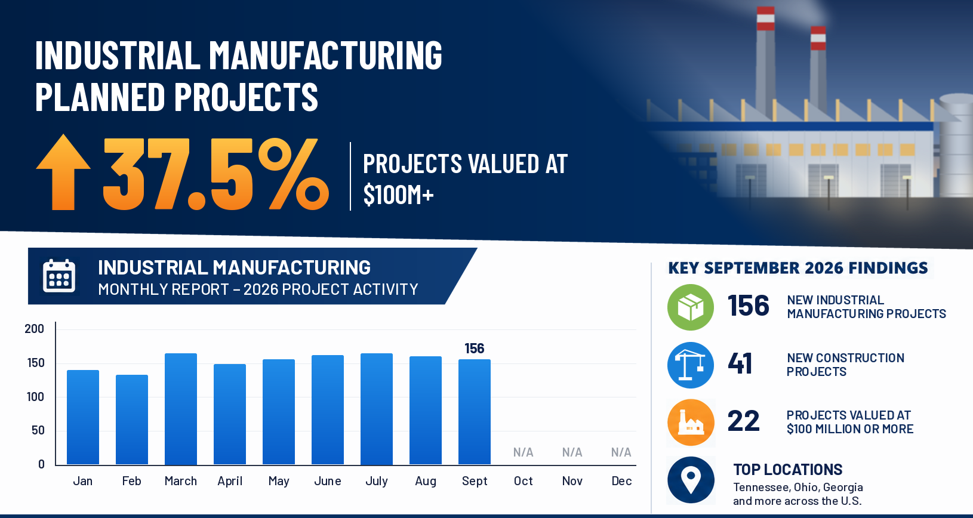
37.5% Growth in $100M New Industrial Planned Projects MoM for September 2026
-
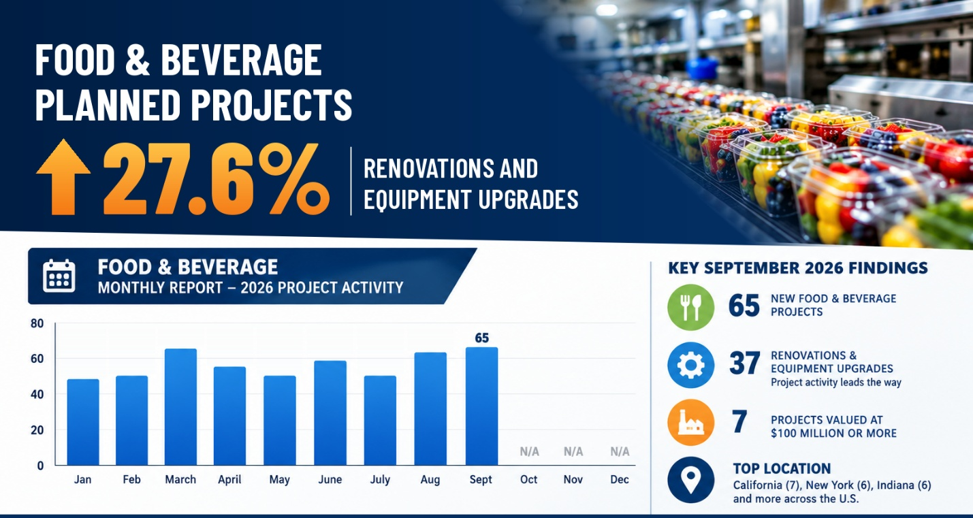
27.6% MoM Increase in Industrial Planned Projects for Renovations and Equipment Upgrades for September 2026
-
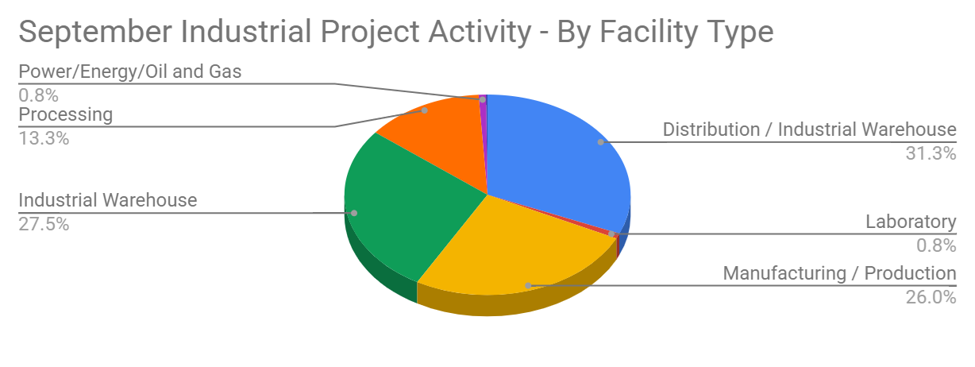
392 New Planned Industrial Projects Tracked in September 2026
-
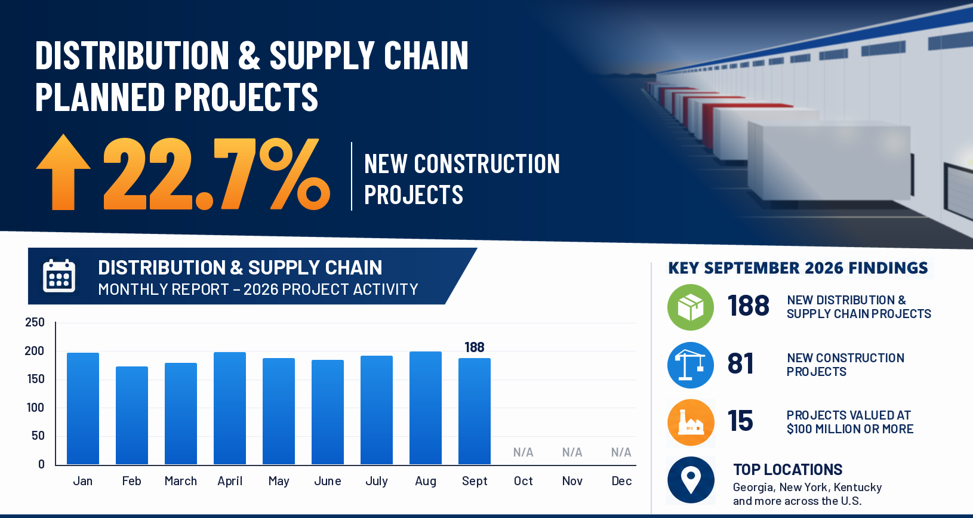
22.7% Increase in September 2026 for New Planned Distribution and Supply Chain Projects Over August 2026
