
AI can help industrial companies identify, research, prioritize, and engage potential buyers more efficiently.
It can analyze large datasets, organize account information, identify patterns among successful customers, draft outreach, summarize sales activity, and automate repetitive prospecting tasks.
However, AI does not automatically create accurate, qualified industrial sales leads.
A lead becomes valuable when the account fits the target market, the contact is relevant, the business need is credible, the timing makes sense, and the information is accurate enough for a salesperson to act on.
AI can support that process. It cannot replace clean data, reliable sources, human verification, project intelligence, technical judgment, or disciplined follow-up.
Glossary: AI-assisted industrial lead generation: AI-assisted industrial lead generation uses artificial intelligence to support account research, contact discovery, segmentation, lead scoring, outreach drafting, data organization, and sales-development workflows.
What Does It Mean to Generate an Industrial Sales Lead?
An industrial sales lead is not simply a company name, email address, or contact record.
A useful industrial lead should include enough information to help the sales team determine:
- whether the company matches the Ideal Customer Profile
- whether the contact has a relevant role
- whether a credible project, need, or business trigger exists
- whether the timing is appropriate
- whether the account is worth further qualification
- what outreach message may be relevant
AI can help assemble and analyze this information, but the quality of the result depends on the sources, instructions, data, and review process behind it.
Glossary: Qualified industrial lead: A qualified industrial lead is a company and contact that match defined targeting criteria and show enough fit, need, timing, authority, project activity, or sales potential to justify active follow-up.
FAQ: Can AI create qualified industrial leads automatically?
AI can identify and prioritize potential accounts, but qualification still requires reliable data, relevant contacts, business context, project timing, and human review.
What AI Can Do for Industrial Lead Generation
1. Analyze Existing Customer Data
AI can help companies examine their existing customer base and identify shared characteristics among strong accounts.
These characteristics may include:
- industry
- company size
- facility type
- geography
- buyer role
- project type
- products purchased
- deal value
- sales-cycle length
- retention
- profitability
This analysis can help refine the Ideal Customer Profile and improve future targeting.
AI may identify patterns, but leadership should confirm that those patterns make business sense. A statistical relationship is not automatically a useful sales strategy.
Glossary: Ideal Customer Profile: An Ideal Customer Profile, or ICP, describes the companies most likely to need the offering, receive meaningful value, and become profitable long-term customers.
2. Research Potential Accounts
AI tools can help collect and summarize publicly available information about companies.
Useful research may include:
- company description
- industry
- locations
- facility footprint
- products and services
- recent announcements
- leadership changes
- hiring activity
- expansion plans
- capital-investment signals
This can reduce the time salespeople spend moving between websites, news releases, directories, and CRM records.
However, AI-generated research should be checked against current sources. AI tools can misinterpret information, combine different companies, rely on outdated material, or present unsupported conclusions with unsettling confidence.
Glossary: Account research: Account research is the process of collecting information about a prospective company, its facilities, operations, contacts, projects, priorities, and possible business needs.
3. Organize and Enrich Sales Data
AI can help standardize, classify, and enrich existing records.
Possible uses include:
- standardizing company names
- grouping accounts by industry
- categorizing job titles
- summarizing company descriptions
- identifying missing fields
- detecting possible duplicates
- suggesting market segments
- organizing notes
This can make large prospect databases easier to work with.
Data enrichment should not be confused with data verification. A tool may suggest information that appears plausible but is incomplete, outdated, or wrong.
Glossary: Data enrichment: Data enrichment is the process of adding, updating, standardizing, or categorizing information about accounts, contacts, industries, facilities, and business activity.
4. Segment Accounts
AI can help divide large prospect lists into more useful groups.
Segmentation may be based on:
- industry
- company size
- location
- facility type
- buyer role
- project type
- product relevance
- sales territory
- account value
- engagement history
Segmentation helps teams create more relevant messaging and assign accounts more efficiently.
Glossary: Sales segmentation: Sales segmentation is the process of grouping accounts or contacts by shared characteristics so targeting, messaging, qualification, and follow-up can be more relevant.
5. Score and Prioritize Leads
AI can help estimate which accounts deserve attention first.
A scoring model may consider:
- fit with the Ideal Customer Profile
- company size
- industry
- project activity
- engagement
- buyer role
- location
- historical conversion patterns
- previous sales activity
Lead scoring can help teams focus their time, but it should not be treated as a verdict.
A high score may reflect strong historical similarity while missing new market conditions, an unusual project, or an important account that does not resemble previous customers.
Glossary: Lead scoring: Lead scoring is the process of assigning a relative value or priority to a prospect based on fit, behavior, timing, engagement, project activity, and sales potential.
FAQ: How can AI prioritize industrial prospects?
AI can compare accounts against customer patterns, targeting criteria, engagement data, project signals, and past outcomes, then rank prospects for further review.
6. Draft Outreach Messages
AI can help create initial drafts for:
- cold emails
- call scripts
- LinkedIn messages
- follow-up emails
- voicemail scripts
- meeting summaries
- campaign variations
The strongest drafts use verified information about the account and connect the outreach to a credible business issue.
Weak AI personalization often sounds specific without being meaningful.
Examples include:
- repeating the company name several times
- mentioning a generic industry trend
- complimenting the prospect’s website
- inventing familiarity with the company
- claiming a need that has not been established
Human review should confirm accuracy, relevance, tone, technical claims, and whether the message gives the prospect a legitimate reason to respond.
Glossary: AI-assisted personalization: AI-assisted personalization uses available account, contact, project, and industry information to draft sales communication tailored to a specific prospect or segment.
7. Automate Repetitive Follow-Up
AI and sales-automation tools can help manage routine outreach sequences.
Possible tasks include:
- scheduling follow-up emails
- creating reminders
- summarizing replies
- routing leads
- updating CRM fields
- drafting next-step messages
- notifying salespeople when prospects engage
Automation can improve consistency, but poor automation can also produce repetitive, irrelevant, or badly timed communication at impressive scale.
The workflow should stop or adjust when the prospect responds, requests no further contact, changes roles, or reveals that the message is no longer relevant.
Glossary: Sales automation: Sales automation uses software to perform repetitive sales-development tasks such as data entry, reminders, sequencing, routing, follow-up, and CRM updates.
What AI Cannot Reliably Do by Itself
Verify Every Contact
Job titles, email addresses, departments, reporting relationships, and employment status change frequently.
An AI tool may surface a likely contact, but the information may be:
- outdated
- incomplete
- assigned to the wrong company
- associated with a former employee
- based on an inferred email pattern
- unrelated to the actual purchasing process
Industrial prospecting often requires direct verification and role-specific research.
Glossary: Contact verification: Contact verification is the process of confirming that a prospect’s name, role, employer, department, email, phone number, and business relevance are accurate and current.
Understand Every Industrial Buying Process
Industrial purchases may involve engineers, plant managers, maintenance leaders, procurement, finance, safety teams, executives, contractors, architects, and outside consultants.
AI can suggest likely stakeholders, but it may not understand:
- who controls the budget
- who writes the specification
- who approves the vendor
- who manages installation
- who influences the final decision
- which location owns the project
Qualification still requires conversations, account knowledge, and careful stakeholder mapping.
Confirm That a Project Is Real
AI may identify language associated with expansion, construction, modernization, hiring, or investment.
That does not necessarily mean:
- the project is approved
- funding is available
- the project is current
- the company is buying now
- the account needs the seller’s offering
- the project has not been cancelled
Project information should be verified and qualified before it is treated as an active sales opportunity.
Glossary: Project signal: A project signal is an event or piece of information that may indicate planned construction, expansion, relocation, modernization, equipment investment, hiring, or another change that could create a sales opportunity.
Replace Human Judgment
AI can summarize and recommend. It does not fully understand the political, technical, operational, and interpersonal context of a complex industrial sale.
Salespeople still need to determine:
- whether the account is a real fit
- whether the project is timely
- whether the contact has influence
- whether the message is credible
- whether the opportunity deserves pursuit
- what the next step should be
FAQ: Does AI replace industrial salespeople or prospecting teams?
No. AI can reduce repetitive work and improve research, organization, and drafting, but industrial selling still requires judgment, verification, technical understanding, relationship development, and qualification.
The Data Quality Problem
AI lead generation depends heavily on the quality of the data it receives.
Common problems include:
- duplicate accounts
- outdated contacts
- missing industries
- incorrect company sizes
- inconsistent job titles
- unverified email addresses
- incomplete sales history
- unclear lead sources
- poorly defined customer segments
If the company’s strongest customers are not identified correctly, AI may learn the wrong patterns.
If lost opportunities are left open in the CRM, the system may treat weak accounts as active opportunities.
If contacts are outdated, automated outreach may simply accelerate delivery to the wrong people.
Glossary: CRM hygiene: CRM hygiene is the ongoing process of correcting, updating, deduplicating, standardizing, and completing account, contact, activity, and opportunity records.
FAQ: Why does data quality matter for AI lead generation?
AI uses the information available to it. Inaccurate contacts, weak customer classifications, duplicate accounts, and incomplete outcomes can produce poor targeting, misleading scores, and irrelevant outreach.
AI Can Create False Confidence
One of AI’s most dangerous sales abilities is producing a polished answer that appears more certain than the evidence supports.
Possible errors include:
- invented company facts
- incorrect contact roles
- outdated project information
- unsupported buying-intent claims
- misidentified competitors
- fictional personalization
- incorrect market trends
Sales teams should distinguish between:
- verified facts
- reasonable inferences
- model-generated suggestions
- unknown information
This distinction should be visible in the workflow, especially before information reaches a prospect.
Glossary: AI hallucination: An AI hallucination is a response that presents false, invented, unsupported, or misinterpreted information as though it were factual.
Privacy, Security, and Compliance
Companies should understand what information they are placing into AI systems.
Sensitive information may include:
- customer records
- contracts
- pricing
- technical specifications
- internal notes
- sales forecasts
- personally identifiable information
- confidential project information
Before uploading data, companies should review:
- vendor data-retention policies
- security controls
- user permissions
- contract terms
- customer confidentiality obligations
- applicable privacy requirements
Convenience should not become a trapdoor beneath the company’s confidential data.
A Practical AI-Assisted Industrial Lead Workflow
A disciplined workflow may look like this:
- Define the Ideal Customer Profile. Identify industries, company sizes, facility types, regions, project types, and buyer roles.
- Collect reliable account data. Use current company, facility, contact, and project information.
- Use AI to classify and segment. Organize accounts into meaningful groups.
- Apply project and business signals. Identify accounts with relevant construction, expansion, relocation, modernization, or equipment activity.
- Prioritize accounts. Score fit and timing without treating the score as unquestionable truth.
- Verify contacts. Confirm roles, employment, contact information, and relevance.
- Draft outreach. Use AI to create a first draft based on verified information.
- Review the message. Check accuracy, tone, technical claims, and relevance.
- Conduct outreach. Use email, phone, LinkedIn, or another appropriate channel.
- Qualify the response. Determine fit, need, timing, authority, project status, and next steps.
- Update the CRM. Record accurate outcomes so future analysis improves.
This workflow uses AI as an accelerator inside a controlled process rather than allowing it to roam freely through the prospect database wearing a little executive badge.
How to Measure AI Lead-Generation Performance
AI lead-generation tools should be measured by business outcomes, not merely activity volume.
Useful metrics include:
- verified contact rate
- qualified-lead rate
- response rate
- meeting rate
- lead-to-opportunity conversion
- pipeline created
- sales-cycle length
- cost per qualified lead
- human correction rate
- unsubscribe or complaint rate
- revenue influenced
A tool that produces thousands of records but few qualified conversations has not solved the lead-generation problem. It has manufactured a larger haystack.
Glossary: Human correction rate: Human correction rate measures how often AI-generated data, scoring, research, classifications, or outreach require meaningful correction before use.
When AI Lead Generation Makes Sense
AI can be useful when the company has:
- a defined target market
- reliable customer and CRM data
- repeatable qualification criteria
- enough accounts to justify automation
- staff responsible for review
- a clear outreach process
- measurable sales outcomes
AI is less likely to help when:
- the target market is vague
- the CRM is unreliable
- the company cannot explain its best customers
- contacts are not verified
- outreach messages are generic
- no one owns follow-up
- lead quality is not measured
AI will usually amplify the existing process. A disciplined process becomes faster. A confused process becomes faster at being confused.
Why Industrial Project Intelligence Matters
AI can help find companies that resemble existing customers, but similarity alone does not prove that a sales opportunity exists.
Industrial Market Intelligence can provide context about companies planning or carrying out:
- new facility construction
- plant expansions
- relocations
- equipment modernization
- warehouse projects
- production-line changes
- capital investment
Project intelligence gives sales teams a stronger reason to prioritize an account and a more credible basis for outreach.
AI can help organize and analyze that information. Human researchers and sales professionals still need to verify the project, understand its stage, identify relevant contacts, and determine whether the seller’s offering fits.
Glossary: Industrial market intelligence: Industrial market intelligence is verified information about industrial companies, facilities, contacts, construction, expansions, relocations, modernization, and other business activity that may create sales opportunities.
How Industrial SalesLeads Can Help
Industrial SalesLeads combines research, data, project intelligence, contact development, and human-led prospecting to help companies pursue more relevant industrial opportunities.
Through Industrial Market Intelligence, sales teams can identify planned construction, expansion, relocation, modernization, and equipment-investment activity.
Through Prospecting Services, Industrial SalesLeads can help:
- define target markets
- build account lists
- identify and verify contacts
- conduct outbound outreach
- qualify interest
- nurture prospects
- schedule appointments
AI and automation may support portions of this work, but the service does not depend on blindly generating names and sending automated messages.
The objective is to create relevant sales conversations based on credible targeting and useful business context.
Contact Industrial SalesLeads to discuss how project intelligence and targeted prospecting can support your industrial sales pipeline.
Final Thoughts
AI can generate potential industrial sales leads, but potential is not the same as qualified.
AI is useful for research, segmentation, scoring, drafting, summarization, and automation. Its weaknesses include outdated data, false confidence, weak verification, generic personalization, and limited understanding of complex industrial buying processes.
The strongest approach combines AI with reliable data, verified contacts, project intelligence, human judgment, and disciplined follow-up.
AI can make industrial lead generation faster. The real question is whether the company has built a process worth accelerating.
Add Sophistication to Your Industrial Lead Generation
Add to your sales pipeline with our Prospecting Services. This allows you to work on the sales funnel while we use AI and other smart tools to develop industrial sales leads that reflect your best customers. How do we do it? Great question. Contact us today to set up some time to learn more about our services.
Want a predictable flow of qualified leads?
Let’s talk about how we can build it for you.
Latest Posts
-
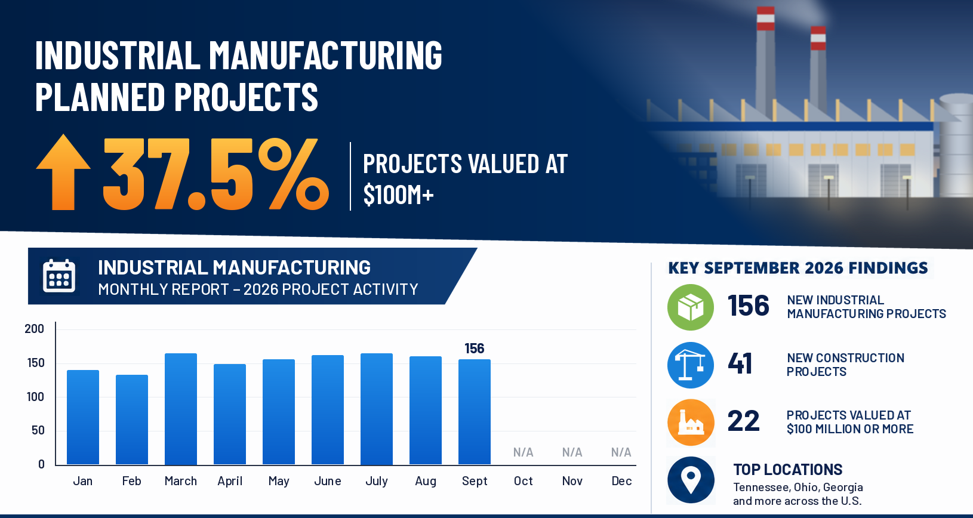
37.5% Growth in $100M New Industrial Planned Projects MoM for September 2026
-
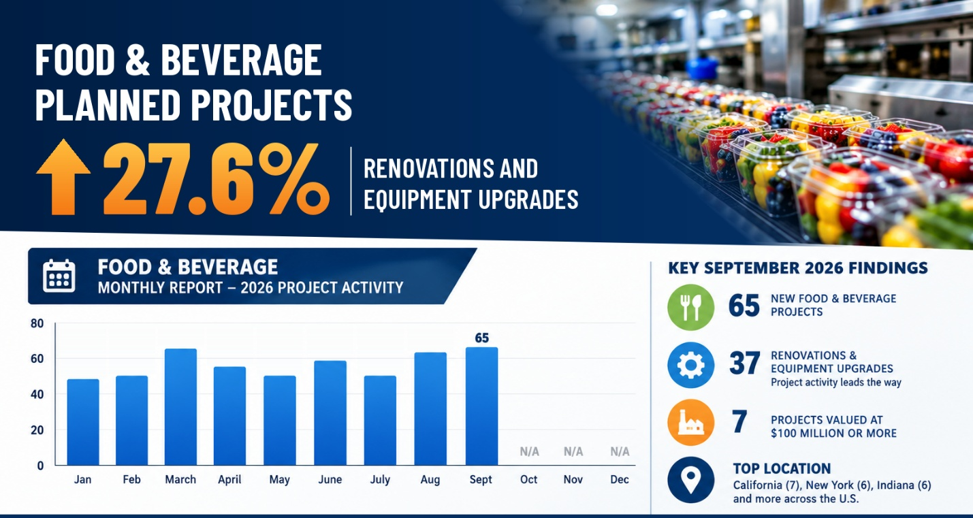
27.6% MoM Increase in Industrial Planned Projects for Renovations and Equipment Upgrades for September 2026
-
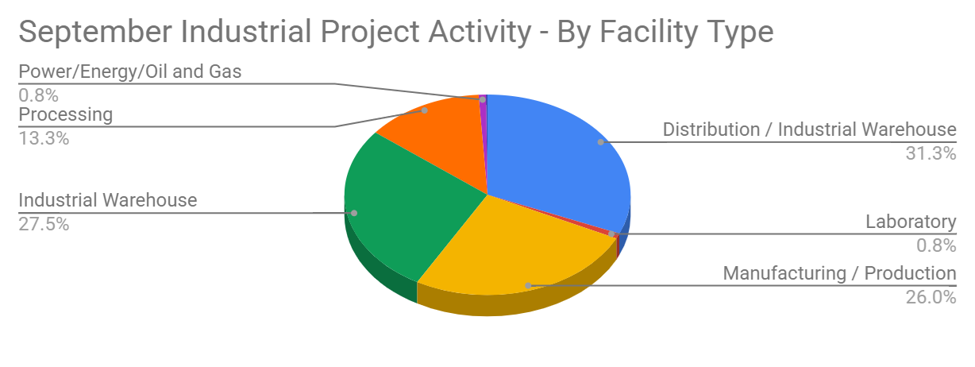
392 New Planned Industrial Projects Tracked in September 2026
-
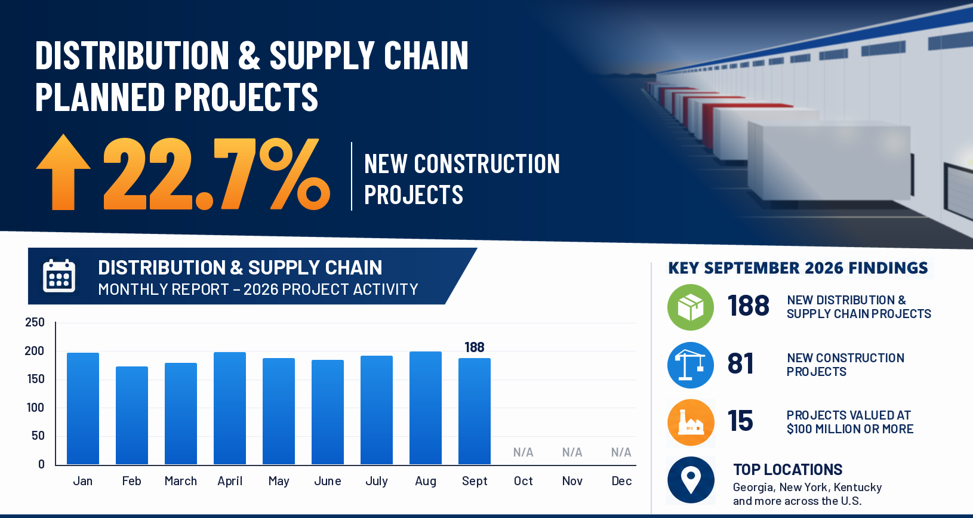
22.7% Increase in September 2026 for New Planned Distribution and Supply Chain Projects Over August 2026
