

Manufacturing lead generation has changed. Trade shows, referrals, distributor relationships, and cold calling still have a place, but they are no longer enough on their own.
Today’s industrial buyers research vendors, compare capabilities, review technical information, and evaluate possible suppliers before they ever speak with a sales representative. For manufacturers, the challenge is not just producing a strong product or service. The challenge is being found by the right companies at the right time, then turning that visibility into qualified sales opportunities.
That is why specialized B2B lead generation for manufacturing matters. Manufacturers, industrial suppliers, equipment providers, construction-related firms, and facility service companies often sell into long, technical buying cycles. A generic B2B marketing or contact-list approach usually misses the details that make an industrial lead worth pursuing.
Why Manufacturing Lead Generation Is Different
Manufacturing sales are rarely simple impulse purchases. Buyers may need to evaluate technical fit, production requirements, downtime risk, compliance concerns, installation timelines, budget approvals, and vendor reliability.
A manufacturing prospect may involve people from several departments, including:
-
operations
-
engineering
-
procurement
-
maintenance
-
plant management
-
finance
-
safety and compliance
-
executive leadership
Each stakeholder may care about something different. Engineering may care about specifications. Operations may care about reliability. Procurement may care about pricing and vendor terms. Executives may care about return on investment and risk.
That is why generic lead generation often underperforms in manufacturing. A name, phone number, and email address are not enough. Sales teams need context.
Glossary: B2B lead generation for manufacturing: B2B lead generation for manufacturing is the process of identifying, attracting, qualifying, and engaging business prospects that may need industrial products, equipment, materials, services, or project support.
The Modern Industrial Buyer’s Journey
The industrial buyer’s journey often begins long before a sales conversation. Buyers may search online, compare vendors, read case studies, download technical documents, review product pages, and investigate whether a company has experience with their type of facility or application.
By the time a prospect contacts a vendor, they may already have a shortlist.
That creates a visibility problem for manufacturers. If a company is not present during the research stage, it may never be considered during the buying stage.
A specialized B2B lead generation strategy helps manufacturers appear earlier in the process by combining useful content, targeted outreach, qualified data, and sales intelligence.
FAQ: Why do manufacturers need specialized B2B lead generation?
Manufacturers need specialized B2B lead generation because industrial buyers often have technical requirements, long evaluation periods, multiple stakeholders, and project-specific needs. A specialized approach helps sales teams focus on prospects with stronger fit, better timing, and clearer business reasons to buy.
Generic B2B Leads vs. Qualified Manufacturing Leads
A generic B2B lead may only tell a sales team who someone is. A qualified manufacturing lead should help explain why that company may be worth contacting.
For example, a stronger manufacturing lead may include details such as:
-
the company’s industry
-
facility type
-
location
-
relevant contacts
-
project activity
-
expansion plans
-
equipment needs
-
modernization efforts
-
construction or relocation signals
-
hiring activity
-
known operational changes
This context helps sales teams prioritize. Instead of calling every company in a broad database, they can focus on accounts that show signs of actual need or upcoming investment.
Glossary: Qualified manufacturing lead: A qualified manufacturing lead is a potential sales opportunity that matches a company’s target market and shows signs of fit, need, timing, authority, or relevant business activity.
Content as a Conversion Engine
Industrial buyers often look for proof before they talk to sales. That makes content a key part of manufacturing lead generation.
Useful manufacturing content may include:
-
technical guides
-
application notes
-
white papers
-
product comparison pages
-
case studies
-
project examples
-
ROI calculators
-
specification sheets
-
maintenance guides
-
installation considerations
-
industry-specific blog posts
-
FAQs and glossaries
The goal is not to publish content just to publish content. The goal is to answer the questions buyers already have while they are researching vendors.
A manufacturer’s website should help prospects understand:
-
what the company does
-
which industries it serves
-
what problems it solves
-
what technical capabilities it offers
-
what makes it different from competitors
-
what proof exists that it can deliver
-
how to begin a sales conversation
When content is useful, it does more than attract traffic. It builds confidence before the first call.
FAQ: What kind of content helps manufacturing companies generate leads?
Manufacturing companies can generate better leads with content that answers technical, operational, and buying-process questions. Useful content may include case studies, specification sheets, technical guides, industry blog posts, ROI resources, application pages, FAQs, and comparison content.
Targeted Demand Generation for Industrial Markets
Effective lead generation for manufacturers is not about chasing every possible visitor. It is about reaching the right companies with the right message.
That is where targeted demand generation becomes important. Manufacturers can use strategies such as search engine optimization, account-based marketing, email outreach, paid media, and retargeting to reach specific industries, regions, facility types, or buyer roles.
However, the targeting needs to be industrially aware. Broad keywords may bring traffic, but not necessarily qualified prospects. A manufacturer may get better results by targeting more specific phrases tied to real buyer intent.
Examples include:
-
manufacturing lead generation
-
industrial equipment sales leads
-
plant expansion leads
-
facility relocation leads
-
industrial construction project leads
-
equipment modernization opportunities
-
manufacturing sales prospecting
-
industrial project intelligence
The more specific the targeting, the easier it becomes to separate general interest from real opportunity.
Glossary: Targeted demand generation: Targeted demand generation is the process of creating awareness and interest among a specific audience, such as manufacturers, plant managers, procurement teams, or industrial companies with active project needs.
Why Account-Based Marketing Fits Manufacturing Sales
Account-based marketing, or ABM, is especially useful in manufacturing because many industrial companies already know the types of accounts they want to reach.
Instead of marketing broadly and hoping the right buyers appear, ABM focuses on selected companies or market segments. Sales and marketing teams can then build campaigns around those specific targets.
A manufacturing-focused ABM strategy may prioritize companies based on:
-
industry
-
facility size
-
geography
-
growth activity
-
capital project activity
-
equipment needs
-
current vendor relationships
-
expansion or relocation plans
-
revenue or employee count
-
product fit
This approach helps sales teams spend more time on companies that match their ideal customer profile.
Glossary: Account-based marketing: Account-based marketing is a B2B strategy where sales and marketing teams focus on specific target accounts instead of broad, general audiences.
Lead Nurturing for Long Industrial Sales Cycles
Manufacturing sales cycles can last months or even years. A prospect may be interested today but unable to buy until budget, timing, approvals, engineering reviews, or project milestones line up.
That is why lead nurturing matters.
Lead nurturing keeps a company visible and useful throughout the buying process. This may include email follow-ups, educational content, project updates, case studies, technical resources, and periodic sales outreach.
The key is relevance. A strong nurture process does not simply keep asking, “Are you ready to buy?” It provides useful information that helps the buyer move closer to a decision.
FAQ: Why is lead nurturing important in manufacturing sales?
Lead nurturing is important because manufacturing sales cycles are often long and involve multiple decision makers. Consistent, relevant follow-up helps keep a company visible while the buyer evaluates options, secures budget, and moves through internal approvals.
Data-Driven Scaling for Manufacturing Lead Generation
A specialized B2B lead generation strategy should also make performance easier to measure.
Manufacturers need to understand which channels, campaigns, keywords, industries, and content assets are producing qualified conversations. Without tracking, marketing becomes guesswork.
Important metrics may include:
-
qualified leads generated
-
cost per qualified lead
-
lead-to-opportunity conversion rate
-
opportunity-to-sale conversion rate
-
source of closed deals
-
target account engagement
-
form submissions
-
calls generated
-
email response rates
-
sales cycle length
-
revenue influenced by marketing
Data does not replace sales judgment, but it does make the system easier to improve. When manufacturers know what is working, they can invest more confidently.
Glossary: Lead-to-opportunity conversion rate: Lead-to-opportunity conversion rate measures how many leads become real sales opportunities after qualification by the sales team.
How Industrial Project Intelligence Improves Lead Quality
For manufacturing and industrial sales teams, some of the strongest opportunities are tied to real business events.
These may include:
-
new plant construction
-
facility expansions
-
relocations
-
renovations
-
production line upgrades
-
equipment modernization
-
warehouse or distribution investments
-
capital improvement projects
-
new permits
-
major hiring activity
These signals can show when a company may need vendors, suppliers, equipment, services, or support.
Industrial project intelligence helps sales teams move from generic prospecting to timely outreach. Instead of contacting a company with no clear reason, the sales team can connect outreach to a project, expansion, upgrade, or operational change.
Glossary: Industrial project intelligence: Industrial project intelligence is information about planned or active industrial projects, including construction, expansions, relocations, equipment upgrades, modernization efforts, and facility changes.
How Industrial SalesLeads Can Help
Industrial SalesLeads helps companies identify better industrial sales opportunities by providing project reports, company intelligence, and verified contact information tied to real business activity.
For manufacturers, suppliers, contractors, equipment providers, and industrial service companies, this can help sales teams focus on companies with stronger fit and better timing.
Instead of relying only on generic lists, sales teams can use Industrial SalesLeads to find companies involved in expansions, relocations, construction projects, modernization efforts, and other industrial changes that may create demand.
That makes outreach more relevant, improves prioritization, and supports a more predictable sales pipeline.
Final Thoughts
Manufacturing lead generation requires a specialized approach because industrial buyers are technical, cautious, and often involved in long decision cycles.
Generic B2B lead generation may create activity, but specialized B2B lead generation for manufacturing creates focus. It helps sales teams identify better prospects, understand project context, support long buyer journeys, and connect with companies when there is a real business reason to reach out.
For manufacturers and industrial companies that want sustainable pipeline growth, the best lead generation strategy combines visibility, content, targeting, data, and industrial sales intelligence.
Want a predictable flow of qualified leads?
Let’s talk about how we can build it for you.
Latest Posts
-
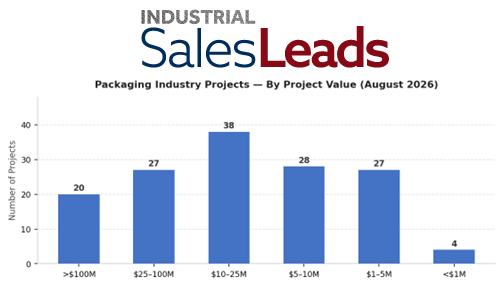
184 New Packaging Industry Projects Drive $17B+ Capital Pipeline in August 2026
-
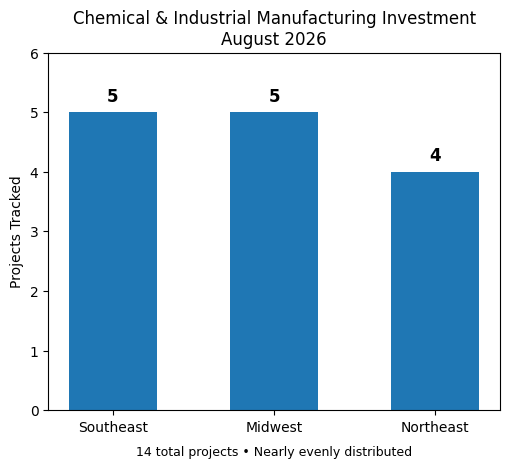
Chemical & Industrial Manufacturing Investment Spans Southeast, Midwest and Northeast in August 2026, with 14 Projects Tracked
-
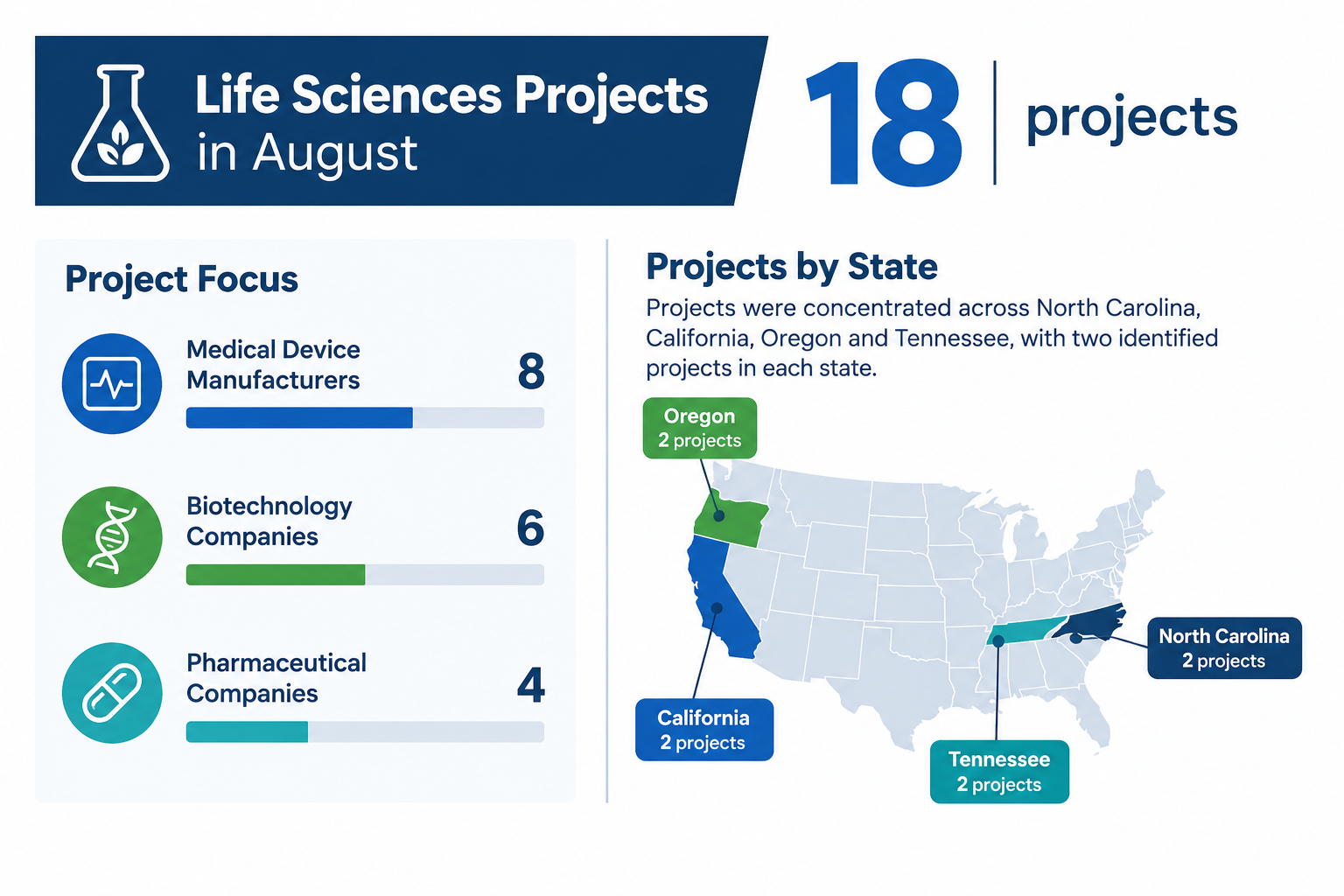
Life Sciences Manufacturing Investment Maintains Investment Momentum with 18 New Projects Identified in August 2026
-
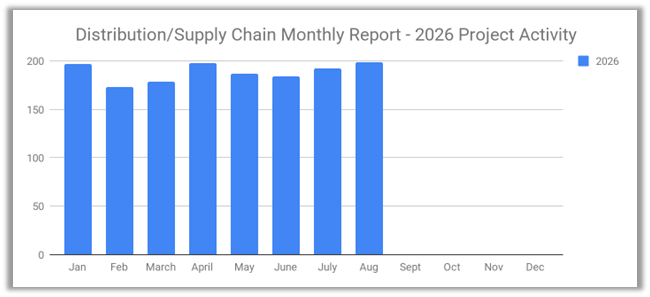
Distribution and Supply Chain Investment Hits 2026 Peak in August, Fueled by Three Months of Accelerating Growth
