

More industrial businesses are turning to prospecting services as a structured approach to industrial sales outsourcing, and for good reason. By separating technical closing from the demands of initial outreach, industrial companies can scale pipeline activity faster, reduce internal overhead, and keep their sales teams focused on higher-value conversations.
Internal sales teams often have deep product expertise. They understand applications, specifications, installation concerns, pricing variables, site requirements, and the technical realities that influence a buyer’s decision. But that does not mean those same salespeople should spend most of their time grinding through cold outreach lists.
Today’s industrial buyer conducts significant research before engaging with a vendor. Buyers compare suppliers, review capabilities, evaluate project timing, and often involve multiple stakeholders before a serious sales conversation begins. That makes consistent prospecting more important, but also more difficult.
Industrial sales outsourcing gives companies a dedicated prospecting layer that helps identify, qualify, and engage potential buyers before handing stronger opportunities to the internal sales team.
The Industrial Prospecting Challenge
Industrial sales cycles are long. In many sectors, opportunities can take six to eighteen months, and sometimes longer, to move from first contact to closed business.
That creates a pipeline challenge. Internal sales teams may be busy with current customers, active proposals, site visits, technical conversations, distributor relationships, and late-stage deals. Prospecting can easily become inconsistent.
When prospecting slows down, the impact may not be obvious right away. The pipeline can look healthy while existing opportunities are still moving. But months later, the gap becomes clear. Fewer new conversations were started, fewer accounts were nurtured, and fewer qualified opportunities are available for the sales team to close.
Glossary: Industrial prospecting: Industrial prospecting is the process of identifying and contacting potential buyers in manufacturing, construction, distribution, logistics, facility services, equipment, and other industrial markets.
Why Outsourcing Industrial Prospecting Makes Sense
Industrial sales outsourcing does not mean replacing the internal sales team. In many cases, it means protecting the internal team’s time.
Closers, account managers, and technical sales professionals are often most valuable when they are working with qualified prospects, active opportunities, and existing customers. Outsourced prospecting support can help keep the top of the funnel active without pulling experienced salespeople away from complex conversations.
An outsourced industrial prospecting team can help with:
-
identifying target accounts
-
researching companies and contacts
-
verifying decision-makers
-
building outreach lists
-
conducting phone and email outreach
-
following up consistently
-
qualifying interest
-
scheduling meetings
-
tracking responses
-
passing qualified opportunities to sales
This structure allows the internal team to focus on the parts of the sales process where their expertise matters most.
FAQ: What is industrial sales outsourcing?
Industrial sales outsourcing is the use of an outside sales or prospecting partner to support parts of the industrial sales process, often including lead research, outreach, qualification, appointment setting, and early-stage pipeline development.
The Cost of Building an Internal Prospecting Team
Building an in-house prospecting team can be expensive. The cost is not limited to salary. Companies also need to account for recruiting, onboarding, training, management, technology, turnover, and ramp-up time.
In industrial markets, ramp-up can be especially difficult because new sales development representatives need time to understand technical products, target industries, buyer roles, terminology, and qualification criteria.
An internal team may eventually become productive, but it can take months before new reps understand enough to have useful conversations. During that time, managers may spend significant energy coaching, reviewing, and correcting outreach.
Industrial sales outsourcing can reduce some of that friction by giving companies access to experienced prospecting capacity without immediately adding permanent headcount.
Glossary: Sales development representative: A sales development representative, or SDR, is a sales role focused on prospecting, outreach, qualification, and setting up sales conversations for account executives or internal sales teams.
Trigger-Based Intelligence Improves Timing
One of the most important advantages of industrial sales outsourcing is the ability to connect outreach to buying signals.
Static call lists are limited. A company may match your target market, but that does not mean it has an active need today. Trigger-based prospecting looks for business events that may indicate a stronger reason to reach out.
Examples of industrial buying signals include:
-
facility expansions
-
plant relocations
-
new construction projects
-
capital investment announcements
-
equipment modernization
-
production line upgrades
-
warehouse or distribution projects
-
leadership changes
-
new permits
-
major hiring activity
-
new funding or ownership changes
These signals can help prospecting teams prioritize accounts where timing may be more favorable.
Glossary: Trigger-based prospecting: Trigger-based prospecting is outreach based on business events or buying signals, such as expansions, relocations, capital projects, leadership changes, or equipment upgrades.
FAQ: Why are buying signals important in industrial sales?
Buying signals are important because they help sales teams identify companies that may have an active or upcoming need. In industrial markets, events such as facility expansions, equipment upgrades, relocations, and capital projects can create timely sales opportunities.
Multichannel Outreach Reaches More Industrial Buyers
Industrial buyers are difficult to reach through one channel alone. Some respond to phone calls. Some prefer email. Some research quietly before replying. Others may notice a company only after repeated exposure across several touchpoints.
That is why outsourced industrial prospecting often uses multichannel outreach.
A multichannel approach may include:
-
direct phone prospecting
-
email outreach
-
LinkedIn engagement
-
follow-up sequences
-
voicemail
-
content sharing
-
appointment setting
-
CRM tracking
The goal is not to overwhelm the buyer. The goal is to stay visible and relevant during a long decision cycle.
Industrial sales outsourcing can help create this consistency. Instead of sporadic outreach whenever the internal team has time, prospecting becomes a defined process.
Glossary: Multichannel outreach: Multichannel outreach is the use of several communication channels, such as phone, email, LinkedIn, and follow-up sequences, to reach and engage potential buyers.
Flexible Scaling for New Markets and Product Lines
Industrial companies often need to adjust sales focus quickly. A company may launch a new product line, enter a new region, pursue a new vertical, or respond to changing market demand.
Hiring a new internal team for every initiative can be slow and expensive. Outsourced prospecting gives companies more flexibility.
For example, an outsourced team can help test:
-
a new geographic territory
-
a new equipment category
-
a new manufacturing vertical
-
a new service offering
-
a new buyer persona
-
a new outreach message
-
a new industry segment
This can help leadership validate market interest before making larger hiring or expansion decisions.
FAQ: How can outsourced prospecting help industrial companies enter new markets?
Outsourced prospecting can help industrial companies enter new markets by researching target accounts, testing outreach messages, identifying decision-makers, and generating early sales conversations before the company commits to a larger internal expansion.
Better Pipeline Development Requires Better Qualification
The goal of industrial sales outsourcing is not simply more names in a database. The goal is better pipeline development.
A stronger outsourced prospecting process should help determine whether a prospect has the right fit, need, timing, authority, and potential value. That way, internal salespeople spend more time with prospects that are actually worth pursuing.
Qualification may include questions such as:
-
Is this company in the right industry?
-
Does the facility match the target profile?
-
Is there a relevant project or operational need?
-
Who influences the buying decision?
-
Is there a known timeline?
-
Is the prospect open to a conversation?
-
Does the opportunity fit the company’s capabilities?
-
Should the account be contacted now or nurtured for later?
This kind of qualification helps reduce wasted effort and keeps the sales pipeline cleaner.
Glossary: Sales pipeline development: Sales pipeline development is the process of creating, qualifying, tracking, and advancing potential sales opportunities from early-stage prospecting toward active sales conversations and closed business.
How Industrial SalesLeads Supports Industrial Sales Outsourcing
Industrial SalesLeads helps companies build stronger industrial pipelines by combining prospecting services, industrial market intelligence, verified contact data, and experienced business development support.
For companies selling into manufacturing, construction, facility services, industrial equipment, distribution, logistics, or related markets, this support can help keep outreach focused on better-fit accounts.
Instead of relying only on static lists or inconsistent internal prospecting, Industrial SalesLeads can help identify new business opportunities, contact decision-makers, qualify interest, and schedule meetings with prospects that match the client’s ideal customer profile.
That allows internal sales teams to stay focused on technical conversations, proposals, site visits, relationship management, and closing business.
Final Thoughts
Industrial sales outsourcing is reshaping pipeline development because it solves a practical problem: internal experts need to sell, but the pipeline still needs consistent prospecting.
A strong outsourced prospecting partner can help industrial companies identify better-fit accounts, track buying signals, reach decision-makers, qualify interest, and maintain momentum across long sales cycles.
For industrial businesses that want predictable pipeline growth without building a full internal SDR team from scratch, outsourcing can provide the structure, consistency, and market focus needed to keep new opportunities moving.
Want a predictable flow of qualified leads?
Let’s talk about how we can build it for you.
Latest Posts
-
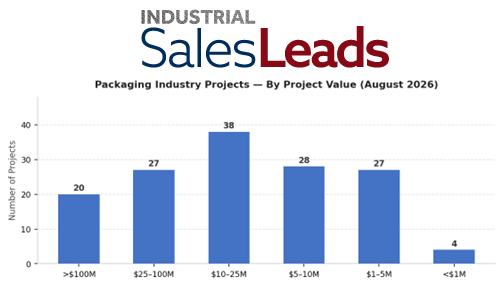
184 New Packaging Industry Projects Drive $17B+ Capital Pipeline in August 2026
-
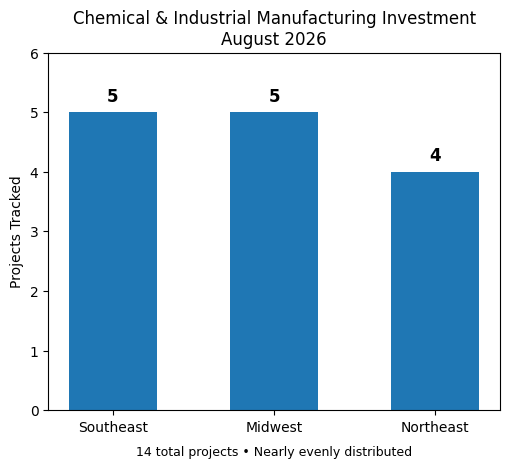
Chemical & Industrial Manufacturing Investment Spans Southeast, Midwest and Northeast in August 2026, with 14 Projects Tracked
-
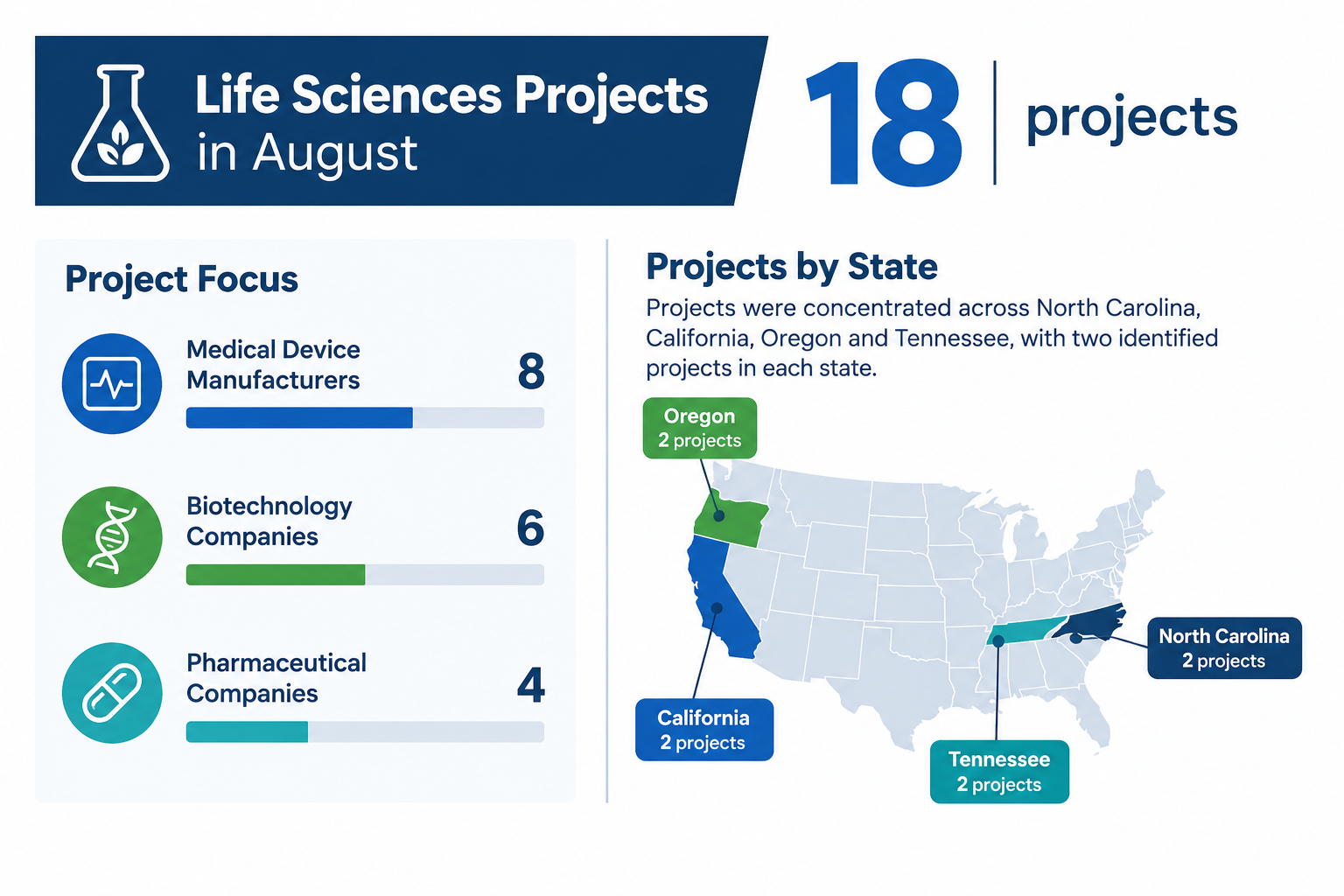
Life Sciences Manufacturing Investment Maintains Investment Momentum with 18 New Projects Identified in August 2026
-
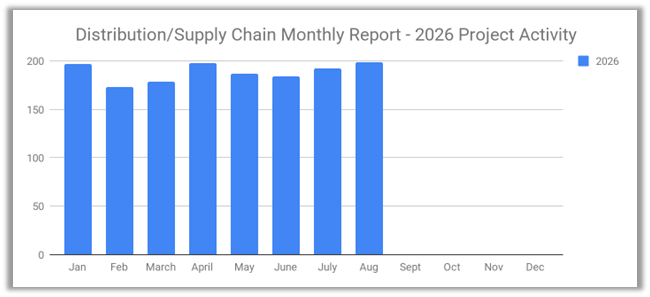
Distribution and Supply Chain Investment Hits 2026 Peak in August, Fueled by Three Months of Accelerating Growth
